
Elevated global crude oil and natural gas prices, driven by geopolitical developments in West Asia, could significantly influence the Government of India's fiscal position for 2026-27, according to a report by ratings agency Icra.
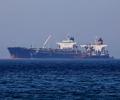
Iranian forces fired upon three commercial vessels in the Strait of Hormuz, with one possibly headed for Gujarat, raising concerns about maritime security in the strategic waterway.

Andhra Pradesh is spearheading an ambitious initiative to establish a fully integrated beach sand minerals, rare earth, and titanium ecosystem, aiming to attract over 50,000 crore in investments over the next decade. This move is part of India's broader strategy to reduce its reliance on China for strategic minerals and permanent magnets, with the state preparing a comprehensive rare earth policy and planning specialised industrial clusters.

'A genuine tribute to Dr Ambedkar does not lie in selective invocation. It lies in asking a harder question: Is the Constitution still doing its job -- restraining even assertive majorities?' asks Manoj Mohanka.

A software engineer earning a high salary allegedly abandoned his career to run a fake online trading racket, duping investors of nearly Rs 100 crore.

Historically, India was a major buyer of Iranian crude, importing significant volumes of Iranian light and heavy grades due to strong refinery compatibility and favourable commercial terms.

India's privatisation push, once projected as a cornerstone of economic reform, has suffered another setback, with the Centre set to call off the IDBI Bank stake sale, highlighting the political and structural constraints shaping the country's disinvestment policy, experts say.

Is the current rally telegraphing a durable peace plan in West Asia, boosted by United States (US) President Donald Trump's incoherent and contradictory posts on social media?

India is sending a shipment of diesel and petrol to Sri Lanka to help alleviate the country's energy crisis amidst regional instability.

Indian shipyards Mazagon Dock Shipbuilders Limited (MDL), Garden Reach Shipbuilders & Engineers Limited (GRSEL), and Cochin Shipyard Limited (CSL) are set for substantial growth, driven by a significant pipeline of Indian Navy orders and diversification into commercial and export markets. The Navy's share in defence spending is approximately 21 per cent, ensuring robust order visibility for these domestic players.

Gautam Adani and Sagar Adani are seeking the dismissal of a US Securities and Exchange Commission (SEC) securities fraud lawsuit, arguing that the case represents an impermissible extraterritorial application of US law and fails for lack of personal jurisdiction.

A US judge has granted Gautam Adani's request for a hearing to dismiss a US Securities and Exchange Commission (SEC) fraud case, with Adani's legal team arguing the case lacks jurisdiction and credible evidence.

Bharat PET Ltd, an integrated packaging solutions provider, has filed draft papers with SEBI to raise Rs 760 crore through an IPO, including a fresh issue and an offer for sale by promoters.

...reopen for up to six months. Until then, the Strait stays nearly closed. The world pays. And no one, including the man who started this, can say when it ends, notes Prem Panicker in his must read blog on the Iran War.

India's three major listed shipyards - Mazagon Dock Shipbuilders Limited (MDL), Garden Reach Shipbuilders & Engineers Limited (GRSEL), and Cochin Shipyard Limited (CSL) - are poised for substantial growth, driven by a robust order pipeline from the Indian Navy and diversification into commercial and export markets.

Two more Indian-flagged LPG tankers have begun their journey from the Persian Gulf, navigating the Strait of Hormuz amidst regional conflict, following disruptions caused by recent tensions in the Middle East.

A senior government official confirms that Indian vessels do not require permission to navigate the Strait of Hormuz, despite regional tensions. Several Indian ships, including LPG tankers, have safely crossed the strait, ensuring continued supply of essential commodities to India.

India Inc on Sunday hailed the Union Budget 2026-27 as a 'structural shift' in the country's technology landscape, noting that the government is moving beyond fragmented pilots to build foundational layers where AI serves as a 'horizontal enabler' for the entire economy.

Egypt, Pakistan, Saudi Arabia and Turkey met in Islamabad in what analysts say is the formal opening of a new diplomatic formation that could reshape the post-war regional order. Their immediate goal is a ceasefire; their larger ambition is to ensure that neither Iran nor Israel emerges from this war in a dominant position. Pakistan's foreign minister then flew directly to Beijing and mooted a Chinese role as guarantor of any eventual agreement. Prem Panicker continues his must read daily blog on the Gulf War.

The value of the rupee, which has slipped to the 92 per dollar mark, does not accurately reflect India's stellar economic fundamentals, the Economic Survey said on Thursday.

After three consecutive months of heavy selling, foreign portfolio investors (FPIs) turned net buyers in the first week of February, infusing more than Rs 8,100 crore in Indian equities, aided by improving risk sentiment, along with a trade deal with the US.

Global index provider MSCI has announced the addition of four Indian companies-including Fortis Healthcare and Paytm - to its Global Standard indices. According to Nuvama Alternative & Quantitative Research, each of these companies is expected to see passive inflows exceeding $400 million. Shares of Paytm rose 4.3 per cent on Thursday, while Fortis Healthcare dipped 1.1 per cent.

When everyone has footage and no one can verify it, the loudest voice wins, notes Prem Panicker who begins a daily blog on the War in the Middle East.

Oxford University Press India has issued an apology to Udayanraje Bhosale, a descendant of Chhatrapati Shivaji Maharaj, over 'unverified statements' made about the Maratha king in a book published over two decades ago. The apology addresses content in 'Shivaji: Hindu King in Islamic India' by James Laine, which sparked controversy and vandalism in 2004.

The previous largest weekly decline was recorded in the week ended November 15, 2024.

Finance Minister Nirmala Sitharaman's biggest challenge will be to find a new growth driver, particularly against the backdrop of a global economy ravaged by heightened uncertainty and fragmentation, financial markets on a precipice, and global commodity prices on a continued uptrend.
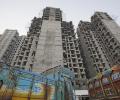
The Supreme Court of India has upheld an order directing NBCC to complete 16 delayed housing projects of Supertech Limited, providing relief to thousands of homebuyers who have been waiting for nearly two decades.
The Supreme Court of India has upheld an order directing NBCC to complete 16 delayed housing projects of Supertech Limited, providing relief to thousands of homebuyers who have been waiting for nearly two decades.

The fact that a major studio put out a silent film starring some of the biggest names in the industry in these concerning times for the film business is the one big takeaway from Gandhi Talks, notes Arjun Menon.

The country's banking system, while remaining "resilient" with bad loans at over a decade low and strong capital buffers, will continue to face intense competition from non-bank sources for resource mobilisation, said the Reserve Bank of India's (RBI's) Trend and Progress of Banking in India 2024-25 report.
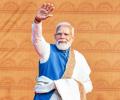
The passing of bills without Parliament, including the treasury benches, having any real understanding of what they contained through any rigorous process has accelerated through the Modi era, points out Aakar Patel.

As the rupee remains under pressure due to several headwinds and the uncertainty around the India-US trade deal, the Reserve Bank of India (RBI) has been stepping in only to calm volatility, not to stop the fall.

One key development is the direct cargo connection between Chennai and Vladivostok, a crucial Russian port on the Northern Sea Route.

A deep split has emerged within India's auto industry over the proposed CAFE exemption for small cars, with only Maruti Suzuki and Renault backing the move in the final SIAM vote.

The government is developing ports across the country as centres for green hydrogen production and export, Sarbananda Sonowal, minister of ports, shipping and waterways (MoPSW) said on Tuesday. "Across the country, over 12 million tonnes of green hydrogen-based e-fuel capacity has been announced.
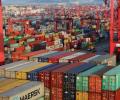
Concerned over the fallout of the Red Sea crisis and severe shortage of containers against the backdrop of a steep decline in merchandise exports in August, the Union government is pulling out all the stops to find a solution. To begin with, the government has devised a strategy aimed at boosting container supply and supporting exporters.

Sonia Gandhi criticizes the Modi government's environmental policies, claiming they endanger the Aravalli hills and disregard environmental protection.

Dr Sulbha Arora, clinical director and fertility specialist at Nova IVF Fertility, explains everything you need to know about egg freezing in India, including the process, the cost and the risks involved.

'There are no additional benefits for banks and market participants to use CBDC...'

EV manufacturers point out that converting a regular petrol car into a flex-fuel vehicle requires only about Rs 17,000-25,000 per unit, whereas developing an EV demands vastly greater investments in research, battery development, and localisation.
 © 2026 Rediff.com - Advertise with us - Disclaimer - Privacy Policy - Sitemap - Feedback - About us - Terms of use - Grievances