
Deadline to submit convincing reform plans is this week.

The situation in Greece worsened with banks closed for a 2nd week.

Without some firmer pledge of debt relief, neither Greece nor the IMF is likely to accept a deal

Communist China has recently developed a great expertise in 'soul reincarnation', feels Claude Arpi

Greek proposals hailed as "a positive step forward".

ISIS' advances in Iraq and Syria are not just tactical but strategic victories -- born of US errors and confusion

With the Rafale fighter deal stuck over price negotiations, can the prime minister step in and find a way out for both countries?

'The "Hollandisation" of British policy may not bring the expected gains as the future may show,' says Claude Arpi.

The time is over when United States President Barack Obama thought he could afford to make a joke about the ISIS.

Will China's new military reforms endanger Xi Jinping's rule?

There is no war against Islam, but there is definitely one against Islamic radicalism, says Claude Smadja.

'If, as appears to be the case, India is on way to 'mending fences' with China, and China is equally desirous to 'reset' the relationship, this could be a self-reflexive moment in India's positioning vis-a-vis not just the Dalai Lama, but also the Tibetan issue and China as a whole,' points out China expert Alka Acharya.

Pushing a barrel of oil back to around $100 would require a reduction of production of about two million barrels a day - a cut that would fall predominantly on Saudi Arabia.

Xi Jinping has accumulated great power, but he faces trials that are just as great, says Claude Smadja.

'Narendra Modi knows how to calculate and remain pragmatic. Take the unexpected Rafale deal - perhaps the first time a PM has considered the country's defence procurement as a priority, over the considerations of the babus... and over his own pet project 'Make in India',' says Claude Arpi.

What was the need for Xi Jinping, general secretary of the Chinese Communist Party, President of the People's Republic of China and Chairman, Central Military Commission, to don the new role of Commander in-Chief? Does this mean that the most powerful Chinese leader since Mao faces numerous threats from within the Communist Party?
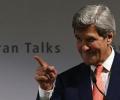
The deal with Iran does not address any of the major issues thrown up by Tehran's ambitions, says Claude Smadja.

'The question remains: Was the Obama visit truly a success? Only the future will tell us if the "breakthrough" in the nuclear liability issue will concretise into electricity.' 'As importantly, it will be interesting to watch how India's relations with China will evolve in the months to come.'
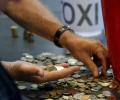
The crisis remains acute with the country's banks already closed.

2014 was a year for downturn for most economies across the globe.

'If there's a Fan sequel, I want a song and dance with Shah Rukh Khan.' Here's introducing Fan girl Shriya Pilgaonkar, who celebrates her birthday today, April 25.

The chaos on its stock markets, a fierce battle between the old and new guard in the Communist Party and the restive border provinces of Tibet and Xinjiang forebode tough times ahead for China, says Claude Arpi.

China is spending billions of dollars to improve infrastructure in Tibet and other parts of its border with India. Claude Arpi explains why New Delhi can't afford to ignore Beijing's plans.

'Under the present Defence Procurement Procedure, it would have been a nightmare, and a long, long one at that, to build 108 Rafales in India. Modi realised this and took the wise decision, though it is a definitive setback for his Make in India scheme.'

'Make in India' will be central to Mr Modi's visit to Europe and Canada. It is difficult to predict what will happen with the Rafale deal, but if it goes through, it will undoubtedly become the 'Mother' of all 'Make in India' projects,' says Claude Arpi.
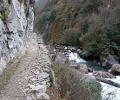
'It is certainly time for New Delhi to open up. Not only should it go ahead at full steam with the roads to the LAC, but the government must also allow tourists to visit these stunningly beautiful areas of Indian territory.'

Two US warships fired at least 50 cruise missiles at the Ash Shai'rat airfield in Homs province in western Syria, from where the US administration believes Syrian President Bashar Al-Assad fired the chemical weapons against his own people, media reports said.

'Tibet remains a prickly issue between the giant Asian nations. China still claims more than 80,000 sq kilometres of Indian territory in the Northeast. Why? Just because Beijing refuses to acknowledge the McMahon line which separates India and Tibet, and this, simply because the 1914 Agreement delineating the border was signed by the then government of independent Tibet with India's then foreign secretary (Sir Henry McMahon),' says Claude Arpi.

'Chinese leaders rarely receive their foreign guests in cities other than Beijing. Such respect for India!' 'Does it mean that Modi could replicate "the warmth and unconventional way" by sending Indian troops into Tibet, as Xi did in Chumur (Ladakh) when he arrived in India? Of course, Indians are far too polite to do so,' says Claude Arpi.

'The US-India relationship is in a different league altogether,' Obama administration officials tell Aziz Haniffa/Rediff.com in Washington, DC.

Syriza lawmakers walked the corridors telling reporters the government might not survive the night.

If the impact of the Greece crisis spreads across Europe and parts of the world which are more interconnected than ever before, India cannot hope to be insulated, says Paranjoy Guha Thakurta.
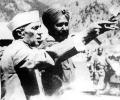
Let us hope that what happened in 1962 will never happened again, prays Claude Arpi
Nehru's sentimental attachment to the Mountbattens deeply vitiated the Kashmir issue. It was certainly the most important factor for the failure to find a solution in the first years of the conflict.
China has been keeping tabs on the restive Tibet province through a 'grid' system and some 600 'convenience police posts' armed with high-tech equipment that monitor the daily life of the citizens of Lhasa and other Tibetan towns. Worse, 'volunteer security groups' known as 'Red Armband Patrols' are roaming around in order to get more information and 'classify' each and every citizen, says Claude Arpi

On the title page of the Top Secret Report, Henderson-Brooks quotes the Chinese tactician Sun Tzu: 'Know yourself, know your enemy: A hundred battles, a hundred victories', says Claude Arpi, highlighting where the Indian Army and government failed to counter the Chinese attack in 1962.
