
In a significant message to the business lobby in Washington, the Union Cabinet on Thursday gave its nod to the Civil Nuclear Liability Bill.The move will encourage the nuclear power plant manufacturing companies, which have been eyeing the Rs 60,000-crore plus market in India, for the next 5-10 years. According to sources, the government will fix the civil liability at approximately Rs 2,400 crore for the manufacturers.
India on Saturday announced plans to amend its nuclear liability law and set up a nuclear energy mission, a move that came ahead of Prime Minister Narendra Modi's likely visit to the United States.

The Indian government has introduced a bill to overhaul the civil nuclear sector, allowing private participation and establishing a new liability regime. The SHANTI Bill, 2025, aims to repeal existing acts and address industry concerns.
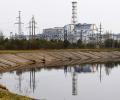
The Supreme Court is reviewing a plea challenging the 2025 SHANTI Act, which caps liability at Rs 3,000 crore for nuclear plant incidents, raising concerns about victim compensation and operator accountability.
The government has finalised the much-awaited rules of implementation of the nuclear liability law, a move that could pave way for the expansion of the atomic power sector by procuring equipment from foreign suppliers. "A PMO committee has approved the rules of implementation of the civil nuclear liability law. We will notify the rules within a month," V Narayanasamy said. The Civil Liability for Nuclear Damage law was passed by Parliament last year.
Pitching for enactment of a law to fix civil damages caused by nuclear accidents, Atomic Energy Commission Chairman Srikumar Banerjee said neither the Indian Environmental Protection Public Liability Insurance Act, 1991, nor the Indian Atomic Energy Act had provisions for damages caused due to war or radioactivity.
India's civil nuclear liability regime has raised serious questions about the country's capacity addition programme. In an interview with Sanjay Jog, G R Srinivasan, former vice-chairman of the Atomic Energy Regulatory Board and currently principal associate-nuclear power business in GMR Energy Ltd, says the regime is tremendously unbalanced and may adversely affect the nuclear capacity addition programme.
One of the biggest myths being propagated is that nuclear cooperation with the US is the answer to India's energy crisis, which in any case would not see the light of the day before 2016. Also Indian Parliament and citizens have been kept in dark about the cost of electricity from foreign-built nuclear power reactors.

The Supreme Court has issued a limited notice to the Centre, seeking clarification on whether courts can grant fair compensation under the SHANTI Act in nuclear accidents, despite liability caps. The court also questioned potential conflicts of interest in appointing members to the Atomic Energy Regulatory Body under the Act, following a plea challenging the law's constitutionality.
While the cap on liability is lower than in several other countries, few producers, including those in India, will supply nuclear power equipment without such a bill -- raising the caps is an obvious solution.
Voicing "serious concern" over India's nuclear liability law, the United States on Friday said New Delhi could seek International Atomic Energy Agency's help in evaluating its legislation's compliance with the Convention on Supplemental Compensation.
India, on Sunday, categorically ruled out any change in the Nuclear Liability Act as a precursor to United States President Barack Obama's maiden visit to India that begins on November 5.
The United States has said that India is committed to the Nuclear Liabilities Bill and it was up to the United Progressive Alliance government to figure out how to move forward in the wake of the Opposition's objections to some aspects of the controversial legislation.The stalled bill, whose passage in Parliament is a must, is a crucial step for the full implementation of the historic Indo-US civil nuclear deal.
In the second part of a three-part series, Manoj Kumar and Lydia Powell, in an Observer Research Foundation study, discuss at length the various loopholes in the Nuclear Liability Bill, whose amended version was recently passed by the Lok Sabha.
The much-debated Nuclear Liability Bill, crucial for operationalising the India-US civil nuclear deal, would be tabled in the Rajya Sabha on March 15, Minister of State for Atomic Energy Prithviraj Chavan has said.

The rules require nuclear plant operators to maintain an insurance policy, financial security or a combination of both to cover civil liability for nuclear damage.

The operator's liability in the case of an incident is limited to 3,000 crore for reactors with thermal power above 3,600 Megawatt; 1,500 crore for reactors with thermal power between 1,500 Mw and 3,600 Mw; 750 crore for reactors with thermal power between 750 Mw and 1,500 Mw; 300 crore for reactors with thermal power between 150 Mw and 750 Mw; and 100 crore for reactors having thermal power up to 150 Mw, fuel cycle facilities other than spent fuel reprocessing plants and transportation of nuclear materials.
The one message that the Congress party wants the Prime Minister's Office to take heed of, following the tumultuous first phase of this year's Budget session, is that the PMO should be more helpful in facilitating political management for the party.Despite the government bending over backwards to explain that the Civil Liability for Nuclear Damages bill was a mandatory legislation -- no matter which country India wanted to engage with in is unconvinced.

Civil nuclear projects in the country would be subject to Indian laws including on issues of civil liability, National Security Adviser Shivshankar Menon said on Friday dismissing reports of attempts to dilute the liability clause in contracts proposed with United States firms.

Indian and American experts on Wednesday held detailed discussions on a range of implementation issues, including administrative, liability, technical and licensing matters to advance the operationalisation of Indo-US civil nuclear cooperation that has been in limbo for past 9 years.
The Parliamentary Standing Committee on Science and Technology, which has held marathon deliberations on the controversial Civil Liability for Nuclear Damage Bill 2010, is expected to present its report to Parliament on August 9.
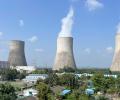
The Bill is likely to pave the way for amending two existing legislations -- the Atomic Energy Act 1962, and the Civil Liability for Nuclear Damage Act 2010.
India on Thursday firmly ruled out any change in the civil nuclear liability law notwithstanding repeated concerns expressed by countries exporting atomic equipments over compensation claim in the event of an accident.
Ahead of Prime Minister Manmohan Singh's visit to the United States, a controversy has broken out over the nuclear liability law with reports suggesting that an agreement will be signed which may not be in tune with the law.

India has a 'natural global partnership' with US, says PM.
Greenpeace has also launched a petition addressed to Prime Minister Manmohan Singh, which the organisation claims has been signed by over 21,000 people.

The India-US nuclear deal was aimed at ending India's nuclear isolation and nuclear apartheid, recalls Rup Narayan Das.
The passage of the Women's Reservation Bill in the Rajya Sabha on Tuesday has not ended the problems of the United Progressive Alliance (UPA).
What is in store for the Koodankulam nuclear power plants, asks S P Udayakumar.

Prime Minister Narendra Modi and US President Donald Trump have vowed to move forward with plans to work together to build US-designed nuclear reactors in India. The decision was made during their meeting at the White House, where they also agreed to significantly expand energy cooperation. The move comes after India announced plans to amend its nuclear liability law and the Atomic Energy Act, which had previously been obstacles to the implementation of the US-India civil nuclear deal.
Ending months of wrangling between treasury benches and the opposition, the Lok Sabha on Wednesday passed the civil nuclear liability bill after government dropped the contentious provision of 'intent' in the case of accident adopting a Bharatiya Janata Party amendment, paving the way for nuclear commerce with the world.
Bowing to pressure from the Bharatiya Janata Party and the Left parties, government on Friday dropped a controversial addition in the civil nuclear liability bill which the Opposition said diluted the liability of suppliers for accidents caused by their negligence.
Government sources said amendments were being considered to the Atomic Energy Act to allow private sector participation and the Civil Liability for Nuclear Damage Act to limit the liability on suppliers of equipment to build atomic energy plants.

'If the BJP detoxifies the nuclear liability law, it will bring economic, environmental and, most of all, strategic benefits.' 'Let's keep our fingers crossed and hope that this Budget promise is met soon -- ideally, before Mr Modi heads to his first meeting with Trump 2.0,' observes Shekhar Gupta.

US urges New Delhi to align its nuclear liability law with the international convention
India's Civil Nuclear Liability Bill will not have an immediate adverse impact on Indo-Russian cooperation in atomic power generation, but Russian contractors would not like to see safety issues raise their project costs. Director for the Centre of Energy and Security Studies and Editor-in-Chief of the Nuclear Club magazine Anton Khlopkov said the legislation passed by the Indian Parliament "is raising concerns in Russia".
The Civil Nuclear Liability Bill is likely to come up for consideration in Parliament on Wednesday
Finance Minister Pranab Mukherjee's meeting with BJP top brass L K Advani, Leader of Opposition in Lok Sabha Sushma Swaraj, her counterpart in Rajya Sabha Arun Jaitley on Tuesday ended on a positive note with both sides reaching a consensus on most issues in the draft bill.The Parliamentary Standing Committee finalised its report on Nuclear Liability Bill. The Compensation cap raised from Rs 500 crore to Rs 1,500 crore.
Ushering in reforms, Union Finance Minister Nirmala Sitharaman on Saturday proposed to open up the nuclear power sector for private players and announced a Rs 20,000 crore Nuclear Energy Mission for research in the field, with an aim to set up five small and modular reactors by 2033.
Sources in the Prime Minister's Office (PMO) told Business Standard that National Security Advisor (NSA) Shiv Shankar Menon will meet top leaders of the BJP and the CPI(M) to explain the salient features of the Bill.
