
Pharma major Cipla Ltd on Thursday reported a 3.7 per cent rise in consolidated net profit at Rs 1,353.37 crore for the second quarter ended September 30, 2025. The company, which had posted a consolidated net profit of Rs 1,305.01 crore in the second quarter of the last fiscal year, said its managing director & global CEO, Umang Vohra, has decided not to seek re-appointment upon completion of his current term on March 31, 2026, Cipla Ltd said in a regulatory filing.

10 stocks from the Nifty 200 index that offer good growth potential and scope to deliver decent returns from current levels, based on brokerage estimates.

There are hopes of a turnaround in overall corporate earnings after six quarters of single digit growth.

For decades, multinational pharmaceutical companies and Indian drugmakers worked in ways that supported each other: MNCs brought innovation and brands, while Indian companies built scale through generics and cost efficiency. There was an important overlap - generic drugs - but this is shrinking fast. And the consequences are reshaping India's gigantic pharmaceutical market.

Drug maker Cipla always fought a lone battle to make drugs affordable in India.

In an event-heavy week, stock investors will track ongoing quarterly earnings, the US Federal Reserve's interest rate decision, and macroeconomic data for market direction, analysts said. Moreover, progress in India-US trade negotiations will remain a key focus for investors, an expert said.
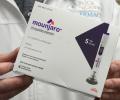
'As more patients are prescribed these drugs, intolerance due to gastrointestinal and other side effects will become more visible, leading to higher discontinuation rates.'

The US Food and Drug Administration's (USFDA)'s new draft guidelines aimed at speeding up and reducing the cost of developing biosimilars - lower-priced, near-replicas of complex biologic medicines - could significantly benefit Indian biotech companies.
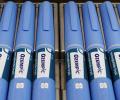
The semaglutide patent expiry next year could unleash a wave of generic versions from Indian drugmakers, with prices expected to go lower -- at least 80 per cent.

Prices for Indian consumers are expected to come down significantly from the current Rs 17,000-Rs 26,000 monthly.
The Indian pharmaceutical industry is likely to benefit from a major wave of patent expiries in the US, as small-molecule drugs worth $63.7 billion are expected to go off-patent between 2025-29, a 65 per cent rise over the previous five years, according to a report by Antique stock broking limited.

Concerns over weakening demand for Indian pharmaceutical (pharma) drugs in the US - their largest export market - have weighed heavily on investor sentiment this year. While the Nifty 50 has gained 6.02 per cent year - to - date (as on September 15), the Nifty Pharma index has declined 5.18 per cent, National Stock Exchange data shows.

"The product technology is coming from DNDi. Cipla will manufacture and make the product available in southeast Asia and other parts of the world at affordable pre-agreed prices," Amar Lulla, joint managing director, Cipla, said.
Drug major Cipla on Tuesday said it has launched drone-powered deliveries of critical medicines - cardiac, respiratory and other essential chronic therapies - to hospitals and pharmacies across Himachal Pradesh in partnership with Skype Air Mobility, a Gurugram-based drone delivery company. Cipla is the first among large Indian pharmaceutical companies to adopt drone-based deliveries to facilitate expedited supply to stockists in remote areas, it claimed. The Mumbai-based firm said the use of drones will support the on-time delivery of its medicines to chemists and clinics in remote areas, and minimise risks of affecting cold chain products due to temperature excursions.

However, Cipla was very clear it does not want to get into vaccine manufacturing.

An insider said that over the past decade or so Cipla has become immune to the exits of leaders. There have been no directional change in the long-term strategies.

Indian drugmakers supply 47 per cent of the generic medicine requirements in the US, and tariffs would have increased prices in the US domestic market for patients, who are already dealing with drug shortages.
Indian pharmaceutical companies may have units abroad as part of "distributed manufacturing" across various locations, according to industry veterans. This may come about over the next five to 10 years.

'Obesity is a raging conversation globally now, and manufacturing of generics will pick up after the patent expires.'

Kamil's elder sister Samina Vaziralli has taken on an expanded role

Those leaving the company include Nikhil Chopra, head of India business, Nikhil Lalwani, who served as head of US business, and Kunal Khanna, head of chronic and emerging therapies.


Cipla is among the three Indian companies that signed a non-exclusive licensing agreement with US-based Gilead Sciences to make and distribute the latter's repurposed Ebola drug Remdesivir in 127 countries including India.

Respiratory product paves way for launch in larger markets and greater earnings visibility.

Hetero has priced the injectable drug at Rs 5,400 per 100 mg vial. With More drugmakers in line to launch the drug soon, the prices may see a further erosion.

In his last assignment, he led the global product strategy and commercialisation functions at Novartis Pharma AG.
Domestic drug major Cipla Ltd has signed a long-term collaboration agreement with Swiss specialty pharmaceutical major Meda, to develop and market an anti-allergic rhinitis drug for various global markets. Cipla will manufacture the drug, which will treat an ailment that causes a runny nose, and the Swiss company will market the product in Europe, Japan, Brazil, South Korea and Australia. The partners are developing the product as a nasal spray to treat allergic rhinitis.

Industry insiders in India warn that any such move in the pharmaceutical sector could be counterproductive for the US as it may face increased drug shortages if tariffs are imposed on such imports.

Hamied however, will continue to be the Vice- Chairman of the company in a non-executive role effective April 1
In recent months, several pharma multinational corporations (MNCs) are increasingly turning to Indian companies to expand market reach in the country's pharmaceuticals sector. Sanofi's partnerships with Dr Reddy's, Cipla, and Emcure, AstraZeneca and Mankind Pharma - teaming up for asthma medication distribution - are a few instances of this trend. This strategy allows MNCs to leverage established Indian networks and reach a wider audience. Indian companies also benefit from global brands and expertise, say analysts.
There is a need to incentivise R&D investments, offer corporate tax concessions and establish an effective intellectual property rights regime in order to push the growth of domestic pharmaceutical industry, as per the industry bodies. Outlining the sector's wish list for the upcoming Union Budget, Organisation of Pharmaceutical Producers of India (OPPI) Director General Anil Matai urged the government to explore methods to incentivise R&D investments, such as deductions on R&D expenses, research-linked incentives for MNCs, and corporate tax concessions.

Rising penetration of trade generic medicines is eating into the value growth of the domestic pharmaceutical market, showed a recent analysis. According to a Kotak Institutional Equities analysis, 70-110 basis points (bps) annual dent is expected from trade generics and Jan Aushadhi on Indian Pharma Market (IPM) growth at least until FY27-28 (see chart). Trade generic medicines are those that are not pushed into the market through doctor promotions.

Foreign banks and private credit funds are queuing up to fund acquisitions by Indian companies who are buying out their local rivals. The Adani Group, Torrent Group, and the Hindujas have approached several foreign banks and private equity (PE) firms to fund their acquisitions. Global investors have about $2 trillion of funds to invest, and about $100 to $150 billion is set aside for India, according to an estimate by JP Morgan.

Several firms are stepping up to help their workforce cope with soaring temperatures

Benchmark indices--Sensex and Nifty--were 0.7-0.8 per cent higher from the Saturday closing. Among the widely-tracked Nifty 50 stocks, 39 advanced and the rest 11 declined at the opening bell. Among the individual stocks, Cipla, ICICI Bank, Sun Pharma, Power Grid Corp, and Bharti Airtel were the top five gainers, while Asian Paints, Hindustan Unilever, Britania, HDFC Bank, and BPCL the losers, NSE data showed. On Monday, Indian stock exchanges were closed for trading on the occasion of Pran Pratistha of Ram Temple in Ayodhya.

'I think some of us, like Mukesh Ambani, myself and those of us who head industrial units, ought to really focus on what we can really do to make the world a safer place, maybe 50 or 100 years from now.' 'For instance, how can we deal with climate change and global warming, right now?' 'The effects of it may not be felt now; in fact, we may pay a price for it today, but it will help the generations to follow.'

Companies run till now by mostly their promoters are increasingly inducting professionals to head their teams.
Leading IT companies i-flex Software and Satyam Computers have made their way to Forbes Global's list of 100 'best under a billion' companies in Asia Pacific.
 © 2026 Rediff.com - Advertise with us - Disclaimer - Privacy Policy - Sitemap - Feedback - About us - Terms of use - Grievances