
India has successfully conducted the maiden salvo launch of the indigenously developed Naval Anti-Ship Missile-Short Range.

India successfully test-fired two Pralay missiles in quick succession off the coast of Odisha, paving the way for its induction into the military. The missile is indigenously developed and features a state-of-the-art navigation system.

The missile showcased its precision and capability to neutralise targets, the statement said.

The flight test fully met all the trial objectives validating complete network centric warfare weapon system, the defence ministry said.

The conversion facilitated range enhancement and improvement in Pinaka's accuracy.

The system performance was also validated through the data captured by a number of radars, telemetry and electro-optical tracking system deployed by ITR, Chandipur.
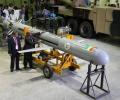
This was the fifth experimental test of the homegrown missile system.

By the time the enemy aircraft is 50 km away, the Akash-NG's computers have calculated the launch trajectory and impact point and launched the missile.

This MRSAM version is a surface-to-air missile developed jointly by DRDO and Israel Aerospace Industries for use by the Indian Army.

The MRSAMs were test-fired from the Integrated Test Range launch pad-III at Chandipur near here before noon
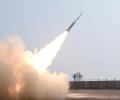
The Integrated Test Range of Defence Research and Development Organisation (DRDO) has taken various measures to protect its facilities at Chandipur and Abdul Kalam Island in Odisha, which are likely to be affected by cyclone 'Yaas', an official said.

The test was carried out by DRDO against a high-speed unmanned aerial target which was successfully intercepted by the missile.

The vehicle can be used as an aerial target for evaluation of various missile systems.
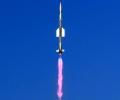
The quick reaction surface-to-air-missile missile developed by DRDO was test launched from the Integrated Test Range at Chandipur near here at about 3.08 pm from a vertical launcher against an electronic target at a very low altitude.
The Defence Research and Development Organisation on Friday successfully conducted a flight test of Solid Fuel Ducted Ramjet (SFDR) technology in Odisha, official sources said.

On both the occasions, the missiles intercepted the simulated targets with pinpoint accuracy. The missiles were tested for minimum and maximum range.

With new added technologies, including the control system, the missile was test-fired from the Integrated Test Range (ITR) launch pad-III at Chandipur around 10.45 am, said a source at the Defence Research and Development Organisation.

The missile is capable of carrying 500/100 kg of warheads and is powered by liquid propulsion twin engines.

The Prithvi-II missile has already been inducted by the armed forces and is handled by the army units attached to the strategic force command's special group.

The state-of-the-art advanced missile, a product of joint venture between India and Israel.

"The sophisticated surface-to-surface missile was flight tested at around 1100 hours from a mobile launcher at ITR's launch complex-3 as part of an operational exercise," defence sources said.
Two medium-range surface-to-air missiles 'Akash' were successfully test-fired from the Integrated Test Range (ITR) at Chandipur-on-sea, about 15 km from Balasore.
India on Friday successfully test fired its two indigenously-developed surface-to-air 'Akash' missiles of Air Force version with a strike range of 25 km from the Integrated Test Range at Chandipur near Balasore in Odisha.

Prithvi-2 is capable of carrying 500-1,000 kg of warheads and is powered by liquid propulsion twin engines, the sources said.
India on Saturday successfully test-fired indigenously developed ballistic missiles 'Prithvi-II' and 'Dhanush' from different locations off the Orissa coast, adding more firepower to the armed forces.

The double test-fire came after trials of the missile, with a range of 25 km and capable of carrying a warhead of 60 kg to neutralise aerial targets, on May 24 and 26.
The surface-to-surface missile took off from an underground silo at the launch complex-3 in the ITR at about 1428 hours, defence sources said.
Two indigenously developed surface-to surface missiles were planned to be fired from a mobile launcher in salvo mode from the launch complex-3 of ITR as part of user trial by the Army, defence sources said.
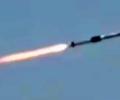
The trails were conducted without a helicopter in direct and top attack mode.
India successfully testfired its indigenously developed, nuclear-capable, ballistic missile Prithvi-II from the Integrated Test Range at Chandipur, about 15 km from Balasore off the Orissa coast, on Friday.
Indigenously developed and beyond visual range (BVR) air-to-air missile 'Astra' was on Monday test-fired from the Integrated Test Range (ITR) at Chandipur in Orissa.
Lakshya was flown as a support system to gauge the precision control of the short range missile.

India on Friday successfully test-fired the new surface-to-air missile, developed jointly with Israel, with a strike range upto 70 km, from a defence base off Odisha coast, a day after two similar trials were conducted.
India successfully tested the advanced version of Lakhsya, the indigenously built Pilotless Target Aircraft from the Integrated Test Range at Chandipur-on-sea, about 15 km from Balasore, for the third consecutive day on Wednesday.

A land-attack version of the missile was test-launched from Launch Pad-3 of the Integrated Test Range (ITR). An air force variant was fired from an IAF fighter jet over Bay of Bengal.
India successfully conducted the third developmental trial in four days of its indigenously developed beyond visual range air-to-air missile 'Astra' on Monday from the integrated test range at Chandipur, 15 km from Balasore in Odisha.
Two days after its successful trial, India on Saturday again test-fired the indigenously developed surface-to-air Akash missile from the test range at Chandipur near Balasore. "The user specific trial, which formed part of the country's routine air defence exercises, was conducted from the ITR," said a Defence Research Development Organisation official associated with the Akash missile project.
India's indigenously developed, micro-light pilot-less target aircraft 'Lakshya-1' was successfully test flown from the Integrated Test Range at Chandipur in Odisha on Thursday.
The air-to-air missile is to form the main interception armour of the indigenously developed Light Combat Aircraft.
 © 2026 Rediff.com - Advertise with us - Disclaimer - Privacy Policy - Sitemap - Feedback - About us - Terms of use - Grievances