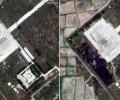
The attacks against the Pakistani air force have taken them at least five years back and caused great damage to them and their Chinese and Turkish inventory of weapons.

The strikes targeted the Nur Khan Airbase in Rawalpindi, the 12th Brigade base in Quetta, Balochistan, and the Khoizai camp in the Mohmand Agency in Khyber Pakhtunkhwa, along with other military sites housing key facilities and centres.
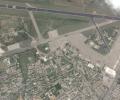
The Pakistani government has once again found itself embarrassed on the world stage, now acknowledging the impact of India's strategic and precision strikes on its military installation during the escalation in May, following Operation Sindoor, which came in retaliation for the April 22 Pahalgam terror attack that killed 26 civilians.

The Air Chief revealed information about India's damage to Pakistan's defence capabilities while addressing an event at the Hal Management Academy in Bengaluru on Saturday.
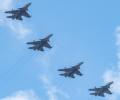
Pakistani military targets at Rafiqui, Murid, Chaklala, Rahim Yar Khan, Sukkur and Chunian were engaged using air-launched precision weapons from Indian fighter jets and the retaliation largely focused on command and control centres, radar sites and weapon storage areas, Qureshi said.
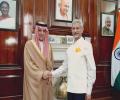
The Saudi statement came as tensions soared significantly, with Pakistan claiming that its three airbases were targeted by Indian missiles and drones early Saturday.
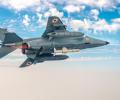
India's precision strikes using an array of weapon systems and missiles on eight key installations ranging from air defence systems to radar sites and command centres of the Pakistani military forced Islamabad to urge New Delhi to end the hostilities, the sources said.

Even Prime Minister Narendra Modi told US Vice President JD Vance on May 9 that Indian response will be "more forceful, stronger, devastating" in response to Pakistani actions, the sources said.
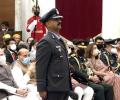
Major Syed Moiz Abbas Shah, 37, was killed on Tuesday in a clash with the Taliban militants in the Sararogha area of South Waziristan near the Afghan border, according to a statement by the Inter-Services Public Relations (ISPR), the media wing of the army.

India on Sunday said it inflicted tremendous losses to the Pakistan military, including downing its fighter jets featuring latest technologies and damaging key military installations close to even capital Islamabad, during the three-day confrontation between the two sides.

Doval said India hit nine terror targets crisscrossing Pakistan with precision and missed none of them
Pakistan's Prime Minister Shehbaz Sharif admitted that India's ballistic missiles hit Nur Khan Airbase and other sites on May 10, a rare acknowledgement that contradicts Pakistan's usual stance of denial when it comes to Indian military action.
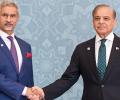
Shehbaz made the comments during a visit to the Kamra air base in the country's Punjab province where he interacted with officers and soldiers involved in the recent military confrontation with India.

The address comes two days after India and Pakistan reached an understanding to stop all firing and military actions on land, air and sea with immediate effect.

The Indian military also acknowledged suffering some losses but declined to provide the details as the operations are going on.

Pakistan military spokesperson Lieutenant General Ahmad Sharif Chaudhry told a hurriedly called press conference in Islamabad at around 4 am that th Pakistan air force's Nur Khan (Chaklala, Rawalpindi), Murid (Chakwal) and Rafiqui (Shorkot in Jhang district) airbases were targeted.
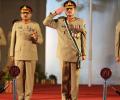
Whenever tenures of army chiefs were extended in the recent past, prime ministers were subsequently eased out of office by the same army chief, notes Rana Banerji, who headed the Pakistan desk at RA&W.
'Had Haji Pir and/or Skardu been taken, the message would have gone out not just to General Asim Munir and his cohort in the Pakistan army but to the Pakistani people that every terrorist incident in India would lead to substantial loss of territory in PoK.'

''I heard from the Pakistani brigadier that Flying Officer Pradeep Apte had been killed after he ejected safely and tried to escape. This news sent a chill up my spine. I had been lucky so far...'

Pakistan on Wednesday hanged a man convicted for attempting to assassinate former military ruler Pervez Musharraf, the seventh execution in the country after a moratorium on death penalty was lifted following the Peshawar school carnage.

Three Indian Air Force officers captured as Prisoners of War by Pakistan during the '71 War made a daring escape from a Rawalpindi jail. M P Anil Kumar recounts that heroic story.
