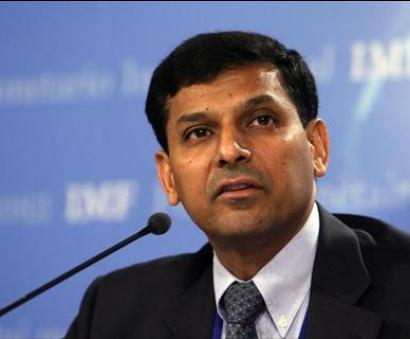
Rajan has shifted from the conventional ground floor room occupied by CEAs to a room on the first floor, adjacent to Chidambaram's office.

More than 100 products have been introduced at the Consumer Electronics Show at Las Vegas.
.jpg)
Govt expects 15.8% growth in revenue collection this year.

We have a government with an extremely weak economic team advising a PM who hardly pays attention to their thoughts, says Jayanta Roy.

From the 'group of 23' leaders, who had written letter to Gandhi seeking Congress' overhaul, Azad and Sharma continue to be regular members of the CWC,

Sitharaman, who was giving her 2021-22 Budget Speech, started off by giving a special shout out to what the Indian team

Noted economist Arvind Subramanian is favoured as the choice for the government's Chief Economic Advisor (CEA).

Coal shortage crisis at thermal power projects does not seem to abate very soon as the number of non-pit head plants with less than four days of dry fuel stock (supercritical stock) has increased to 70 this Sunday compared to 64 a week ago on October 3, as per government data. According to the latest coal stock data of the 135 plants with over 165 GW of installed generation capacity monitored by the Central Electricity Authority (CEA), as many 70 plants are categorised as supercritical stock or having less than four days of fuel on October 10, 2021, compared to 64 a week ago on October 3, 2021. The data also showed that the number of non-pit head plants having less than seven days of fuel (critical stock) has also increased to 26 on Sunday from 25 such projects a week ago on October 3, 2021.

'It is far too early to celebrate the numbers.' 'They are still fairly weak compared to the pre-pandemic level.'

In its letter, finance ministry has pointed to sections 35, 35A and 36 of the Banking Regulation Act, 1949, to highlight the powers and functions of the RBI as regulator
The country's economy is expected to grow by around 6 per cent in the current fiscal, even in the worst-case scenario of global recession prevailing till March 2010, according to Arvind Virmani, chief economic adviser in the Ministry of Finance.

For the first time, Subramanian said, "the Economic Survey has embraced Big Data, and we mine this data to shed new light on the flow of goods and people within India."

The economic impact of the Omicron variant of COVID-19 on emerging economies will depend on a mix of government restrictions, public comfort with social interactions, and capacity of governments and central banks to provide additional policy support to the private sector, Moody's Investors Service said on Wednesday. The emergence of the new variant poses new risks to the global economic growth and inflation outlook, as concerns mount about the variant's health risks and several countries have imposed new travel restrictions in recent days. These restrictions will likely increase over the coming weeks until scientists learn more about the variant, it said.

Swamy now wants Arvind Subramanian, one of the front runners for the post of the new RBI governor to be sacked.

As India builds its data centre capabilities, it is imperative that it is supported by green energy. This is because data centres are guzzlers of energy.

Due to improvement in business climate, industry chieftains refrain from visiting the North Block.
Subramanian Swamy now wants Arvind Subramanian sacked.

Given India's reliance on coal, electric vehicles could at best be 10% more efficient than petrol in terms of CO2 savings.

She beat 11 contestants from across the world to win the title.

Pahal looks to cut down diversion and eliminate duplicate.

Taxes on health, excluding medicines, could rise from 8.8 per cent currently, to around 13.6 per cent - an increase of 4.8 per cent.

A key hindrance to a faster turnaround of these banks is the slow progress in the resolution of legacy bad loans and the need to build up provisions against those assets.

A greater payment security mechanism for power generation companies to ensure timely payouts for supply of electricity will be in focus in 2022 as stricter rules are on the anvil for 24x7 power supply amid discoms' outstanding dues at a whopping Rs 1.56 lakh crore. Mounting outstanding dues of distribution companies (discoms) to electricity generation companies (gencos) have been a perennial issue affecting the entire value chain in the power sector and are also a hindrance for the ambitious goal of 24x7 power supply across the country even when the payment for coal is made in advance. The situation persists despite the fact that discoms' dues become overdue after 45 days of generating bills and they also have to pay penal interest on the overdue amount in most of the cases to gencos.

Headline inflation will come down under the 6 per cent mark in July itself but will stay at an elevated level of over 5 per cent for some time, Chief Economic Advisor K V Subramanian said on Thursday. Such an outcome will get the price rise back into the upper-end of the target band given to RBI, he said, adding that consumer price inflation had breached the mark for three consecutive quarters last fiscal because of supply side issues like challenges in movement of goods. "With reasonable probability, I expect this month the (inflation) print to come less than 6 per cent," Subramanian told a conference organised by industry lobby Ficci. Right after data for May showing inflation at 6.4 per cent had come out, Subramanian said he had predicted it will cool down in internal meetings and also during "deliberations with the regulator".

India's wholesale price-based inflation is at a 30-year high, leading to a "very alarming" situation for the country, former World Bank chief economist Kaushik Basu said on Thursday. He, however, doesn't see any risk of hyperinflation, but cautioned that if retail inflation follows wholesale prices, it might lead to "inflationary crisis". Participating in a virtual event organised by the Asia Society, India, Basu said the inflationary situation in India is at a "very risky bend".
Prime Minister Manmohan Singh on Sunday did some plain speaking with his Pakistani counterpart Nawaz Sharif laying down the precondition of end to violations of ceasefire along the LoC for progress towards resumption of Indo-Pak dialogue on various issues.
Amid multiple sectoral woes, India is projected to see an electricity supply shortfall of 6.7 per cent in the current fiscal with the Southern region expected to be the worst hit.

Concerned by GDP slowdown and unrealistic tax targets, the economists urged Finance Minister Nirmala Sitharaman to implement long-term structural steps like land and labour reforms. Warning against any off-Budget financing the economists said the government should prepare a statement of intent for its social, rural and welfare sector expenditure.

The panel suggested inclusion of alcohol and petroleum products in GST, as is being demanded by the Congress.

'The Jalan Committee has now provided very clear guidelines on how the (RBI's) balance sheet should be looked at, what kind of disclosures should be made, what are the principles on which the Contingency Risk Buffer should be maintained, what should be the revaluation reserves, and the market risk to the Contingency Risk Buffer.'
Former Indian players on Wednesday not only backed Hockey India's decision to send back Pakistanis but also advocated more stringent action even as players from across the border urged that the upcoming bilateral series should not be derailed due to the ongoing conflict.

Thackeray held a meeting on the issue and instructed authorities concerned to ensure there is no recurrence of the episode, an official statement said.

'Unemployment barely figures in the Budget except as a derived demand from the industry and infrastructure.' 'There is no effort at direct attack on unemployment.'
Finance Secretary Hasmukh Adhia vacates his post on November 30 and Expenditure Secretary Ajay Narayan Jha, the second seniormost bureaucrat in the finance ministry, retires on January 31, the day before Jaitley presents the 2019-20 interim budget.
S&P earlier this week had said India faces 'one-in-three' chance of rating downgrade in the next two years
Given that the public is no longer willing to tolerate lack of transparency, politicians will see they have no alternative but to change, feels Raghuram Rajan, economic advisor to the prime minister. Interestingly, Professor Rajan made this hard-hitting speech at an event to release a book in Prime Minister Manmohan Singh's honour.
Rajan, who will be a key member of Finance Minister P Chidambaram's team, was also honorary economic adviser to Prime Minister Manmohan Singh.

Chief Economic Advisor Arvind Subramanian said the government has "enough ammunition" to deal with volatility in the currency market.

The Economic Survey seems convinced that 2019-2020 saw the bottom of the economic cycle, points out Abheek Barua, chief economist, HDFC Bank.

Economists have cautioned that any deferment of the government's fiscal goals would prove counter-productive and raise the interest payment burden.
