The trial will take place in 525 subjects at various sites, including AIIMS, Delhi, AIIMS, Patna and Meditrina Institute of Medical Sciences, Nagpur.
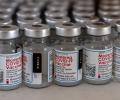
India's drug regulator Drugs Controller General of India has granted permission to Mumbai-based pharmaceutical company Cipla to import Moderna's COVID-19 vaccine for restricted emergency use in the country, official sources said on Tuesday.
An intranasal vaccine as a booster dose would be easier to administer in mass vaccination campaigns and has the potential to prevent transmission.

The approval by the Drugs Controller General of India (DCGI) was given on the basis of recommendations submitted by a COVID-19 subject expert committee (SEC) of the Central Drugs Standard Control Organisation (CDSCO).

Dinesh Thakur is famous for exposing Ranbaxy safety problems

The approval by the Drugs Controller General of India comes following recommendations by the Subject Expert Committee on COVID-19 of the Central Drugs Standard Control Organisation.
The new regime aims to bring in ease of doing business, as the NITI Aayog has proposed to do away with the need to have manufacturing licences to register medical devices or to get a certificate of compliance.
The central drug regulator has issued show cause notices to these two importers and asked to stop the import of rapid test kits based on the observation by the apex health research body Indian Council of Medical Research (ICMR).

The regulator had issued alerts in June and July of 2015.

Confirming the Drugs Controller General Of India (DCGI) approval, Serum Institute of India CEO Adar Poonawalla on Tuesday tweeted: '@SerumInstIndia's brand Covovax has completed bridging studies in India and has been granted Emergency Use Authorisation by DCGI for adults and for children above the age of 12. Younger age groups will follow shortly.'
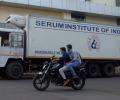
The Serum Institute of India (SII) had put in an application to the Drugs Controller General of India (DCGI) in October for grant of market authorisation of Covovax for restricted use in emergency situations.

As India holds its breath for the Covid vaccination to be begin, Sudhir Bisht provides a quick checklist of what you must know about the vaccines that will be administered to citizens.

Of the 289 faulty hip implant victims identified, 93 patients had undergone revision surgeries. The company, however, said it could reach only 67 patients and would pay Rs 25 lakh each to the other 26 as well after verifying their claims and if those patients approached J&J.

Currently, phase 2 and 3 clinical trials of the Oxford vaccine candidate is going on in the United Kingdom, phase 3 clinical trial in Brazil and phase 1 and 2 clinical trials in South Africa.

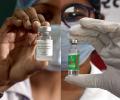
In a series of tweets after the Drugs Controller General of India (DCGI) approved Oxford's vaccine Covishield and Bharat Biotech's Covaxin for restricted emergency use, Modi said it will make every Indian proud that both the vaccines are made in India.

The Central Drugs Standard Control Organisation (CDSCO), the apex drug regulator, may soon ban the production and sale of three medicines in the country. The drugs - cisapride, phenylpropanolamine (PPA) and human placenta extracts - have been controversial medicines for their alleged adverse reactions for several years now.

The PM directed officials to evaluate various technology tools to ensure efficient and timely vaccination in due course of time. He also emphasised that detailed planning for such large scale vaccination should be undertaken immediately.

'Safety is my first priority.' 'I need to ensure that any drug or vaccine that our citizens get is first safe.'
The panel also recommended giving approval to Bharat Biotech for carrying out a study on interchangeability of its Covaxin and the under-trial adenoviral intranasal vaccine candidate BBV154, but asked the Hyderabad-based firm to remove the word "interchangeability" from the study title and submit a revised protocol for approval.
If the DCGI grants regular marketing authorisation, Covishied will be the second vaccine in the world to receive such approval.
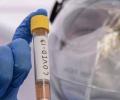
The Drug Controller General of India has sent a letter to the Glenmark seeking clarifications on pricing as well as claims of therapeutic efficacy. While Glenmark has claimed this drug is effective in comorbid conditions like diabetes, hypertension, according to protocol summary (of clinical trials) the trial was not designed to access the Fabiflu in comorbid conditions.
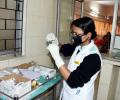
A joint venture of Synbiotics, a wholly owned subsidiary of Ambalal Sarabhai Enterprises (ASE), and CoDiagnostics, CoSara Diagnostics is the first and only Indian company so far to receive a licence from the Central Drugs Standard Control Organisation (CDSCO) to manufacture coronavirus diagnostic test kits.
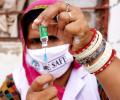
If things go according to plan, the vaccine would be available in the market by the end of this year.
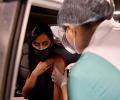
Hyderabad-based vaccine manufacturer Bharat Biotech, which is carrying out its phase 3 trial will publish the data in July following that the company will be applying for the full licensure of Covaxin.
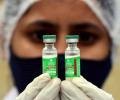
Serum Institute has the capacity to make 250 million doses of Covishield monthly.
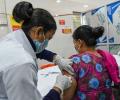
Covaxin is being developed by Bharat Biotech jointly with the Indian Council of Medical Research (ICMR)- National Institute of Virology (NIV). The Phase III human clinical trials of Covaxin began mid-November, targeted to be done in 26,000 volunteers and it is the country's first and only Phase III efficacy study for a COVID-19 vaccine, a press release from the vaccine maker said on Saturday night.

Senior Congress leader Anand Sharma on Sunday raised concerns over India's drugs regulator granting permission for restricted use of Bharat Biotech's COVID-19 vaccine and asked the government to explain why mandatory protocols and verification of data has been dispensed with.
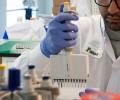
The vaccine candidate -- 'Covaxin' -- is being indigenously developed by the Bharat Biotech in collaboration with the Indian Council of Medical Research (ICMR).
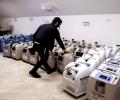
The government has capped the trade margin on oxygen concentrators at 70 per cent in order to keep in check the price of the much in demand critical life saving component amid the second wave of the coronavirus pandemic. The trade margin has been capped at 70 per cent on price to distributor level on oxygen concentrators. In an official release, the chemicals and fertilisers ministry said the decision has been taken in view of the extraordinary circumstances arising due to the pandemic which has resulted in volatility in Maximum Retail Prices (MRP) of oxygen concentrators.
An expert panel of India's Central Drug Authority on Tuesday recommended granting permission to Serum Institute of India (SII) for conducting phase 2/3 trials of Covid vaccine Covovax on children aged 2 to 17 years with certain conditions, official sources said.

According to sources, around 10 crore doses of the Sputnik V vaccine is likely to be imported for emergency use in the country in the next six to seven months.

Zydus plans to initiate the clinical trials of ZyCoV-D in July 2020 across multiple sites in India. In animal studies the vaccine was found to elicit a strong immune response in multiple animal species like mice, rats, guinea pigs and rabbits.
Gennova has also got permission for phase-2 and 3 clinical trials for its lyophilised mRNA vaccine for injection from the subject expert committee advising the Central Drugs Standards Control Organisation, reports Sohini Das.

This is apart from the requirement to stock hydroxychloroquine (200 mg) and Azithromycin (500 mg) tablets for patients requiring ICU management, asymptomatic healthcare workers and asymptomatic household contacts of positive cases.

Of the 137,000 drug government tested 345 turned out to be fake.

As India launches the world's most ambitious and biggest vaccination drive against COVID-19, the country will encounter the formidable challenge of rapidly scaling up distribution of the vaccines to secure immunity for its entire population, two prominent Indian scientists at World Health Organisation have said.

It said clinical trials of the drug 2-deoxy-D-glucose (2-DG) showed that it helps in faster recovery of hospitalised patients and reduces supplemental oxygen dependence.

More lucrative routinely prescribed drugs are at higher risk of failing quality standards

'Almost 70 per cent production time of a vaccine is dedicated to quality control, which is done through several hundred tests.'
Alkem Labs was issued drug alerts twice last year -- in June and July -- for its drug Glimekem.
