
Another maternal death has been reported at the Ballari Medical College and Research Centre (BMCRC), bringing the total number of such fatalities in the past month to five.
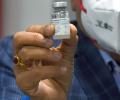
The Union health ministry on Thursday termed as 'misleading' and 'fallacious' media reports which claimed that regulatory approval for COVID-19 vaccine Covaxin was rushed due to political pressure.

They said after examining and analysing the adverse event reports, causal relationship and all related details shared by or to be shared by the WHO, the committee will advise and recommend further course of action to the Drugs Controller General of India (DCGI).

A probe has been initiated by India's drug regulator after the World Health Organisation (WHO) issued an alert saying cough syrups manufactured by an Indian firm could potentially be linked to the death of children in The Gambia, official sources said.
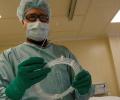
The transition of Class A and Class B medical device makers to the licensing regime by October 1 seems to be an uphill task with several small and medium manufacturers saying they are still awaiting the audit from the government authorities. If the licenses don't come through, either due to lack of audits or MSME units not clearing the audits, then a few thousand small-scale medical device units will face the issue of business continuity in three weeks. Class A medical devices are those with low to moderate risk to the patient or user (surgical dressings for example), while Class B medical devices refer to devices with moderate risks that require special controls (catheters for example).

India's drug regulator has initiated a probe and sought further details from the WHO after the global health body issued an alert that cough syrups manufactured by an Indian firm could potentially be linked to the death of children in Gambia.
The World Health Organisation on Friday said that it is in touch with the Uzbek authorities about the reported deaths of 18 children after consuming contaminated cough syrup made by Noida-based Marion Biotech.

A notification of the revised Schedule M rules by the Ministry of Health and Family Welfare has elicited mixed responses from the pharma sector and industry observers. While the industry has welcomed the revision of rules, several analysts said that implementation and compliance can become a challenge for smaller pharmaceutical companies. The Schedule M of the Drugs and Cosmetics Rules specifies the good manufacturing practices (GMPs), which aim to ensure quality of drugs made in the country.

After reports of contamination in cough syrups sent from the country, India is considering a system to test them before exporting. It is learnt that the Central Drugs Standard Control Organisation (CDSCO) has sent a proposal to the Union health ministry on this. The idea is to test the medicines at government labs before exporting.
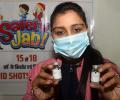
The company had in December said that the CDSCO had approved a 12-month shelf life for Covaxin, which was nine months earlier, Sohini Das reports.

The joint inspections is to ensure the safety, efficacy, and quality of drugs available in the country

Three employees of a Noida-based pharmaceutical firm, whose cough syrup is alleged to have led to the death of 18 children in Uzbekistan last year, were arrested on charges of manufacturing and sale of adulterated drugs, officials said.
In the letter, Somani said the samples of four made-in-India cough syrups linked to the deaths of 66 children in Gambia which were tested in government laboratory here were found to be complying with specifications and not to have been contaminated with DEG or EG according to the test reports.

A three-member team each from the Central Drugs Standard Control Organisation (CDSCO) and the State Drug Controller visited the plant in Tamil Nadu's Kancheepuram, 40 km from Chennai, on Friday after the company recalled the eye drop.
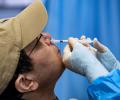
iNCOVACC is the world's first intranasal vaccine for COVID-19 to receive approval for the primary two-dose schedule, and as a heterologous booster dose.
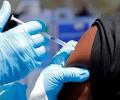
It has been approved by the European Medicines Agency for conditional marketing authorisation.
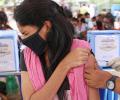
The DCGI's approval came following recommendation by the Subject Expert Committee of the Central Drugs Standard Control Organisation.
A team of central agencies and the Uttar Pradesh drug department had carried out an inspection at the firm's office in Noida on December 29 and taken six more samples for testing.

Samples of the cough syrup have been taken from the manufacturing premises in Noida and sent to the Regional Drugs Testing Laboratory (RDTL) in Chandigarh for testing, Mandaviya said.
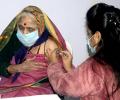
An expert panel of India's central drug authority on Wednesday recommended granting regular market approval to COVID vaccines Covishield and Covaxin for use in adult population subject to certain conditions, official sources said.
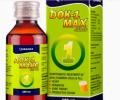
The Central Drugs Standard Control Organisation (CDSCO) has initiated a probe in connection with the death of 18 children in Uzbekistan allegedly linked to Marion Biotech.

The manufacturing licence of Noida-based pharmaceutical firm Marion Biotech has been cancelled by the Uttar Pradesh authorities, according to officials.

The announcement comes a day after the Subject Expert Committee (SEC) on COVID-19 of the CDSCO recommended granting emergency use authorisation (EUA) to the COVID-19 vaccines Covovax and Corbevax with certain conditions.

Covaxin is being indigenously developed by Bharat Biotech in collaboration with the Indian Council of Medical Research (ICMR).
The Subject Expert Committee on COVID-19 of the CDSCO on October 12 after deliberating Bharat Biotech's EUA application had recommended granting emergency use approval to Covaxin for use in the 12-18 years age group with certain conditions.
The move has come days after the state government announced to form a special investigation team to probe into the death of Disha Salian, the former manager of late actor Sushant Singh Rajput.
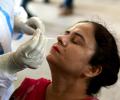
The Hyderabad-based firm completed clinical trials of the nasal vaccine with about 4,000 volunteers and there is no side effect or adverse reaction reported so far, company sources had said.

The show-cause notice dated February 8 by DCGI V G Somani cited a Delhi high court order dated December 12, 2018, which prohibits online sales of medicines without a licence.
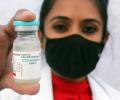
Nearly 50 million doses of Bharat Biotech's COVID-19 vaccine, Covaxin lying with the firm are set to expire early next year as there are no takers owing to poor demand, company sources said.

The antiviral drug may cost around Rs 55,000 for an 11-dose course, or Rs 5,000 per injection -- much less than the price of imports from Bangladesh, reports Sohini Das.
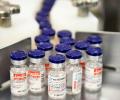
According to the recommendations of the Subject Expert Committee (SEC) meeting held on July 30, which have been approved by the Drugs Controller General of India (DCGI), Sputnik-Light is the same as the component-1 of Sputnik V and as its safety and immunogenicity data in the Indian population has already been generated in a trial here, there seems to be inadequate data and justification for conducting a separate, similar trial.
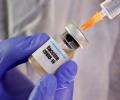
COVAXIN, developed by Hyderabad-based Bharat Biotech in collaboration with Indian Council of Medical Research and National Institute of Virology, has got the nod for human clinical trials from the Drug Controller General of India
The firm presented that Sputnik Light vaccine is approved in 29 countries, including Russia and Argentina.

Bharat Biotech applied to the Drugs Controller General of India (DCGI) seeking permission for conducting phase 1 and phase 2 clinical trials of the intranasal vaccine following which the subject expert committee of the CDSCO on Tuesday deliberated on the application and recommended granting permission for phase 1 trial.

The Pune-based Gennova Biopharmaceuticals has submitted phase 2 data of mRNA vaccine and has also completed the recruitment of phase 3 data.

A joint team of the state and the Centre inspected the unit and found 12 violations or deficiencies.
In a report submitted Monday to Rajya Sabha chairman and Vice President M Venkaiah Naidu, the Parliamentary Standing Committee on Home Affairs also said there was a need for a comprehensive public health law to keep a tab on private hospitals and check black-marketing of medicines.

The Pune-based vaccine major has entered into a collaboration with the University of Oxford and AstraZeneca to manufacture the vaccine.
Once the UK drug regulator gives its approval to the Oxford vaccine, the expert committee on COVID-19 at the Central Drugs Standard Control Organisation (CDSCO) will hold its meeting and thoroughly review the safety and immunogenicity data from the clinical evaluations conducted abroad and in India before granting any emergency authorisation for the vaccine here, official sources said.
An expert committee of the Central Drugs Standard Control Organisation (CDSCO) on Wednesday sought additional safety and efficacy data for COVID-19 vaccine candidates of Serum Institute and Bharat Biotech, after deliberating upon their applications seeking emergency use authorisation for the shots, official sources said.
