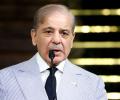
United States President Donald Trump is set to engage in high-stakes bilateral meetings on Thursday, including a closed-door session with Pakistan's Prime Minister Shehbaz Sharif in the Oval Office, according to Trump's public schedule released by the White House.

With a confident new generation of innovators, India now has the scale and self-belief to shape its own digital destiny marked by creation, observes Ajay Kumar chairman, UPSC.

US senators have alleged that TikTok, owned by the Chinese Communist Party, has interfered in elections of various countries, including India, and called for extending the deadline for a ban on the platform in the US. They applauded India's ban on the social media platform, citing concerns about Chinese propaganda and data harvesting. Lawmakers, including Democrats and Republicans, introduced legislation to delay the ban by 270 days, arguing it would allow for a more thorough review of the implications and potential alternatives to a ban. They also criticized the rushed nature of the ban and its potential impact on free speech and the livelihoods of American users.

TikTok credited Trump's intervention for providing "clarity and assurance" to its service providers, enabling the app's rapid return.
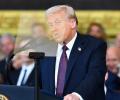
Donald Trump's exaggerated opinion of his dealmaking capacity can get him into trouble, observes R Sriram.

If completed, this deal would place OpenAI among the most valuable private companies globally, alongside Musk's SpaceX and ByteDance, the parent company of TikTok, according to The New York Times.
US President Donald Trump has signed an executive order extending the operations of TikTok, the Chinese-controlled video-sharing platform, by 75 days. Trump intends to pursue a resolution that protects national security while preserving the platform used by 170 million Americans. The order instructs the attorney general to refrain from enforcing a law that would have forced TikTok's parent company ByteDance to divest from the app or face a ban from US app stores. Trump cited the national security concerns posed by TikTok and the need to review sensitive intelligence related to these concerns. He also emphasized the importance of finding a resolution that protects national security without abruptly shutting down the platform.

Passed by the House by 352 to 65 votes, the bill now heads to the US Senate for it to be sent to the White House for the President to sign it into law.
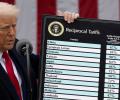
US President Donald Trump has proposed a deal to China that would see the sale of TikTok's US operations to an American buyer in exchange for a reduction in tariffs on Chinese exports to the US. The proposal comes amid a trade war between the two countries and follows China's retaliation of Trump's tariffs on Chinese goods. Trump has also said that tariffs are a powerful economic tool and that he is determined to ensure fair trade between the US and China.

United States President-elect Donald Trump has invited Chinese President Xi Jinping to attend his January 20 inauguration, CBS News reported citing sources.
TikTok's app effectively shut down in the US, just hours before a law banning the popular video-sharing platform was set to go into effect. The app was shut down on Saturday, displaying a message that the app "isn't available right now," but expects resolution under President-elect Trump. The Supreme Court on Friday unanimously upheld the divest-or-ban law, which gave TikTok's China-based parent company ByteDance until Sunday to divest from the app. President Trump said Saturday that he would most likely give TikTok a 90-day extension. Following Friday's Supreme Court decision, TikTok CEO Shou Zi Chew thanked the president-elect for his commitment to finding a solution to keep the app accessible in the US.
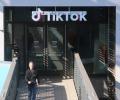
The US Supreme Court has upheld a law requiring TikTok's China-based parent company to divest from the app, paving the way for the popular platform to be banned from the US starting Sunday. The court's decision was unanimous, with the justices citing national security concerns related to TikTok's data collection practices and relationship with a foreign adversary. While existing users may still access the app, new users will be unable to download it and updates will no longer be available. The decision comes as the Biden administration prepares to hand over the reins to the incoming Trump administration, which is expected to review the situation before making a final determination on TikTok's fate.
Trump signed executive orders on August 6 that would prevent TikTok and WeChat from operating in the US as they threatened America's national security and economy.

Chinese tech unicorn ByteDance co-founder billionaire Zhang Yiming on Thursday announced that he will step down as CEO, in a surprise move that signalled a major leadership shake-up at the nine year-old technology firm which created popular global short-video app TikTok. Zhang, 38, who is one of China's wealthiest entrepreneurs, said he is ready to step down after nearly a decade of running the world's largest unicorn, becoming the latest among the country's technology founders to quit in their prime. Zhang will step down from his role as CEO of the Beijing-based ByteDance, giving up his day-to-day responsibilities to "be more impactful on longer-term initiatives," the Hong Kong-based South China Morning Post quoted the company announcement on Thursday.

The company has set an internal target of 6-18 months to set up the data centre. The plan is part of the $1 billion ByteDance has recently committed to the Indian market over the next three years.
According to a source at Bytedance, the company held a town hall on Wednesday where it communicated news about the closure of India business to its employees.
'The loss of Chinese internet company Byte Dance, mother company of TikTok, could be as high as USD 6 billion after the Indian government banned 59 Chinese apps, including TikTok following deadly border clash between India and Chinese troops last month,' reported Global Times citing sources.

Technology giant Microsoft is in talks with TikTok's parent company ByteDance to buy its US operation.

Both its short video-sharing apps have ranked as the top two breakout social apps of 2019 in India.
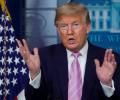
India has banned as many as 106 Chinese apps, including TikTok, a move welcomed by both the Trump administration and the US lawmakers.

Post elections, the company has been making frequent visits to various ministries, including the IT ministry, commerce ministry, as well as different agencies to get the hang of things in the administration.
TikTok has stressed that its US user data is already stored on US-based servers and backed up in Singapore, and is therefore not subject to Chinese law as some US officials have feared.
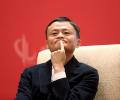
Jack Ma who had five years ago said he was inspired and excited by "Make in India" possibly understood the essence of the signature campaign better than some others and decided to stay away from India other than as an investor, says Nivedita Mookerji.

According to experts, the banning of the apps has created negative sentiments and reduced the confidence among the Chinese investors to invest in India.
Trump said the spread in the United States of mobile applications developed and owned by the companies in China continues to threaten the national security, foreign policy, and economy of the country.
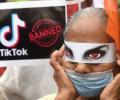
The ban in India would hit Chinese internet companies that were making headway in the world's fastest-growing mobile market.

The app, which has close to 1 million users per day, its lawyer, is losing close to Rs 4.5 crore in revenues every day.
The banned Chinese apps, which include TikTok, Shareit and UC Browser, earn revenue mainly from online advertisements, subscriptions, and commissions for selling products. India is the biggest driver of these Chinese apps due to the population. The ban on the 59 Chinese apps will negatively affect the valuations of the companies, especially those going for IPO.
Meanwhile, TikTok said it has faith in the Indian judicial system.
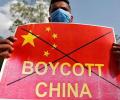
The Indian authorities feared that these apps were transferring consumer data to locations outside the country, especially China, in an unauthorised and surreptitious manner. With servers in India, the data of local consumers would be stored in the country.
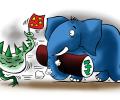
The Chinese government is imposing severe restrictions on their tech companies - whether it is on data security, marketing practices or floating an IPO. Should this be music to the ears of Indian start-ups and home-grown private equity (PE) funds? Ask Indian start-ups and the answer is a resounding "yes".
Tiktok and Helo in a joint statement said they have plans to invest $1 billion over the period of next three years to develop technology infrastructure and owns responsibility of local community.

The deal follows Facebook picking up a 9.99 per cent stake in the firm that houses India's youngest but largest telecom firm on April 22 for Rs 43,574 crore. Within days of that deal, Silver Lake -- the world's largest tech investor -- bought a 1.15 per cent stake in Jio Platforms for Rs 5,665.75 crore. On May 8, US-based Vista Equity Partners bought 2.32 per cent stake in Jio Platforms for Rs 11,367 crore.

Summary of sports events and persons who made news on Wednesday.

Diverse marquee investors are becoming long-term shareholders of Jio Platforms because of a unique set of technologies and platforms under one entity.

This is the second investment by General Atlantic in a subsidiary of Reliance Industries, following a Rs 6,598.38 crore investment in Jio Platforms announced earlier this year.
Madras HC said the platform should not be used to host obscene videos.

Support from the committee gives Xi an indefinite extension on the reins of power, which will surely result in hawkish and insular policies. It does not bode well for relations with the USA, or with anyone else who does not bow the knee to Beijing, for that matter.

Tamil Nadu, Telangana, Maharashtra, West Bengal and Gujarat are alarmed by the rising use of the app in smaller towns and hinterland, where it is increasingly being used for spreading hate messages and child pornography.

The idea behind starting Chingari is not to build a TikTok clone but to position itself as a super app for India like WeChat.
