
Riteish Deshmukh brings earnestness to the role, but the gravitas of Chhatrapati Shivaji Maharaj calls for a towering presence, resonant voice and sharp, piercing gaze, which are somewhat missing in Raja Shivaji, notes Mayur Sanap.

'Creating a film on Maharaj is beyond my capability. I believe that even if the finest directors in the world came together, no single film could ever truly do justice to our Maharaj.'

The 'wagh nakh' or tiger claw-shaped weapon used by Chhatrapati Shivaji Maharaj was brought to Mumbai from a London museum on Wednesday, state Culture Minister Sudhir Mungantiwar said.

Nobody has claimed that the wagh nakh being brought to the state from London was used by Chhatrapati Shivaji Maharaj, Maharashtra minister Sudhir Mungantiwar told the legislative assembly.

'In a war of guerrilla resistance from 1682 to 1707, the Marathas destroyed the foundations of the Mughal empire.' 'Shivaji was dead, but his example and ideals survived and were the main source for inspiration for the Marathas in their desperate struggle with the mighty Mughal empire,' notes Colonel Anil A Athale (retd), the well known military historian.
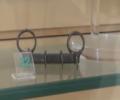
The wagh nakh is likely to be housed in the Chhatrapati Shivaji Sanghralaya (museum) in south Mumbai.
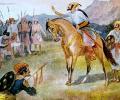
'Shivaji and Sambhaji followed the gospel of humanity. 'They did not discriminate based on religion, caste, or colour.' 'That is the beauty of Shivaji and Sambhaji's Hindvi Swaraj.'
In 1666, Shivaji Maharaj and his son Sambhaji escaped from the Agra Fort, one of the most miraculous escapes in India's history.
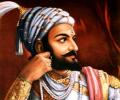
Shivaji made sure that his soldiers respected the sanctity of mosques and the Quran Sharif to ensure that his fight against the Mughals did not become fight against Islam, explains Colonel Anil A Athale (retd).

The Battle of Pratapgad can be termed the turning point in Indian history as it interrupted the continuous chain of Muslim successes on the battlefield.
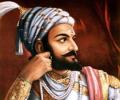
'Shivaji was among a handful of Indian rulers to realise the importance of sea power... Not much attention is paid to his remarkable achievement: Building a modern navy and the revival of Indian maritime power.'

The temple complex at Aihole offers a fascinating insight into the history of Chalukyan temple architecture.
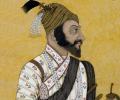
'Aurangzeb, who had destroyed the Hindu temples of Mathura and Kashi and many others in the north, was a very different ruler when he came to Maharashtra.' 'He did not touch a single temple in Maharashtra.' 'It was possibly the greatest triumph of Shivaji's statesmanship,' notes Colonel Anil A Athale (retd), the well known military historian.
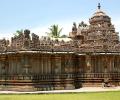
Mumbai's CST, Halebidu and Amruthapura. Sudha Murty lists her selection of India's beautiful monuments.

'We are dealing with a size of the world that equaled England and France combined. We are talking about 250 years of history.' Sultans of Deccan India, 1500-1700: Opulence and Fantasy -- a first of its kind exhibition anywhere in the world -- opened at the Met, April 20. Aseem Chhabra spoke to Navina Haykel, the curator of the show.
