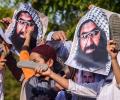
'Jaish e Mohammed has been allowed to resurge through supported terror actions in J&K in a deliberate tactic by Pakistan, if only to reduce the international pressure on the Lashkar e Taiba leadership after 26/11,' points out Rana Banerji, who headed the Pakistan desk at the Research and Analysis Wing, India's external intelligence agency.

This will be the fifth time that Prime Minister Sharif will pick the top commander of the country's nearly 550,000 ground troops.
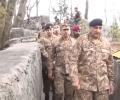
General Bajwa gets inputs from his senior officers, but he has the final word, notes Rana Banerji, who headed the Pakistan desk at the Research and Analysis Wing, India's external intelligence agency.

In yet another arrest in the Udhampur attack, National Investigation Agency on Tuesday booked an alleged overground worker of banned LeT outfit who had transported four terrorists from one place in Kashmir to another after they infiltrated into the Valley.
He said the JeM handler, who is in his late 20s, was in the tribal area of Pakistan when he communicated around 18 times with the terrorists.

The new ISI chief Lt Gen Mukhtar possesses a vast experience in the field of intelligence and has headed the counter-terrorism wing of the spy agency in Islamabad. He was commissioned in the Armoured Corps regiment in 1983.

What India has failed to acknowledge is that sub-conventional war is the name of the game and irregular forces have emerged with greater strategic value over conventional and even nuclear forces, and reliance purely on conventional force and diplomacy is grossly inadequate, says Lt Gen Prakash Katoch (retired).

The anti-terror probe agency's chief Sharad Kumar said help of Pakistan will be sought in solving the Pathankot terror attack case.

Top Lashkar-e-Tayiba commander Abu Qasim was gunned down on Thursday in Kashmir.

The NIA chief refrained from naming the terror group responsible for the attack.

'ISI-backed jihadi groups like the Jaish-e-Mohammed and Lashkar-e-Tayiba are now prepared to cross the International Border and attack targets in Punjab at will,' says Ambassador G Parthasarathy, India's former high commissioner to Pakistan.

It is because of the feared domestic backlash that the Modi government is now stepping up pressure on Pakistan to accommodate Indian interests.

He also said it was for India to decide on dates for Foreign Secretary-level talks, postponed in the wake of the terror strike.
'A conventional war is not in fashion today and not seen as being able to deliver the objective.' 'Perhaps surgical strikes that are deeper, this time not on Pakistan's terrorist facilities, but on Pakistan army facilities.' 'The nation has to be prepared for losses.' 'War is not something that can be pussyfooted around.' 'If we go for limited number of posts in Kashmir, these are very difficult posts to capture and very difficult operations.' 'Be prepared for 200 to 300 killed.'

Nawaz Sharif's appointment of a new army chief will influence India-Pakistan relations

It was never the quality of the CV that defined an incumbent's performance or legacy.

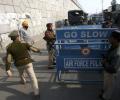
Intermittent blasts and exchange of fire to neutralise two more terrorists continued on Sunday night at Air Force Station in Pathankot, Punjab where four terrorists were killed, seven security men lost their lives and 17 persons were injured in the over 40-hour-long operation.

General Qamar Bajwa, his colleagues say, is a firm opponent of extremism and terrorism. He may prove even more forceful in the fight against terrorism than his predecessor, who is credited with launching Operation Zarb-i-Azb, which helped lower the frequency of terrorist attacks.
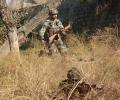
'Jihadi outfits backed by the ISI are now prepared to attack targets not just in J&K, but also in Punjab. This signals an escalation in the range and scope of cross-border terrorism, which cannot be ignored,' says Ambassador G Parthasarthy, former high commissioner to Pakistan.

A fleet of eight JF-17 Thunder fighter jets -- jointly made by the two countries -- will escort the Chinese president once his plane enters the Pakistani airspace.

With Pakistan's powerful army chief Gen Ashfaq Parvez Kayani's term coming to an end in November, names of top generals who are likely to succeed him are being discussed in the political circles and in the corridors of power.
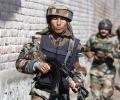
'After General Raheel Sharif took on the Tehrik-e-Taliban Pakistan, some sections of the military establishment may have felt unease as to whether the crackdown could be extended against friendlier 'non-State' actors like the Lashkar-e-Tayiba.'
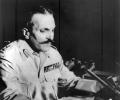
29 years ago this August, Pakistan's dictator, the general who made jihad part of Pakistani State policy, died in a mysterious air crash. Did the KGB, the then USSR's dreaded espionage agency, assassinate Zia-ul Haq? Was India's RA&W responsible for blowing Zia's military aircraft out of the skies? Was it Zia's many enemies in Pakistan's military? Was it a box of mangoes as Mohammad Hanif speculated in his fascinating novel about Zia's death? Or was the assassin someone else?
29 years ago this August, Pakistan's dictator, the general who made jihad part of Pakistani State policy, died in a mysterious air crash. Did the KGB, the then USSR's dreaded espionage agency, assassinate Zia-ul Haq? Was India's RA&W responsible for blowing Zia's military aircraft out of the skies? Was it Zia's many enemies in Pakistan's military? Was it a box of mangoes as Mohammad Hanif speculated in his fascinating novel about Zia's death? Or was the assassin someone else?
29 years ago this August, Pakistan's dictator, the general who made jihad part of Pakistani State policy, died in a mysterious air crash. Did the KGB, the then USSR's dreaded espionage agency, assassinate Zia-ul Haq? Was India's RA&W responsible for blowing Zia's military aircraft out of the skies? Was it Zia's many enemies in Pakistan's military? Was it a box of mangoes as Mohammad Hanif speculated in his fascinating novel about Zia's death? Or was the assassin someone else?

The British administration ignored the mounting evidence of violence between Hindus and Muslims... Military historian Barney White-Spunner traces the countdown to the tragedy in his book, Partition.
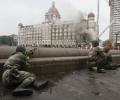
Through its early days to the 1980s, Pakistan sought to expand its sphere of Islamic influence through Afghanistan to Central Asia and got Pakistani citizens recruited in the Afghan government institutions in the 1990s when the Taliban were power. Now, it is looking eastward through India to Bangladesh and Myanmar to establish an imaginary caliphate.

'If you destroy the assets in Pathankot, you degrade the combat potential of India; you degrade the war potential of India.'
