
Prime Minister Manmohan Singh returned to New Delhi on Saturday after a four-day visit to Japan during which he held talks with his Japanese counterpart Shinzo Abe on various issues
That Japan put high marquee value on the prime minister's visit is evident from the fact that Dr Singh has been invited to address a joint session of the Diet, Japanese Parliament.

'Chinese dominance reduces India's influence in South and Southeast Asia and erodes its status globally.' 'For a country striving to create a multipolar Asia, it would be a serious setback,' says Brigadier S K Chatterji (retd).

"We will be doing something very rapidly to do with the additional security for our country. You'll be seeing that sometime next week," Trump said.

After Pyongyang tests a missile potentially capable of reaching the US, Dr Rajaram Panda explores the realistic -- and peaceful -- options before Donald Trump and the international community at large.

Pressure had been building on the International Olympic Committee (IOC) and its president, Thomas Bach, with some athletes and sporting bodies angry that a seemingly inevitable decision had taken so long.
Indian businessmen on the forum would also include Baba Kalyani of Bharat Forge, Sunil Kant Munjal of Hero Honda, Nandan Nilekani of Infosys, Vikram Kirloskar of Toyota Kirloskar and Deepak Parekh of HDFC.
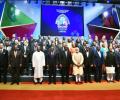
'During my visit to Japan and after meeting with Prime Minister (Shinzo) Abe, I gladly recall that in our joint declaration we mentioned Asia-Africa growth corridor and proposed further conversation with our brothers and sisters of Africa,' Prime Minister Modi said.

India has reportedly declined a request from the United States seeking a no fly-zone over Rajpath during President Barack Obama's visit for the Republic Day.
Prime Minister Manmohan Singh will seek more investments from Japanese companies into India during his four-day visit to Japan.
Defence and security cooperation, short of any military alliance, will also high be on agenda of talks that Singh will have with Japanese Prime Minister Shinzo Abe on Friday.
Cooperation in civil nuclear energy and comprehensive economic engagement will be high on Prime Minister Manmohan Singh's agenda as he embarks on a four-day trip to Japan from Wednesday.
Ways to strengthen military ties and sale of Japanese amphibious aircraft to Indian armed forces are expected to be discussed during the meeting of the Defence Ministers of the two countries in New Delhi in New Delhi.

The G20 chair has suggested three areas for the talks in Argentina - the future of work, infrastructure for development and a sustainable food future, areas where India has a lot at stake.

The former World heavyweight boxing champion passed away on June 3.
Bush Sr is in Japan for business meetings.
It has been clear, these past three days, that the Indian delegation had, while following the economic agenda, in parallel made a push for a positive statement from Japan on the nuclear question.
The joint statement issued by Dr Singh and PM Abe in Tokyo.

Here's a collection of some of the best photos, taken last week, from around the globe.
Dr Singh was presented a guard of honour and was received by Japanese Prime Minister Shinzo Abe at Kantei, his official residence.

The PM will have an audience with the Emperor of Japan and hold the annual summit meeting with his Japanese counterpart Shinzo Abe that could see a civil nuclear cooperation pact being inked.

South Korea Defense Ministry spokesman Kwon Ki-joon, said that "several projectiles" flew about 1,000 kilometers.

Rediff readers tell us what their first salary was and what it meant to them at the time.
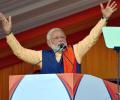
Addressing a massive public rally to celebrate the signing of the accord on January 27 that is expected to bring lasting peace to the troubled state, Modi said now the time was to work together for peace and development of the North-East.

The long-reigning monarch is the first to abdicate his throne in nearly 200 years.

'Like Nehru, too, Modi has found dealing with Beijing more and more difficult and has adopted an increasingly assertive approach towards managing India's northern neighbour.'

The US president said the summit will be more than a photo-op.

Multiple US and N Korean teams are holding simultaneous meetings ahead of the Singapore Summit.
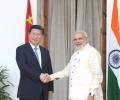
The Modi-Xi meeting assumes significance as India-China relations have followed a southward trajectory over contentious issues.
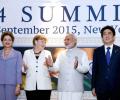
Hosting a summit of leaders of Germany, Japan and Brazil under the G-4 format, the PM said the UNSC "must include the world's largest democracies, major locomotives of the global economy, and voices from all the major continents" to carry "greater credibility and legitimacy".
American soldiers had severely beaten up a captured Iraqi major general and stuffed him in a sleeping bag where he choked to death, classified documents detailing brutal tactics used to extract confessions from captured prisoners have revealed.\n\n
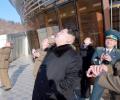
While trying to persuade North Korea to give up its provocative actions, engaging China is the first hurdle that world leaders will have to deal with, says Rajaram Panda.

A senior US official said that the plan of establishing OBOR alternative was still 'nascent'.

In 2013, India had displayed the Inter Continental Ballistic Missile Agni V during the Republic Day Parade. The chief guest at that time was Bhutanese King Jigme Khesar Namgyel Wangchuck.

The next round of bad news could come from Europe, where banks in a number of economies such as Italy, Portugal and Greece are sitting on mountains of bad loans.
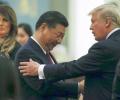
'While many Chinese policy makers dismiss the political, economic and technological component of US-India relations, they express caution on the defence-related ties which also happens to be a major driver in US-India relations,' explains China expert Srikanth Kondapalli.
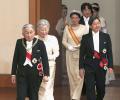
The emperor has no political power, yet he enjoys a unique place in Japanese society, notes Dr Rajaram Panda.
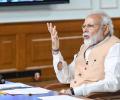
Addressing his council of ministers in a video conference, Modi asked them to prepare business continuity plans to fight the economic impact of COVID-19 on a war footing, but also asserted that this crisis is an opportunity to boost the 'Make-in-India' initiative and reduce dependence on other countries.

The foundation stone of the dam was laid on April 5, 1961 by the country's first prime minister Jawaharlal Nehru. However, it took 56 years to complete its construction.
