
A new study by The Energy & Climate Initiative Society (ENCIS) predicts that AI adoption in India's power generation sector will surge from 35% to 65% by 2030, becoming a core operational capability. The study highlights that nearly seven out of ten professionals see power generation as offering the best opportunity for efficiency gains through AI, driven by India's expanding digital infrastructure and significant investments from energy giants. Predictive asset management and proactive maintenance are identified as key areas for AI application, with efficiency being the primary driver for AI investments.

Shiprocket plans to allocate a significant portion of its IPO proceeds towards artificial intelligence (AI), aiming to evolve its e-commerce enablement platform into a comprehensive operating system for merchants, enabling conversational commands and reducing manual tasks.

French football champions Paris Saint-Germain (PSG) have announced a partnership with Google, making Google Gemini their official AI assistant and Google Pixel their official smartphone, with plans for a Google space at Parc des Princes stadium.

A PwC India report highlights that the competitiveness of India's industrial manufacturing sector hinges on the seamless integration of Artificial Intelligence (AI) into business strategies and operations. The report indicates that a significant majority of Indian manufacturers view AI as crucial for achieving strategic goals and are accelerating automation across various functions to build intelligent enterprises and gain sustainable competitive advantage.

IIT Madras's Centre of Excellence for Road Safety has organised its first international hackathon, focusing on AI in road safety. The event brought together participants from India and other BIMSTEC nations to develop data-driven, technology-enabled solutions for the region, which faces a high number of road fatalities annually. The hackathon aims to foster collaboration among governments, academic institutions, and regional bodies to address this critical issue.

The aim is to win over the country's enterprises, developers and startups as AI systems shift from answering questions to autonomously executing tasks.

The Delhi High Court has dismissed a lawsuit by news agency ANI against OpenAI, ruling that ChatGPT's use of copyrighted material for training large language models (LLMs) constitutes fair dealing under the Copyrights Act. The court emphasised that restraining AI development would be detrimental to India's growth in the field and public interest.

Sridhar Vembu, Zoho Corporation Founder, states that the IT industry is not generating new jobs due to funds being redirected towards the escalating costs of AI and data centre infrastructure. He highlights a structural economic challenge where advanced technology, while making goods affordable, creates income distribution issues and suggests that solutions like Universal Basic Income might gain traction, especially in countries like India.

Azim Premji's private investment firm, Premji Invest, has quietly built a formidable portfolio of 11 AI startups, primarily in the US, with a combined valuation of $43 billion. The firm has participated in 19 funding rounds since 2021, with a notable focus on US-based companies, many of which were founded by Indian entrepreneurs.

Dr Lovi Raj Gupta, pro vice-chancellor, Lovely Professional University, explains how aspiring professionals can equip themselves for a competitive AI-driven job market.
The HUMAIN AI Literacy Mission (HAILM) has been launched in India to integrate structured artificial intelligence education into schools nationwide. The initiative provides an age-appropriate AI curriculum for Classes 3-12, teacher training, and digital learning resources, aiming to equip students and educators with responsible AI understanding.

Delhi Police are investigating claims that protesters involved in the July 20 "Chalo Sansad" demonstration used AI tools to learn methods for countering police crowd-control measures, such as using wet jute bags against tear gas. The probe also covers the alleged distribution of protective gear and the involvement of individuals with prior criminal records, as police analyse digital and other evidence to establish the sequence of events and identify those responsible for the violence.
High-performance computing server maker Netweb Technologies reported a more than twofold increase in net profit to Rs 85.32 crore for the first quarter ended June 30, 2026. This significant growth was primarily driven by its AI Systems segment, which contributed over 62% of the revenue. The company also saw its revenue from operations more than double to Rs 819.6 crore, reflecting strong demand and disciplined execution, with a robust order book of Rs 2,507 crore.
Researchers have developed an AI-based approach to generate detailed maps highlighting differences in how distinct parts of the brain age. This new model reveals that not all brain regions age at the same rate, with frontal and temporal lobes appearing biologically older. The study also links these regional ageing patterns to cognitive function and neurodegeneration, particularly in Alzheimer's disease.

Chief Justice of India Surya Kant highlighted the rapid integration of Artificial Intelligence into arbitration practices, expressing concerns about its accuracy, authenticity, and ethical use. He stressed the need for mandatory disclosure when generative AI is used in preparing legal documents and reports, advocating for shared standards to manage deepfakes and AI-generated material. The CJI also encouraged embracing AI for efficiency in tasks like e-discovery while preserving core arbitration principles.
Microsoft has officially launched its fourth cloud region in India, located in Hyderabad, as part of its USD 20.5 billion investment in the country's digital and AI infrastructure. This new facility, which became available on August 6, features zero-water cooling technology and aims to enhance capacity and resilience for organisations in India and Asia, supporting the nation's rapid digital growth and projected increase in data centre capacity.
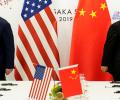
Top US and Chinese officials, including Vice Premier He Lifeng and Treasury Secretary Scott Bessent, held "candid, in-depth and constructive" talks in New York on economic and trade issues, with a specific focus on artificial intelligence. These discussions precede Chinese President Xi Jinping's anticipated visit to Washington and occur amidst new US sanctions targeting countries purchasing Russian oil and gas, and the US unveiling an "AI Force."
A joint report by Deloitte India and FICCI projects India's consumer economy to reach USD 1.9 trillion by 2030. This growth will be fuelled by rapid AI adoption, evolving consumer preferences, and new commerce models like e-commerce and quick commerce. India leads in AI adoption among top countries, with businesses leveraging it for engagement, innovation, and forecasting. The report also highlights the emergence of a new Indian consumer seeking convenience and transparency, and identifies key trends shaping FMCG, retail, and e-commerce sectors.
A three-day 'AI Champions for Digital Governance' programme has commenced in New Delhi, hosted by ITDC, SCOPE, and LBSNAA. The initiative aims to train senior leadership and operational teams in applying artificial intelligence within public sector organisations, aligning with the IndiaAI Mission. Experts highlighted AI's role in improving efficiency, productivity, and public service delivery, while also emphasising responsible adoption and data quality. The programme seeks to build an AI-ready nation and contribute to India's vision of future-ready governance systems.
A three-day 'AI Champions for Digital Governance' programme has commenced in New Delhi, hosted by ITDC, SCOPE, and LBSNAA. The initiative aims to train senior leadership and operational teams in applying artificial intelligence within public sector organisations, aligning with the IndiaAI Mission. Experts highlighted AI's role in improving efficiency, productivity, and public service delivery, while also emphasising responsible adoption and data quality. The programme seeks to build an AI-ready nation and contribute to India's vision of future-ready governance systems.

Indian-origin tech executive Uday Ruddaraju has been appointed Chief Technology Officer, Compute at OpenAI, a year after leaving Elon Musk's xAI. Ruddaraju, an alumnus of Hyderabad's Chaitanya Bharathi Institute of Technology, announced his new role on LinkedIn, highlighting OpenAI's mission to build the world's largest compute footprint for frontier AI.

Climate scientist Tapio Schneider advocates for expanding early warning systems beyond rainfall events to include other disaster triggers like flash floods, citing the recent Nepal floods. He highlights the inevitability of 1.5 degrees Celsius global warming and discusses the role of advanced climate modelling and AI in improving predictions and research, particularly for regions like India.

Karnataka Chief Minister D K Shivakumar announced the establishment of India's first government-driven Artificial Intelligence University and an AI Hub in Bengaluru. This initiative aims to position Karnataka as a global leader in responsible AI innovation, fostering talent, research, and collaboration. The state seeks to become an AI-native state, leveraging AI to improve governance and daily life across various sectors.
Global semiconductor giant AMD projects the overall market for compute infrastructure, driven by artificial intelligence, to reach USD 2 trillion by 2030 from USD 365 billion in 2025. The company unveiled new products and its Helios AI infrastructure, emphasising an open ecosystem and significant performance gains over competitors, with India playing a key role in its global rollout.
Global semiconductor giant AMD projects the overall market for compute infrastructure, driven by artificial intelligence, to reach USD 2 trillion by 2030 from USD 365 billion in 2025. The company unveiled new products and its Helios AI infrastructure, emphasising an open ecosystem and significant performance gains over competitors, with India playing a key role in its global rollout.

Christopher Wood, global head of equity strategy at Jefferies, warns that cheaper Chinese artificial intelligence (AI) models could lead to 'massive capital destruction' in US markets, highlighting the rapid growth of Chinese LLMs and the increasing debt funding for AI capex in the US.

Chinese President Xi Jinping called for global collaboration in artificial intelligence development, emphasising a "symphony of global collaboration" over a "solo performance" by any single nation. Speaking at the World Artificial Intelligence Conference in Shanghai, Xi highlighted the need for ethical AI governance, shared prosperity, and addressing challenges like the widening digital divide. He also announced China's commitment to support developing countries with 5,000 AI research projects and training programmes. The event also saw 29 countries sign an agreement to establish the World Artificial Intelligence Cooperation Organisation (WAICO) in Shanghai.

The data may include details of foreign bank accounts, investment accounts, certain financial investments, interest income, dividends and other specified financial income held by Indian tax residents abroad.

Union Minister Piyush Goyal has filed a police complaint after an AI-generated deepfake video, maliciously altering his remarks, surfaced on social media. The video falsely depicted him making threatening statements against students protesting the NEET examination. Government sources confirm many related links have been taken down, and Goyal has warned of strict legal action against those involved in its creation and dissemination.

IT services giant Wipro has launched an Applied AI Centre of Excellence (CoE) in Bengaluru, focusing on Anthropic's Claude models. This initiative aims to accelerate enterprise AI adoption, train 10,000 experts, and integrate AI into core business workflows and Wipro's internal operations.

'At the end of the day, it is just another technology produced by the human mind.'

GenAI recorded the widest talent gap, followed by AI deployment engineering (72.4 per cent), AI governance (70 per cent), and MLOps (68 per cent).

Uttar Pradesh authorities have implemented extensive security and logistical measures for the annual Kanwar Yatra, which began on Thursday and concludes on August 11. These include AI-enabled surveillance, additional security personnel, medical camps, dedicated control rooms, and traffic diversions, all aimed at ensuring a "zero incidents and zero accidents" pilgrimage for lakhs of devotees.

The Federation of Indian Pilots (FIP) has urged India's Aircraft Accident Investigation Bureau (AAIB) to conduct a comprehensive evaluation of the Boeing 787's electrical systems during its probe into the fatal Air India crash of June 2025. This call follows concerns raised by the Foundation of Aviation Safety regarding chronic system failures and the central role of electrical architecture in the B787 design. The crash, involving a Dreamliner VT-ANB, killed 260 people, and FIP emphasizes the need for detailed examination of all electrical and electronically controlled systems.

Chinese President Xi Jinping is set to visit the United States from September 23 to 25 for summit talks with US President Donald Trump, with discussions expected to cover critical economic and trade issues, including AI, and the recently signed US sanctions law targeting countries buying Russian oil and gas.

'The government has to act as one unit since the threat from these newer models will soon scale up.'
Bengaluru-based Remidio Innovative Solutions has secured a patent from the Japan Patent Office for its deep learning system that automates retinal image capture. This new patent enhances their existing intellectual property in Japan, strengthening their integrated AI platform and making retinal screening more accessible and cost-effective.

Wipro Executive Chairman Rishad Premji announced that clients are now integrating Artificial Intelligence (AI) into their core business processes, moving past initial pilot projects. Speaking at the company's AGM, Premji highlighted AI's role in driving innovation, efficiency, and growth, and noted Wipro's internal AI adoption has significantly streamlined operations.

Personality rights violations are increasingly being used as vehicles for financial fraud, with unsuspecting consumers misled by fabricated endorsements.
Chinese President Xi Jinping has called for global collaboration in Artificial Intelligence development, stating it should be a "symphony" rather than a "solo performance." His remarks came at the World Artificial Intelligence Conference (WAIC) in Shanghai, where 29 countries also signed an agreement to establish the World Artificial Intelligence Cooperation Organisation (WAICO), an independent intergovernmental body headquartered in Shanghai. China also pledged 5,000 AI research projects and training for developing nations.
