
'Refiners may soon be forced to adjust operations, curtailing runs as product exports stall and directing output solely to domestic markets.'
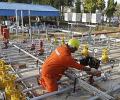
Ongoing strategic investment into assets abroad, alongside gas purchases being made by India, will soon allow the country to access as much gas as it needs, Petroleum and Natural Gas Minister Hardeep Singh Puri said on the sidelines of India Energy Week (IEW 2025).

After dropping a Rs 5,000 crore plan to fill parts of strategic oil storages, the government will lease out space in the underground rock caverns to domestic and international firms to store oil, a top executive said on Tuesday. India Strategic Petroleum Reserve Ltd has built underground storages at Visakhapatnam in Andhra Pradesh and Mangalore and Padur in Karnataka to store 5.33 million tonnes of oil that can be used in any emergency situation like supply disruption or war. UAE's Abu Dhabi National Oil Company (Adnoc) has already hired half of the 2.5 million tonnes storage capacity at Padur and 1.5 million tonnes facility at Mangalore.

State-owned Indian Strategic Petroleum Reserves Ltd (ISPRL), which operates India's strategic crude oil storage, will make awards by December to lease around 1 million tons of crude oil storage space (7.3 million barrels) at two of the country's three existing Strategic Petroleum Reserves (SPRs), around a fifth of the total SPR capacity. This will enable the refilling of crude caverns even as escalating hostilities in the Gulf threaten disruptions in crude supplies, two industry sources said.

While most analysts are expecting poor results from oil marketing companies (OMCs) in the first quarter of 2024-25 (Q1FY25) and even in the first half (H1) of FY25, GAIL (India) could be an outlier. Upstream producers, Oil and Natural Gas Corporation (ONGC) and Oil India (OIL) could do well due to strong crude and gas prices, but refiners are likely to see weak margins and the impact of frozen prices during the election period will also be negative.

Billionaire Mukesh Ambani's Reliance Industries has signed a pact to invest an undisclosed amount in a giant petrochemical hub being built in the UAE. The oil-to-telecom conglomerate will join the recently-formed Ta'ziz joint venture of Abu Dhabi state energy giant Adnoc and state holding company ADQ for developing the Ruwais Derivatives Park in western Abu Dhabi. A company statement said an agreement has been signed for Reliance to invest in the project but did not give details. Unconfirmed reports put the investment at about $1.5 billion.

India is expected to ramp up its purchase of crude oil from the United Arab Emirates (UAE) in the coming months following discussions between the two countries on the sidelines of the ongoing COP28 summit in Dubai, multiple sources in the know said. The UAE has historically been India's third-largest source of crude. It has suffered the largest drop in shipments since Indian refiners began to binge on Russian crude in 2022.

The identities of the two Indian nationals killed in Monday's suspected Houthi drone attacks near the Abu Dhabi airport that sparked multiple explosions in the United Arab Emirates capital have been established, the Indian embassy said on Tuesday.
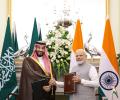
India and Saudi Arabia on Monday decided to expedite implementation of the $50 billion West Coast refinery project, and identified energy, defence, semiconductor and space as areas for intensified cooperation during talks between Prime Minister Narendra Modi and Saudi Crown Prince Mohammed Bin Salman Bin Abdulaziz Al-Saud.

'Preliminary investigations suggest that the cause of the fires are small flying objects, possibly belonging to drones, that fell in the two areas. Teams from the competent authorities have been dispatched and the fire is currently being put out,' news reports said.
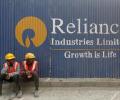
Reliance Industries Limited on Wednesday became the first Indian company to hit the Rs 19 lakh crore market valuation mark following a rally in its share price. The market heavyweight stock jumped 1.85 per cent to its record high of Rs 2,827.10 on the BSE. Following the gain in the share price, the company's market valuation jumped to Rs 19,12,814 crore in morning trade on the BSE.

India and Saudi Arabia on Monday called on states to reject the use of terrorism against other countries and prevent access to weapons, including missiles and drones, to commit acts of terror.

Oil prices have declined by more than 60 per cent since January with benchmark crude falling well below $30 per barrel, driven by an acute oil demand decline caused by the coronavirus and a lack of production cuts by OPEC and other oil producing countries.
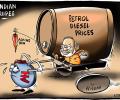
What could be more uncertain than Virat Kohli's agonising wait for a century for over two years? Perhaps it's what you will pay tomorrow morning to fill your vehicle's tank. Pump prices have joined cricket scores as the country's favourite discussion topic. Steep increases invite widespread protests, while moderate additions make the government anti-reformist. The ongoing fuel price conundrum is no different.

A few years ago, when top officials of Indian state-run refiners went to Dubai to negotiate a crude oil supply contract, a senior official from state-owned Saudi Aramco told them, "We can negotiate on anything, but I am the last man standing for you. "Nobody can offer the range of crudes we do with certainty," an official who was part of the negotiating team recalls. Perhaps that explains why Saudi Arabia is less concerned about losing its place as India's premier oil supplier to an upstart like Russia, which emerged from nowhere to become India's biggest crude oil supplier in September and October.

According to sources, Russian energy giant Rosneft or its affiliates, Saudi Aramco and Reliance Industries are in race for BPCL's three refineries - Mumbai, Kochi in Kerala and Bina in Madhya Pradesh - 16,309 petrol pumps, 6,113 LPG distributor agencies and more than a fifth of 256 aviation fuel stations in the country.
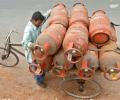
A shortfall in LPG supply from Aramco has led to huge booking backlog across states. To meet the backlog, India has asked Abu Dhabi National Oil Company for two additional cargos of LPG, but that may take another 10 days to reach.
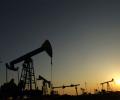
Experts say local demand, government policies in retail and refining sector are attracting foreign players.

India is back on the diplomatic table pushing oil producing countries to raise production in a bid to cool down runaway oil prices. Brent crude oil prices traded above $90 a barrel, on Thursday, for the first time since 2014. Brent is the most popular marker for crude oil trade. It is used as a benchmark for two-thirds of the world's internationally traded crude oil.

India, the world's third-biggest oil consumer, has conveyed to OPEC countries its concern over high oil prices that are threatening to impact the nascent economic recovery after the devastating pandemic. New Oil Minister Hardeep Singh Puri has made phone calls to key OPEC nations to convey the desire for an affordable price for consumers. After calling his counterparts in Qatar and the UAE, he called Organization of the Petroleum Exporting Countries (OPEC) kingpin Saudi Arabia on Thursday evening.

Why does the world's fastest-growing major consumer of energy fail to attract investments in oil and gas? This is a question worth pondering after private sector conglomerate Reliance Industries Ltd (RIL) failed to close a $15-billion downstream asset deal with Saudi Arabia's national oil company, Aramco. It's understandable if multi-billion dollar investments in oil and gas projects or deals involving state companies that need to traverse a complex bureaucracy at state and federal levels and the corridors of ministries unravel. However, Mukesh Ambani-run RIL, India's most successful energy company, is not typically known to fumble on closing deals (Ambani closed deals worth around Rs 2 trillion early last year in telecom and retail with blue chip investors).

Sena also said that laying a brick for the $44 billion (Rs 3 lakh crore) mega refinery project at Nanar in Ratnagiri district of Maharashtra would be akin to laying the foundation stone for a cancer hospital there.

In 2017, a consortium led by Russian state oil company Rosneft agreed to buy Essar Oil for $12.9 billion in India's biggest foreign acquisition of a homegrown company. Rosneft's buyout of Essar's assets was meant to herald a wave of energy investments in India - over six decades after Esso, Caltex and Shell invested in India's refining sector in the 1950s. But the government has tripped up in its efforts to sell Bharat Petroleum Corporation Ltd (BPCL), formerly Burmah Shell, a blue chip public sector company. Bidders include a couple of global funds and resources firm Vedanta.

Reliance Industries will sell 20 per cent stake in its oil and chemicals business to Saudi oil giant Aramco for about $ 15 billion and nearly half of its fuel retail business to BP of UK for Rs 7,000 crore. Aramco, the world's biggest crude exporter, will also supply Reliance's twin-refineries at Jamnagar in Gujarat with 7,00,000 barrels of oil a day on a long-term basis, Ambani said.

The Vedanta group on Wednesday confirmed putting in a preliminary expression of interest (EoI) for buying the government's stake in Bharat Petroleum Corp Ltd (BPCL).
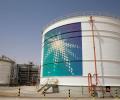
Estimated to cost $44 billion, the project was expected to be commissioned by 2025.
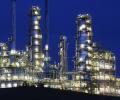
BPCL's impending privatisation and RIL's stake sale to Saudi Aramco raise questions about the future of the West Coast Refinery, once touted as the world's largest.

Modi is the first foreign leader to be invited to the palace by the Crown Prince, who appreciated the role played by Indian workers in the development of UAE as a modern nation, ministry of external affairs spokesperson Raveesh Kumar tweeted.

India's imports from Iran rose to 250,200 barrels per day
 © 2026 Rediff.com - Advertise with us - Disclaimer - Privacy Policy - Sitemap - Feedback - About us - Terms of use - Grievances