
The Railway ministry has been allocated budgetary support of Rs 140367.13 crore in the Union Budget on Tuesday - Rs 20,311 crore more than the revised figures of the previous fiscal. Overall, the national transporter is set to get a capital expenditure (CapEx) push of Rs 2.45 lakh crore in the financial year 2022-23, 14 per cent higher than the budgeted capital expenditure of Rs 2.15 lakh crore for the current financial year. Finance Minister Nirmala Sitharaman in her Budget speech for 2022-23 said that India will manufacture 400 new, energy-efficient Vande Bharat trains in the next three years.

The government is set to initiate consultations with the Reserve Bank of India (RBI) to devise a new security clearance framework for screening potential bidders of public sector banks (PSBs) as it kick-starts the privatisation process, beginning with the strategic divestment of IDBI Bank. As the government is moving ahead with strategic divestment of IDBI Bank and is looking to privatise two PSBs, the Department of Investment and Public Asset Management (DIPAM) is looking to put in place an appropriate framework as the potential buyers will have to meet the RBI's fit and proper criteria, said an official. The process of bank privatisation would be different from the sale of any other public sector undertaking (PSU), and more restrictions and measures will have to be put in place, the official said.

Buying or selling securities based on rumours about expected changes in tax rates or sectoral sops can backfire, advises Sarbajeet K Sen.

The Budget Session of Parliament will commence on Monday and is scheduled to conclude on April 8 wherein the first part of the session will extend up to February 11, said the Lok Sabha Secretariat on Sunday.

The Union Cabinet has approved amendments to the General Insurance Business (Nationalisation) Act, paving the way for privatisation of government-owned insurers. The amendments, approved by Cabinet, will remove the clause for the Centre to hold at least 51 per cent in public sector insurance companies at any given time. It will also have an enabling provision for the transfer of management control from the government to the potential buyer of the public sector insurance company. The finance ministry will move amendments to the insurance Act in the ongoing Parliament session.

Services such as deposits and withdrawal at branches, cheque clearance and loan approvals would be affected due to the strike.
United Forum of Bank Unions (UFBU), an umbrella body of nine unions, has given a call for a two-day strike from March 15 to protest against the proposed privatisation of two state-owned lenders. In the Union Budget presented last month, Finance Minister Nirmala Sitharaman had announced the privatisation of two public sector banks (PSBs) as part of its disinvestment plan. The government has already privatised IDBI Bank by selling its majority stake in the lender to LIC in 2019 and merged 14 public sector banks in the last four years.

Analysts caution against volatility and recommend buying stocks of companies that are on strong fundamental footing that have been beaten down badly in the recent carnage.

These could include strengthening the public-private partnership (PPP) dispute resolution mechanism, uniform PPP institutional framework, easier terms for infrastructure companies accessing bond markets, and tax sops, Business Standard has learnt. Investment in infrastructure projects with high multiplier effect has been the Centre's main plank to revive the economy, create employment and boost consumption.

There will be no second term for President Kovind and no elevation for Vice President Naidu.

Finance Minister Nirmala Sitharaman on Monday called on President Ram Nath Kovind before presenting the Union Budget 2021-22. As per established tradition, the Finance Minister met the President at the Rashtrapati Bhawan before heading to Parliament. The Union Cabinet will meet at 10.15 am to clear the Budget.

If you are buying a bond to cater to your regular income needs, check the interest distribution schedule.

The 'halwa ceremony' marks the beginning of the lockdown of several officials in the finance ministry, who remain cut off from their families until the presentation of the Budget by the finance minister in the Lok Sabha.

Budget has already bombed at the box office and passing it without a revisit will be a mockery of the exercise though any modification may be short lived and perfunctory, observes V Ranganathan.

The Union Cabinet on Wednesday approved a Rs 26,058 crore production linked incentive (PLI) scheme for auto, auto-components and drone industry to enhance India's manufacturing capabilities, Union Minister Anurag Thakur said on Wednesday. The PLI scheme will incentivize the emergence of advanced automotive technologies' global supply chain in India.

These new coins will be made available for public use shortly, said Sitharaman.

So which sectors are likely to do well in 2022? Should you focus on domestic economy-related sectors or export-oriented ones?

India's economic growth is estimated to have slowed down to 11-year low of 5 per cent during the current financial year ending March 2020.

The United Forum of Bank Unions (UFBU), an umbrella body of nine unions, on Tuesday gave a call for a two-day strike from March 15 to protest against the proposed privatisation of two state-owned lenders. In the Union Budget presented last week, Finance Minister Nirmala Sitharaman announced the privatisation of two Public Sector Banks (PSBs) as part of its disinvestment plan. The government has already privatised IDBI Bank by selling its majority stake in the lender to LIC in 2019 and merged 14 public sector banks in the last four years.

The broader NSE Nifty sank 252.55 points, or 2.14 per cent, to 11,558.60.

After navigating the turbulent pandemic waves, the recovering Indian economy is now sailing through unchartered waters of rising coronavirus cases, spiralling commodity prices and spiking inflation though the lighthouse of sustainable growth remains visible. As 2022 begins, a raft of developments, ranging from Budgetary announcements to continuation of stimulus measures to monetary policy, will set the tone for the domestic economy, which is projected to grow more than 9 per cent in the current fiscal ending March 2022. The country's continuing massive vaccination drive and 'precaution' doses starting for select categories of people this month will provide a firewall against any steep spike in coronavirus cases amid the emergence of the Omicron variant.

If 2019-20 (FY20) was an unusual year for highway construction in India, with the pace of work slowing down for the first time since the Narendra Modi government assumed power in 2014, largely due to the general elections in May and liquidity crunch, the outbreak of the Covid-19 pandemic in 2020-21 (FY21) only made matters worse with lockdowns and labour unavailability. The pace of highway construction in 2021-22 (FY22) has not been able to bulldoze the pandemic barriers in a year marred by two Covid-19 waves - the second at the start of the fiscal year, the third towards the close. With localised lockdowns and restrictions on mobility, highway construction growth in the country has now fallen to a five-year low.

In the Union budget, Rs 65,011.8 crore has been allocated to the Ministry of Health and Family Welfare, up from Rs 62,659.12 crore in 2019-20.

The Economic Survey released before next year's Budget could become a single volume, reverting to the practice followed till FY14. "There is so much to write about the Indian economy's performance in the past year. "Most of the exciting themes will be covered in what used to be considered Part II," said a senior government official who is part of the preparations for the Survey.

Is the worst over for Indian banks? The past two years saw them ride on treasury trades as deposits soared and credit growth dipped sharply. Gross and net non-performing assets (NPAs) moved south, and the provision coverage ratio (PCR), capital buffers, and profitability indicators are back at pre-pandemic levels. So, what's the plot ahead?

This will be the first time since the presentation of independent India's first budget on November 26, 1947, that the documents containing income and expenditure statement of the Union government along with finance bill, detailing new tax and other measures for the new financial year, will not be physically printed.

The biggest headwind to the consumption story in FY23 is a sharp decline in government subsidies on food, fertiliser and fuel, and overall decline in revenue expenditure net of interest payments. This, analysts say, will adversely impact purchasing power of households at the lower end of the income pyramid, translating into lower spending on consumer goods and services.

'For the next two years, we expect the bulk of earnings growth contribution from sectors like financials and energy, where the outlook remains positive, while the sectors which are linked to domestic consumption and are currently witnessing strains on margins have low salience for Nifty earnings.'

Strategic divestment of select public sector undertakings will remain a priority area, she said.

'Short term volatility is likely due to various factors, global and domestic; investors may use this as an opportunity to increase the allocation to equities.'

The government told an all-party meeting Monday that it does not intend to bring any legislative business in Rajya Sabha during the first part of the Budget Session which is till February 11, sources said.

Modi said the policies of the government will empower the downtrodden and turn them into a "power house" for the development of the country.

Given the many policy areas where the Centre and the states have not been seeing eye to eye in the last few years, it is time the Modi government convenes a meeting of the Inter-State Council, recommends A K Bhattacharya.

There are two ways: Deliver a rapidly growing economic pie or reform GST and close corporate tax loopholes, suggests T N Ninan.
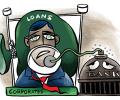
This is following revival of demand from the corporate sector and small and medium enterprises (SMEs), even as a nascent economic recovery is taking shape. Credit growth of scheduled commercial banks had accelerated to 9.2 per cent year-on-year (YoY) by the end of December 2021 after breaching the 7 per cent-mark in November, for the first time since April 2020.

Omkeshwar Singh, Head, Rank MF, a mutual fund investment platform, will answer all your budget-related queries on investing in mutual funds between 1 pm and 2 pm, February 4.

Finance Minister Nirmala Sitharaman on Saturday unveiled the budget for fiscal 2020-21, vowing to boost income of Indians and their purchasing power, in a bid to revive domestic economic growth that has slumped.

Uttam Ghosh offers his take on Union Minister Anurag Thakur's incendiary slogan.
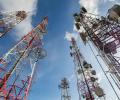
The government expects to realise Rs 35,100 crore from the partial sale of Bharatnet fibre assets and around 13,500 mobile towers owned by state-run telecom firms as part of its national monetisation pipeline released on Monday. Government think tank Niti Aayog has valued over 2.86 lakh kilometre of optical fibre assets laid by BBNL and BSNL under rural broadband project Bharatnet at Rs 26,300 crore, according to the National Monetisation Pipeline (NMP) document. According to the document, BSNL's 13,567 mobile tower assets and MTNL's 1,350 towers have been valued at Rs 8,800 crore.
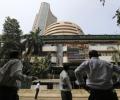
The decision has been taken following requests made in this regard by market participants as Budget contains several market-moving announcements.
 © 2026 Rediff.com - Advertise with us - Disclaimer - Privacy Policy - Sitemap - Feedback - About us - Terms of use - Grievances