
Savitri and Narayanan Sitharaman arrived in a separate car in Parliament.
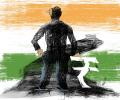
The employment situation remains dire. Whatever can be done to promote greater low-skill employment should be pursued aggressively, advises former chief economic adviser Shankar Acharya.
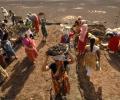
Sources in the Rural Development Ministry said the actual expenditure incurred in 2020-21 will be higher than the allocated funds and it will at least be at par with this year's total estimated expenditure of MGNREGS.

The country's 5,000 MPs, MLAs and MLCs should resolve in this historic year to return to the people the favour they have been doing by relentlessly nurturing democracy over the last 70 years, he said.

The Cabinet on Wednesday approved the production-linked incentive (PLI) scheme worth Rs 10,683 crore for textiles sector with an aim to boost domestic manufacturing and exports. The decision was taken in a meeting which was chaired by Prime Minister Narendra Modi. The Cabinet "has approved the PLI scheme for textiles for MMF (man-made fibre) apparel, MMF fabrics and ten segments/ products of technical textiles with a budgetary outlay of Rs 10,683 crore," Textiles Minister Piyush Goyal told reporters.

While the session will begin with the President's address to the joint sitting of the two Houses, the same day the pre-budget economic survey will be tabled.

Foreign portfolio investors (FPIs) remained net buyers to the tune of Rs 12,266 crore in the Indian market in the first five trading sessions of February, as positive sentiment post-Union Budget 2021 sparked a rally in investment.
Addressing the BJP parliamentary party meeting, Modi said he relished all these challenges during the pandemic and the country also overcame them.

The Indian economy has recovered 'handsomely' from the pandemic-induced disruptions, former Niti Aayog vice chairman Arvind Panagariya said on Tuesday, while expressing hope that the recovery will be sustained and the growth rate of 7 to 8 per cent will be restored. Panagariya suggested that the government must now signal its intention to wind down fiscal deficit by cutting it by half-to-one percentage point in 2022-23. "The Indian economy has recovered handsomely, returning to its pre-COVID GDP... "Only private consumption is still below its pre-COVID-19 level," the eminent economist told PTI in an interview.

'The government is trying to kickstart the investment cycle in India and while the corporate investments are yet to gather momentum, there are early signs of the same.'
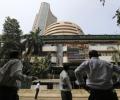
Top gainers in the Sensex pack included IndusInd Bank, ITC, L&T, M&M, PowerGrid, Asian Paints and SBI, ending up to 3.79 per cent higher.

IndusInd Bank was the top gainer in the Sensex pack, zooming around 8 per cent, followed by PowerGrid, Dr Reddy's, Sun Pharma, NTPC and Axis Bank. On the other hand, UltraTech Cement, Maruti, ITC, Kotak Bank and Asian Paints were among the losers.

Investor wealth has jumped by over Rs 12.31 lakh crore in three days, taking the market capitalisation of all BSE-listed companies to a record Rs 198.43 lakh crore on Wednesday as equities continued their Budget-driven rally. The BSE benchmark Sensex closed above the historic 50,000 mark for the first time ever on Wednesday. The 30-share benchmark closed with a gain of 458.03 points or 0.92 per cent at 50,255.75. During the day, it zoomed 728.67 points to its lifetime high of 50,526.39. In three trading days, the benchmark has gained 3,969.98 points or 8.57 per cent.

The Centre's push to sell Air India on priority has led to delays in other strategic divestment proposals, such as privatising United India Insurance, as well as ongoing transactions, such as Shipping Corporation of India (SCI) and Bharat Petroleum Corporation (BPCL), revealed multiple officials involved in the process. The Department of Investment and Public Asset Management (DIPAM) is yet to take new privatisation recommendations of the NITI Aayog to the core group of secretaries on disinvestment (CGD) headed by the Cabinet secretary, said one of the officials. The priority now is to ensure all approvals for Air India are in place since the government intends to hand over the national carrier as early as this month.

India on Monday set aside over Rs 7,100 crore in its budget for 2021-22 as development assistance for countries in its neighbourhood as well as in Africa and Latin America, with Bhutan getting the maximum allocation of Rs 3,004 crore while Rs 100 crore will be given to Chabahar port project in Iran.
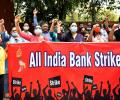
The government can also individually exempt the PSBs, that are to be privatisated from the two Bank Nationalisation Acts. This will bring such lenders under Banking Regulation Act, and make them companies, reports Nikunj Ohri.

Lok Sabha will take up general discussion on the Union Budget for 2019-2020 on Monday.
The Parliament resumes on Monday after a break. WATCH THE LIVE DEBATES HERE.

Indian billionaires saw their combined fortunes more than double during the COVID-19 pandemic, and their count shot up by 39 per cent to 142, while the wealth of the ten richest is enough to fund school and higher education of children in the country for 25 years, a new study showed on Monday. In its annual inequality survey released on the first day of the World Economic Forum's online Davos Agenda summit, Oxfam India further said that an additional one per cent tax on the richest 10 per cent can provide the country with nearly 17.7 lakh extra oxygen cylinders, while a similar wealth tax on the 98 richest billionaire families would finance Ayushman Bharat, the world's largest health insurance scheme, for more than seven years. The COVID-19 pandemic saw a huge rush for oxygen cylinders and insurance claims during the second wave last year.

The supplementary nutrition programme and the Poshan Abhiyaan under the Women and Child Development Ministry has been merged to launch Mission Poshan 2.0 to strengthen nutritional content, delivery, outreach, and outcome, according to the Union Budget announced on Monday.

The defence budget was increased to Rs 3.37 lakh crore for 2020-21 against last year's Rs 3.18 lakh crore.

Sectors which attract maximum foreign inflows include services, computer software and hardware, telecommunications, automobile and trading.

The Index of Industrial Production (IIP) grew by 1.4 per cent in November as most components like manufacturing, electricity, mining, primary goods, and consumer durables witnessed a slowdown, according to data released by the National Statistical Office (NSO) on Wednesday. This is on the base of a decline of 1.7 per cent in November 2020 and before the new Covid variant started impacting economic activity. IIP growth was lower than the 4 per cent expansion recorded in the previous month but was better than a 1.6 per cent contraction seen in November 2020. Separately, rising prices of kitchen staples pushed retail inflation, or rate of price increase, to 5.59 per cent in December 2021, bringing it close to the upper band of Reserve Bank's comfort zone.

Recently, world headlines buzzed with Elon Musk's announcement that he was shelving his audacious bid for social media platform Twitter. Away from the media spotlight, questions are being asked about the maverick billionaire's plans in India, too. A few days ago, a Reuters report said Musk's flagship Tesla had put on hold its plan to launch electric cars in India.

The bulk of the incremental profits will come from oil & gas and automobile sectors.
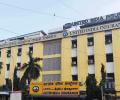
The NITI Aayog has recommended privatisation of state-owned insurer United India Insurance Company as the government aims to move ahead with its new public sector enterprise (PSE) policy for Atmanirbhar Bharat. The policy think tank has suggested that the public sector insurer be considered for privatisation in the banking, insurance and financial services sector, which has been classified as 'strategic' in the PSE policy, said an official. The policy proposes the "bare minimum" presence of government-owned companies in strategic sectors, and privatisation, merger or closure of remaining public sector undertakings (PSUs).

Anil Rego, CEO, Right Horizons lists out the important things, of course, apart from the IT exemption limit, that the salaried class must be looking forward to in the Union Budget 2015-16 that Finance Minister Arun Jaitley will present tomorrow morning

The decision to increase the MSPs (Minimum Support Prices) was taken at a meeting of the Cabinet Committee on Economic Affairs (CCEA) chaired by Prime Minister Narendra Modi. MSP is the rate at which the government buys the grain from farmers. Currently, the government fixes MSPs for 23 crops grown in both kharif and rabi seasons. Sowing of rabi (winter) crops begins from October immediately after the harvest of kharif (summer) crops.

83% of the CEOS plan to hire more in the new year.

Finance Minister Nirmala Sitharaman announced on Monday a record sum of Rs 1.10 lakh crore for the Railways, out of which Rs 1.07 lakh crore is for capital expenditure, and said the national transporter would monetise the dedicated freight corridors after its commissioning. Presenting the Union Budget 2021-22, Sitharaman also applauded the services provided by the Railways to transport essential goods across the country during the coronavirus lockdown.

Moody's Investors Service, while silent on the sovereign rating on the higher-than-expected fiscal deficit numbers, expressed doubts over attaining the higher revenue targets and divestment realisation as assumed in the Budget. The Union Budget 2021-22 has pegged a fiscal deficit of 9.5 per cent for the current financial year as against the consensus 7 per cent, and 6.8 per cent for 2021-22 with a market borrowing of around Rs 12 lakh crore. It also assumes Rs 1.75 lakh crore to be scooped up from divestment.

The Reserve Bank of India, for the second straight time, on Thursday kept its key policy rate unchanged at 5.15 per cent, maintaining its accommodative policy stance as long as it was necessary to revive growth. The central bank retained GDP growth at 5 per cent for 2019-20 and pegged it at 6 per cent for the next fiscal.

There is no direct impact of the Russia-Ukraine crisis on India in terms of bilateral trade but a surge in oil prices poses considerable risk to the economy, an analyst report said on Friday. International oil prices which have surged past $100 per barrel "pose risks to external stability and currency movement," a Bank of Baroda Economics Research report said. Russia has launched military operations against Ukraine, stoking fears of significant disruption in the region, including loss of life. The West is ramping up financial sanctions against Russia and support for Ukraine.

While no specific state-oriented sops were rolled out, a strong thread of political wellness ran through the Budget.

'Market feels this Budget will promote all-round growth and that is what is giving it confidence.'

Congress leader and ex-finance minister P Chidambaram on Tuesday said the Union Budget was the "most capitalist" with nothing for the poor and farmers while sops were being provided to big industrialists turning India into a very "unequal country". At a press conference after Union Finance Minister Nirmala Sitharaman unveiled a Rs 39.45 lakh crore Budget, he said because of the ruling party's "brute majority" the Lok Sabha pass the Budget but people will reject it. He claimed the Bharatiya Janata Party was going to elections, scheduled in five states, not with their performance or with the promises and assurances to the people, but solely "with the agenda of dividing the country and bringing Hindutva back to power".

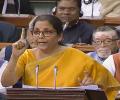
Finance Minister Nirmala Sitharaman presents her fourth Budget in Lok Sabha on Tuesday.

'The robust tax collections give the finance minister a fair amount of headroom for an expansionary fiscal policy.'

As per the rules and regulations, members must not do anything that brings disrepute to the Parliament and affects their credibility, and members must utilise their position as Members of Parliament to advance general well-being of the people.
The Union Budget is not everyone's cup of tea. But here's how you can make it yours.
 © 2026 Rediff.com - Advertise with us - Disclaimer - Privacy Policy - Sitemap - Feedback - About us - Terms of use - Grievances