
At the auto show, Maruti showcased some of its existing cars in a new avatar. Here are some of them...

market mood was also buoyed after China said its Vice Premier Liu He will visit Washington next week for the signing of an interim trade deal. ICICI Bank was the top gainer in the Sensex pack, rallying 3.80 per cent, followed by SBI, M&M, IndusInd Bank, Maruti Suzuki, Asian Paints and RIL.
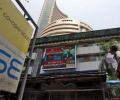
Maruti Suzuki, SBI, HDFC, Hero MotoCorp and Infosys too gained up to 2.55 per cent.

In May, Satpal Singh, who runs a dairy business with three buffaloes in Jewar, near Noida, was worried about the steep spike in input costs. Singh said dry fodder rates, which cost Rs 1,500-2000 per tractor trolley last year, were quoting at Rs 4,500-5,000. The price of other cattle feed ingredients (that include mustard meal and similar mixes) had also gone up from Rs 2,000 per quintal to Rs 3,100-3,200 per quintal.

Morgan Stanley Sales & Trading, US, believes the stock is better value for money than others and has a upside as high as 73 per cent. A slowdown in the economy has hit demand and led to a fall in overall consumption in an auto market which till recently was one of the fastest growing in the world.

Analysts caution against volatility and recommend buying stocks of companies that are on strong fundamental footing that have been beaten down badly in the recent carnage.

The torchbearer's face will likely be seen by hundreds of millions of people watching around the world.

Ajit Mishra, vice president, Research, Religare Broking, answers your queries.

The company is voluntarily undertaking a recall for WagonR (1 litre) manufactured between November 15, 2018, and October 15, 2019, and Baleno (petrol) manufactured between January 8, 2019, and November 4, 2019, MSI said in a regulatory filing.

These bikes were all the craze on Day 1 of Auto Expo 2018's media exclusive.

The country's largest carmaker Maruti Suzuki India (MSI) aims to sell 4-6 lakh CNG units in the current fiscal year depending upon supply situation of essential components, as per a senior company official. The company sold about 2.3 lakh CNG units in 2021-22. MSI currently sells nine of its 15 models with CNG powertrain and is looking to drive in more models with such technology in the coming days.
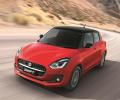
While the latest, fourth-generation Swift makes no pretence of being a performance car or the last word in luxury, what it does stand for is amply evident, notes Pavan Lall.
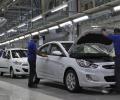
Major automobile manufacturers like Maruti Suzuki, Hyundai, Mahindra & Mahindra, Tata Motors and Toyota Kirloskar on Tuesday reported decline in domestic passenger vehicle sales in May compared to the previous month as a spike in COVID-19 cases and lockdowns across various states hit production and dispatches. The country's largest carmaker Maruti Suzuki India (MSI), which shut production from May 1 to May 16 so as to divert oxygen from industrial use for medical purposes, reported domestic dispatches to dealers at 35,293 units last month, down 75 per cent from 142,454 units in April. The company said sales of its mini cars, comprising Alto and S-Presso, declined by 81 per cent to 4,760 units in May as against 25,041 units in April this year.

So which sectors are likely to do well in 2022? Should you focus on domestic economy-related sectors or export-oriented ones?

Major automakers, including Maruti Suzuki, Hyundai, Tata Motors, Mahindra & Mahindra, Kia, Toyota and Honda, on Thursday reported healthy growth in passenger vehicles sales in June, recovering from the disruptions induced by the second wave of COVID-19. The country's largest carmaker Maruti Suzuki India (MSI) posted total sales of 1,47,368 units in June, up from 46,555 units in May. Its domestic dispatches to dealers last month stood at 130,348 units, up from 35,293 units in May, as easing of COVID-related restrictions helped the auto major to dispatch more units to dealerships.

Auto majors, including Maruti Suzuki India, Hyundai and Tata Motors, on Sunday reported high double-digit growth in their domestic passenger vehicle sales in July riding on stabilisation of macro-economic factors and better consumer sentiments. Similarly, Honda, Nissan, MG Motor and Skoda also reported healthy growth in their sales last month leveraging on improved market mood amid prevailing lower coronavirus infection rate, despite supply constraints of semi-conductors. The country's largest carmaker Maruti Suzuki India's (MSI) domestic sales increased by 39 per cent to 1,41,238 units last month as against 1,01,307 units in July 2020, the company said in a statement.

India's largest carmaker, Maruti Suzuki India (MSIL), is focused on getting 50 per cent of its customers' car-financing transactions executed through its Smart Finance platform by next year. Shashank Srivastava, executive director-sales, MSIL, said this will help the company turn its website into a single-window channel through which customers can select their models, find dealers, and arrange financing. He said there is a likelihood that 100 per cent of its customers availing of financing will take it through Smart Finance. To date, the company has disbursed Rs 6,500-crore loans via Smart Finance to around 100,000 customers, accounting for 28 per cent of all finance-based car-purchase transactions for the company.
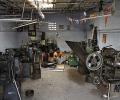
The intensity of power crisis this season has hit a new high with average coal stock dipping to less than eight days. The first of a pan-Indian series, based on a ground report, shows how the Manesar industrial hub is coping with the challenge. As the scorching heat wave and the lengthy power cuts intensify in Haryana, the usually bustling labour chowk of the Industrial Model Township (IMT) of Manesar wears a deserted look.

HDFC Bank was the top gainer in the Sensex pack, rallying nearly 4 per cent, Infosys jumped over 3 per cent. Sun Pharma, NTPC, HCL Tech, Tech Mahindra, HDFC, RIL and TCS also closed with gains. On the other hand, Axis Bank was the top laggard, followed by ITC, ICICI Bank, IndusInd Bank and Maruti Suzuki.

Tata Motors, India's third largest passenger vehicle maker, took pole position in the competitive sport utility vehicle (SUV) market in October, reveals the data from industry sources. Riding high on the Punch - the sub-compact SUV offering launched on October 18 - the Tata group flagship sold a record 23,381 units in October, higher than 20,022 units sold by archrival Mahindra & Mahindra, 18,538 units sold by Hyundai Motor India, and 15,931 units sold by Kia Motors India. Utility vehicles - that include SUVs and multipurpose vehicles - accounted for almost one in every two passenger vehicles sold in India in the first seven months of the current financial year, according to the Society of Indian Automobile Manufacturers.

On the Sensex chart, Bharti Airtel was the biggest loser with nearly 3 per cent drop in its share price. It was followed by IndusInd Bank, Maruti Suzuki, HeroMoto Corp and Tata Steel.

Ajit Mishra, vice president, Research, Religare Broking, answers your queries.

We check out the Grand Vitara -- the biggest, most expensive Suzuki in the country.

Equity benchmark Sensex ended 127 points higher on Friday, primarily led by gains in auto, metal and power sector stocks amid positive cues from global markets.

According to government data, the Centre procured only 35,179 ventilators out of the 50,000 originally ordered.

The muted expectation of dealers come at a time when vehicle manufacturers such as Maruti Suzuki, Hyundai Motor, Mahindra & Mahindra and others reported a double-digit fall in wholesale dispatches to dealerships in July and August.

Tata Motors, Ford, Nissan, Maruti Suzuki, Toyota Kirloskar, BMW, Renault and Isuzu have also announced price hike from next month citing impact of increase in commodity prices and foreign exchange rates.

In four days, Sensex has fallen by 5,815.25 points. From the 30-share pack, 22 companies closed the day lower, led by Bajaj Finance, Maruti Suzuki India, Axis Bank, M&M, Tech Mahindra and ONGC, plunging up to 10.24 per cent.

Several carmakers, including car market leader Maruti Suzuki India pulled the plug on diesel models citing higher costs for BSVI variants leaving buyers with limited options.

Among the Sensex constituents, Tata Motors was the biggest loser with 6.52 per cent fall, followed by Vedanta 5.09 per cent, Bajaj Auto 4.99 per cent, Maruti Suzuki 4.26 per cent and Tata Steel 2.65 per cent.
In percentage terms, IndusInd Bank, SBI, HDFC, ICICI Bank and L&T were among the top losers. On the contrary, Bharti Airtel, Reliance, Sun Pharma, HCL Tech and Maruti Suzuki emerged as major gainers.

If it splits now, who takes what away and leaves what behind? asks Shekhar Gupta.

IndusInd Bank was the top gainer in the Sensex pack, rallying over 7 per cent, followed by SBI, ICICI Bank, HDFC twins, Axis Bank, Bajaj Finserv and UltraTech Cement. NSE Nifty soared 245.35 points to 14,923.15.

Other major gainers were Tata Steel, Yes bank, Axis Bank, Maruti Suzuki, Tech Mahindra and TCS -- rising as much as 7.09 per cent.

The company, which sells every second car in the domestic market, said it expected production and sales to grow between 4 per cent and 8 per cent for the financial year started in April.
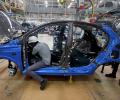
While sales of compact cars, including models such as Swift, Celerio, Ignis, Baleno and Dzire declined, sales of utility vehicles, including Vitara Brezza, S-Cross and Ertiga, increased 26.3 per cent to 19,177 units as compared to 15,178 in the year-ago month.

Watch the flash mob that take over Auto Expo 2018.
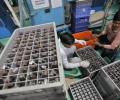
The strike, however, had no impact on production of auto majors Maruti Suzuki India, Hero MotoCorp, Honda Cars India, Mahindra & Mahindra, Tata Motors and Hyundai Motors India as their plants in various parts of the country functioned normally.

Maruti Suzukisaid it was trying to offer more factory-fitted CNG cars to address environmental concerns
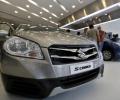
The carmaker has sought 1,292 acres at Industrial Model Township, Sohna, 25km from Gurugram.
 © 2026 Rediff.com - Advertise with us - Disclaimer - Privacy Policy - Sitemap - Feedback - About us - Terms of use - Grievances