
While commercial vehicles are expected to benefit from strong replacement demand, the two-wheeler and tractor segments are expected to gain from a recovery in the rural economy.

Leading carmakers Maruti Suzuki and Hyundai witnessed a double-digit drop in sales in October on account of the global semiconductor shortage impacting production. Kia India, Honda Cars and MG Motor also saw a fall in dispatches last month as compared with October 2020. However, companies like Tata Motors, Mahindra, Nissan and Skoda managed to post positive numbers last month despite the supply chain challenges.
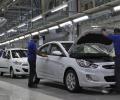
India's passenger vehicle exports rose by 26 per cent in April-June 2022 aided by enhanced shipments to Latin America and Africa and a low base of the year-ago quarter that was hit by the second wave of COVID-19. As per the latest data released by the Society of Indian Automobile Manufacturers (SIAM), passenger vehicle shipments rose to 1,60,263 units in the April-June period of this fiscal as compared with 1,27,083 units in the same quarter of 2021-22. Passenger car shipments saw an 88 per cent year-on-year growth at 1,04,400 units while utility vehicle exports rose 18 per cent to 55,547 units during the period under review, SIAM data showed.

'Some of the launches may get deferred due to the semiconductor shortage, which is unlikely to get resolved before the second half of 2022.'

After a turnaround in performance by Indian equity markets since July that has seen the S&P BSE Sensex and the Nifty50 wipe out the year-to-date losses, analysts suggest investors start nibbling into stocks that are focused on the domestic economy. While they say intermittent corrections, led by policies of global central banks and other economic data, cannot be ruled out, analysts expect India's relative outperformance among global equity markets to continue as it looks better placed with a healthy economic recovery, and remains one of the fastest growing major economies. In this backdrop, Neeraj Chadawar, head of quantitative equity strategy at Axis Securities, believes that amid global slowdown, aggressive tightening by the central banks, and preference for domestic interests first (by the local government), export-oriented themes are likely to be muted or will deliver conservative returns in the near-term.

Companies in the micro, small and medium enterprises (MSME) sector may legally challenge the Haryana government's new law which mandates 75 per cent reservation of jobs in the private sector for locals. "We had earlier gone to the high court against this law, but the court said that it would hear the matter after the law was notified," said Manoj Tyagi, general secretary, IMT Industrial Association. Industries and associations feel that the law will not benefit the state and will hit MSMEs that are just coming out of the crippling effects of the lockdowns owing to the Covid-19 pandemic.

Hemant Shivsaran lists the number of projects the Modi government has announced since August to woo Gujarat voters.

Recently, South Korean Foreign Minister, Chung Eui-yong, dialled his Indian counterpart, S Jaishankar, in New Delhi. His government, he said, "regretted the offence caused to the people of India". A day earlier, India had summoned the South Korean ambassador to express its "strong displeasure" over "an unacceptable social media post".

Continuing its decline for the third day on Friday, the BSE gauge plummeted 1,214.96 points or 2.20 per cent to 53,887.72 during the day. It settled at 54,333.81, a decline of 768.87 points or 1.40 per cent.

Two years after it hitched a ride with Hero MotoCorp (Hero), Harley-Davidson (Harley) and the Pawan Munjal-led firm are gearing up to ride into the middleweight (midweight) motorcycle segment (350-850cc) in the world's largest two-wheeler market.
Passenger vehicle dispatches from factories to dealers in India fell 8 per cent in January, mainly due to semiconductor shortage, auto industry body SIAM said on Friday. The total passenger vehicle wholesales dropped to 254,287 units in January 2022 as compared to 276,554 units in the same month of last year. Last month, passenger car dispatches stood at 126,693 units as compared to 153,244 units in the year-ago period. Similarly, van dispatches declined to 10,632 units in the period under review from 11,816 units in January 2021.
Leading carmakers Maruti Suzuki, Hyundai and Tata Motors reported robust dispatches to dealers in May on the back of strong demand for passenger vehicles across regions, even as the global semiconductor shortage continued to impact production. Mahindra & Mahindra, Kia India, Toyota Kirloskar Motor, Honda Cars and Skoda also witnessed strong demand for their models last month. The month of May also witnessed Tata Motors race ahead of Hyundai in terms of domestic wholesales.

All nine Adani stocks saw a rise in their share price in H1FY23, ranging from 6.1% in case of Adani Ports to 102% in case of Adani Power.

First off the block will be a new multi-purpose vehicle which is being co-developed with Toyota - Suzuki's alliance partner. The model will also wear a Toyota badge.

Please send your queries to getahead@rediff.co.in with the subject line 'Cars' and experts from CarJasoos.com will answer your queries related to buying new or used cars.

A strong demand for diesel SUVs has bumped up the contribution of these variants to Hyundai Motor India's sales to a three-year high, a company top official told Business Standard. The local arm of the South Korean carmaker has benefitted after some leading manufacturers - including car market leader Maruti Suzuki - pulled the plug on diesel models amid tightening regulations. Hyundai has also gained from the changing travel preference -people are frequenting getaways and taking to the road a lot more than what they did before the pandemic. This trend has been fuelling overall SUV sales.

The new year will see a line of hatchbacks (including compact SUVs) hit the Indian roads. Rajesh Karkera/Rediff.com offers a peek.

The Tata group flagship has sold more sport utility vehicles (SUVs) in the domestic PV market in the past four months than any other automotive manufacturer, cementing its no.1 spot. It first grabbed pole position in the SUV segment in October 2021 after the launch of the Punch - a sub-compact SUV offering.
The country's leading automakers Maruti Suzuki and Hyundai Motor reported a decline in dispatches to dealers in March as shortage of electronic components impacted production. On the other hand, Tata Motors, Skoda and Kia India posted their highest ever monthly wholesales last month. Toyota Kirloskar Motor said its dispatches in March were the highest in the last five years while Mahindra & Mahindra also reported a robust increase in its passenger vehicle dispatches in March.

After a long delay, Thailand opened its twice-postponed Bangkok international motor show to the public as coronavirus restrictions eased, with nearly all attendees wearing masks and face shields.

Tata Motors on Tuesday said it will increase prices of its passenger vehicles by an average of 0.9 per cent with effect from January 19, in order to partially offset the impact of rise in input costs. The Mumbai-based automaker sells various models like Tiago, Punch and Harrier, in the domestic market. Effective January 19, 2022, an average increase of 0.9 per cent will be implemented, depending on the variant and model, the automaker said in a statement.

Automobile exports from India recovered in the first quarter with all vehicle segments, including passenger vehicles and two-wheelers, witnessing growth following an improvement in the pandemic situation across various international markets. As per the latest SIAM data, total vehicle exports during the April-June quarter this fiscal stood at 14,19,430 units as compared with 436,500 units in the same period of 2020-21 which saw massive disruptions due to the COVID lockdowns across the country, hampering sales as well overseas shipments. SIAM director general Rajesh Menon told PTI that while two-wheeler shipments were better than previous three years, passenger vehicles, three-wheelers and commercial vehicles export numbers were yet to catch up with numbers in the first quarter of 2018-19 fiscal.

Hyundai got two stars for Grand i10 Nios and Kia got three stars for Seltos.

Investors' wealth has swelled by over Rs 13.16 lakh crore as benchmark indices continued their northward march for the fifth session on the trot on Monday. The 30-share BSE Sensex jumped 935.72 points or 1.68 per cent to settle at 56,486.02 on Monday. In the past five trading sessions, the benchmark has zoomed 3,643.27 points or 6.89 per cent. Propelled by the optimism in equities, the market capitalisation of BSE-listed firms jumped by Rs 13,16,944.74 crore in five trading sessions to Rs 2,54,27,775.78 crore.

With rising petrol and diesel prices driving up demand for its CNG vehicles, the country's largest carmaker Maruti Suzuki India plans to widen its CNG portfolio by offering the fuel option in four more models 'very shortly', according to a senior company official. The company, which plans to launch an electric vehicle (EV) in the Indian market by 2025, is also currently keeping a close watch on the country's EV ecosystem "to find out what is the best way of evolution" to be able to offer affordable EVs with hassle free charging infrastructure in order to clock high volumes for a sustainable business.

These companies join the likes of other global firms Hyundai, Suzuki, Toyota, KFC, and Pizza Hut which have also apologised for social media posts by their business associates in Pakistan supporting Kashmir Solidarity Day following backlash in India and call for boycott of their products.

Equity investors became richer by over Rs 7.21 lakh crore as stock markets continued the rally for the second day on Wednesday. The 30-share BSE Sensex opened in the green on Wednesday and further jumped 1,469.64 points or 2.75 per cent to 54,893.73 during the day. It finally settled at 54,647.33, higher by 1,223.24 points or 2.29 per cent amid reports of diplomatic efforts to end Russia's attack on Ukraine. On Tuesday, it settled at 53,424.09, higher by 581.34 points or 1.10 per cent.

With 15 models and a market share of close to 50 per cent, it rules the Indian market, selling almost 1.5 million units every year, rolling out one model every ten seconds.

With a million-odd electric vehicles (EVs) - two-wheelers, e-rickshaws, buses and passenger cars - expected to hit the road this calendar year, the shift from gasoline-powered vehicles has become irreversible. Now the question is whether the supply chain is ready for this shift. Key components - the high-powered lithium-ion battery and the cells which go with it, the electric motor, and the electronics powered by chips - account for nearly 60 per cent of the cost of an EV.
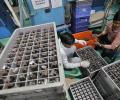
Auto component makers in India are bracing for a tough time. High absenteeism among workers owing to Covid-19, shortages of critical parts, and temporary closures of plants by automobile manufacturers have thrown a spanner in the works for the Rs 3.2-trillion sector, which derives 60 per cent of its revenues from automobile original equipment manufacturers (OEMs), with the balance split equally between replacement demand and exports. Car market leader Maruti Suzuki India on Saturday said it was extending the maintenance shutdown, which was from May 1 to 9, till May 16, "keeping in view the current pandemic situation". Some activities will continue in the plants.
As the second wave of the Covid-19 pandemic abates, India's automakers are hopeful of a quick recovery in sales volumes, led by better rural sentiment, low interest rates, improved availability of finance and a gradual uptick in business and economic activity. In fact, companies have started to ramp up production already, encouraged by high order books and the growing preference for private transport in both rural and urban areas as a means to avoid infections. In early April, the industry had been bullish as the sales trend for March showed that the effects of the Covid-19 pandemic had been left behind. The total vehicle sales had grown by 77 per cent, albeit on a lower base, and for the past few months, sales had consistently touched 300,000 units per month.

The country's largest carmaker Maruti Suzuki India (MSI) is planning to invest around Rs 18,000 crore on a new manufacturing facility in Haryana, as per a top company official. The new plant would replace the company's Gurugram-based facility and is expected to have an installed production capacity of 7.5-10 lakh units per annum. While confirming the Rs 18,000 crore investment plan, MSI chairman RC Bhargava told PTI that the company had always planned to shift the Gurugram facility to a nearby location.
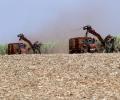
Use of 10 per cent ethanol-blended petrol has led to a saving of over Rs 41,000 crore in the foreign exchange for the country, minister of state for environment, forest and climate change Ashwini Kumar Choubey said on Wednesday. Speaking at an online event of auto industry body SIAM on sustainable mobility, the minister said the government is working in multiple ways to encourage sustainable mobility. "India recently achieved 10 per cent ethanol blending target 5 months in advance, saving over Rs 41,000 crore worth of fuel imports for the nation," Choubey noted.

The list clearly shows the dominance of Maruti and Hyundai in the Indian passenger vehicle market.

At 12:25 PM, the barometer index, the S&P BSE Sensex was down 358 points or 1.3% at 26,368.

Japanese auto major Nissan on Wednesday said it is discontinuing Datsun brand in India, nine years after the company kicked off the marque's global relaunch in the country. Having failed in its ambitious global relaunch of Datsun, Nissan had in 2020 discontinued the brand in Russia and Indonesia, the other two countries along with South Africa and India which were marked as key markets targeting the entry level car segment. Confirming the move to discontinue the Datsun brand, Nissan India in a statement said, "Production of Datsun redi-GO has ceased at the Chennai plant (Renault Nissan Automotive India Private Ltd). "Sales of the model still continue (till the stock lasts)."
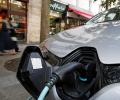
Automobile manufacturers, new and old, as well as ancillary suppliers are set to spend a combined Rs 70,630 crore over the next five years on either entering the electric vehicle segment or stepping up their presence in it. Data culled from announcements made by firms shows India, the world's fifth largest automobile market, is poised to receive one of the biggest capex pushes ever to fuel the transition from internal combustion engines to electric motors and batteries as part of a green drive. The EV push, egged on by the government's emphasis on electric mobility to meet its net zero targets, is expected to yield at least 25 electric vehicles - new ones as well as electrified versions of existing vehicles running on internal combustion engines.

Tuesday's top gainers included SBI, UltraTech Cement, HDFC Bank, L&T, Bharti Airtel, Maruti Suzuki and Kotak Bank.

...followed by financial services, IT, and sales and marketing.

Rajesh Alva brings you the details of the first maxi-scooter from the Suzuki stable.
 © 2026 Rediff.com - Advertise with us - Disclaimer - Privacy Policy - Sitemap - Feedback - About us - Terms of use - Grievances