
'We plan to add over 100,000 square kilometres every year, to reach an ambitious target of 500,000 square kilometres by 2025.'

The government wants to complete the operations rapidly, including the actual counting of people, by February next year, reports Subhomoy Bhattacharjee.

'If we want faster growth and want greater flow of credit towards the private sector, it's important to have many more of such large entities.'

The government, it would seem, is reserving its firepower to spend on big-ticket items that will be announced in the Budget, reports Subhomoy Bhattacharjee.

'For the common man, the economic conditions are not going to get better.'

The modus operandi for immunising the country's 1.35 billion population in stages has been thrashed out in more than one meeting among top government officials in the health ministry and the Prime Minister's Office.

There was the mistaken belief that there was no risk of a second wave anytime soon.

Earlier this year, the Union Cabinet gave the management of state-run companies the freedom to decide on divesting their subsidiaries. However, the very next day a meeting was held at the top level of the Government of India, for the presentation of proposals for more autonomy for state-run companies. Interestingly, no chiefs of any of these companies were invited. It is a problem that will stare the government in the face with the state-owned banks too, as talks have again begun for inviting strategic investments in these companies.

This month, advertisements for managing directors and the senior management team for the National Bank for Financing Infrastructure and Development or NaBFID, should be out, signalling the start of a financial institution (FI) like no other the country has ever had. For this and other reasons government managers associated with the NaBFID project are convinced it should remain a 100 per cent government-owned entity. This is somewhat different from what former economic affairs secretary Tarun Bajaj said when the NaBFID Bill was being tabled in Parliament earlier this year: "To begin with, it will be 100 per cent government owned.

It would be difficult to stick to the Budget numbers unless the departments are reined in their expenditure plans.

'We expect the movements to come down to a trickle or even to stop at all these places,' says NDRF DG Satya Pradhan.

Aadhaar is falling behind on technology, missing out on confidentiality and has gaps in its data archiving policy and preserving confidentiality in delivery of the cards to people, says a report by the Comptroller and Auditor General of India (CAG). The performance report, 'Functioning Of Unique Identification Authority Of India', tabled in Parliament on the last day of the budget session notes, assigning a unique identity to all resident Indians was supposed to be the key feature of Aadhaar. But "There were instances of issue of Aadhaar with the same biometric data to different residents indicating flaws in the de-duplication process and issue of Aadhaar on faulty biometrics and documents". It says close to half a million such records had to be cancelled by the Unique Identification Authority of India up to 2016.

In a first, the Comptroller and Auditor General's (CAG) officers reached out to several ministries in the last week of April as part of a confidence-boosting measure. The meeting brought the CAG officials and those from the ministries across the table to discuss the pain points in their relations. CAG of India Girish Chandra Murmu took this novel step because of growing tensions between those audited and the auditor.

LIC identifies the problems well, but what the markets will watch is how nimble it is with the solutions.

'How do you apply indelible ink without coming into contact?' 'There have to be options for other activities like casting of vote where you press a button and that of the signature identifying oneself.' 'None of our procedures should lead to exposure to infections.'
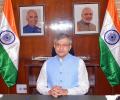
From trusted bureaucrat, to Wharton, MNC executive to businessman, and now politician, the man in charge of two weighty ministries is a unique all-rounder with specialist knowledge.

North Block is concerned that when India is trying to attract more investment, putting up restrictions on audit firms could create an avoidable bad advertisement.
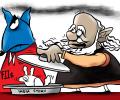
IT, FMCG and manufacturing sectors are less attractive to foreign portfolio investors

Valuers have found almost no assets to pay for their claims against the Videocon group that entered the insolvency process in 2018. But the dissenters suggest that the money is elsewhere, possibly in the group's oil and gas assets, which are not part of the group's bankruptcy case.

The largest challenge for the gigantic exercise between the Centre and the 29 states was to keep the latter interested over the years.

Each of the larger states may need less than Rs 10,000 crore each to finance the exercise.

Among all the geographies where Amazon is fighting regulators, India is the only place where its lines are also tangled in a major corporate battle, this one with India's largest company by market capitalisation over the acquisition of Mumbai-based Future Group's retail chain, the country's second largest. No other corporate entity in any country offers a challenge to Amazon's hegemony in a way Reliance Industries does - and the final hearing of an arbitration case filed at the Singapore International Arbitration Centre between the two may decide at least some of these issues. This legal battle between one of the world's most powerful corporations and one of India's most powerful conglomerates could be complicated by a host of other developments.

G C Murmu rarely speaks in public and when he does, his statements are always in lockstep with the thinking within this government.

People working at the Nigambodh Ghat -- perhaps the busiest cremation site in the national capital in the wake of outbreak of the pandemic -- go about their job with resilience, helping in whatever way possible.

Though COVID-19 will wreak more damage to the finances of the Indian population, the insurance sector is unlikely to get hurt.

The government would have to assure the Supreme Court that collection of biometric data under Aadhaar does not violate privacy.

For financial sector companies setting up shop in India, as of now the go-to regulators are obviously Sebi and the RBI with carve-outs for IRDAI or possibly PFRDA. But this could change soon with the International Financial Services Centres Authority, observes Subhomoy Bhattacharjee.

The views were asked for by the law ministry as part of a Cabinet note on the subject.

'After we released the report, the stir it created took us by surprise.'

When Finance Minister Nirmala Sitharaman tables her Budget on February 1, the numbers could be something to cheer.

Chances are any such disruption will not occur on the major shipping lanes but on some edge of the ocean between India and China. Even if there is no actual disruption, the costs of averting one can be punitive. The setting for this is provided by the energy shortage both countries face, says Subhomoy Bhattacharjee.

As in the past, it is up to the merchants to decide if they will bear the burden of the charge or bill it to the customers. Subhomoy Bhattacharjee reports.

Making water available is always a serious challenge in the summer for all public authorities. This year, the challenge is higher when hand-washing at every opportunity has become a necessity. So keeping potable water lines running without a glitch has become most necessary.
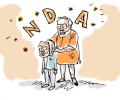
'The AMs are a different beast and reflect the political play within the government.' 'Prime Minister Modi does not need to assuage any interest group to take the final call on any decision that belongs rightfully to the Cabinet,' points out Subhomoy Bhattacharjee.

Cities are setting the rules that now carry life and death implications for their residents, and most of these rules are sought to be set by the municipal authorities who have never wielded such power, reports Subhomoy Bhattacharjee.

With Raghuram Rajan not 'really there', the FinMin has decided to keep a watch on market developments this week with all key officials on the job.

Without Myanmar, India can't engage with any of the Asian nations to its east.

There is a large population standing outside the coverage of primary healthcare, says Praveen Gupta of Raheja QBE.

There is discrimination against women in insurance cover. As a flood of insurance companies tap the capital markets with public issues, there is however, hardly any reference to this asymmetry. Subhomoy Bhattacharjee reports

None of the political parties in UP has any effective plans to create jobs.
 © 2026 Rediff.com - Investor Information - Advertise with us - Disclaimer - Privacy Policy - Sitemap - Feedback - About us - Terms of use - Grievances