
Anura Kumara Dissanayake, the leader of the Marxist Janatha Vimukthi Peramuna's (JVP) broader front National People's Power (NPP), on Sunday consolidated his lead in the Sri Lanka's presidential election.

A delegation from former president Maithripala Sirisena's Sri Lanka Freedom Party met him in the morning to press for their demand on the formation of the interim government.
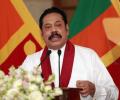
Rajapaksa's move signalled that he would contest the snap polls, to be held on January 5, under his own party banner and not that of Sirisena's SLFP.

After nearly two days of political deadlock, the stakeholders are engaged in prolonged talks to try and appoint a successor to Mahinda Rajapaksa.
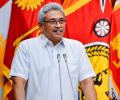
The dissidents, led by former president Sirisena's Sri Lanka Freedom Party, would leave the ruling Sri Lanka Podujana Peramuna coalition with its 14 Members of Parliament, party sources said after their meeting with the President on Monday.

Unidentified persons lobbed a bomb targeting the home of opposition presidential candidate Sarath Fonseka's campaign manager in Colombo on Friday, as violence escalated with just four days left for the polls.
The slain editor of a prominent Sri Lankan newspaper, known for its vocal anti-establishment stand on the war on the Liberation Tigers of Tamil Eelam, was buried in Colombo on Monday as the government came under heavy flak, including from a senior ruling party leader, for failing to stop attacks on the media.Former president and ruling Sri Lanka Freedom Party leader Chandrika Kumaratunga joined the growing number of opposition politicians and media watchdogs.
His remarks followed National Security Advisor M K Narayanan's recent remarks in Chennai that Sri Lanka should not seek weapons from Pakistan or China, but should come to India for its requirements.

'For the first time, all major countries are discovering India's indispensability to their own foreign policy interests.'
'We would like India to play a much more vigorous role. Of course, there are constraints and inhibitions, but it is still possible for India to play a meaningful and proactive role.'

Sri Lankans were on the edge on Tuesday as they waited whether embattled Gotabaya Rajapaksa will honour his offer to resign as president, amid signs that key members of the erstwhile powerful ruling family were attempting to flee in the face of massive public anger against them for mishandling the economy that has bankrupt the country.
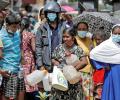
New Delhi has a chance to rid itself of its image as the bully in the subcontinent by helping a neighbour tackle problems that India, for once, has no role in creating. It should grab the opportunity with both hands, suggests Aditi Phadnis.

Sri Lanka's new Finance Minister Ali Sabry on Tuesday resigned, a day after President Gotabaya Rajapaksa appointed him after sacking his brother Basil Rajapaksa amidst the island nation's worst economic crisis.

Though dubbed as the "war hero", the role of Rajapaksa in ending the conflict with the Liberation Tigers of Tamil Eelam with the death of its supremo Velupillai Prabhakaran in 2009 is quite divisive as he stands accused of violating human rights, a charge he vehemently denies.
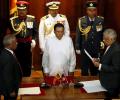
The swearing in ceremony was held inside the premises of the Presidential Secretariat at 9:30 am. President Sirisena administered the oath of office to 66-year-old Wickremesinghe, who has already served three times as the prime minister.

Rajapaksa informed the lawmakers of United People's Freedom Alliance that he has resigned from the post.

Over 15 million voters are eligible to vote in the election being held under electoral districts-based proportional representation system.
Rajapaksa was appointed as the premier on October 26 by President Maithripala Sirisena after sacking Ranil Wickremesinghe, plunging the nation into a constitutional crisis.

From Sri Lanka's most popular political family to its most despised -- going by the voices on the streets calling for the Rajapaksas' ouster -- what went wrong for the clan? Veteran Sri Lanka watcher N Sathiya Moorthy offers an insight.

Though dubbed as the 'war hero', the role of Rajapaksa in ending the conflict with the LTTE with the death of its supremo Velupillai Prabhakaran in 2009 is quite divisive as he stands accused of violating human rights, a charge he vehemently denies.

Mahinda Rajapaksa recovered from his 2015 electoral losses, went to the people and campaigned about the injustice done to him. Without attempting to be subtle, he underscored his image of the Sinhala Buddhist warrior a la Dutugemunu, the king of Sri Lanka (164 BC to 140 BC) who led the military campaign against the invading warlord Elara.
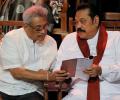
President Rajapaksa and Prime Minister Rajapaksa will transform Sri Lanka's political landscape after Thursday's electoral triumph, predicts N Sathiya Moorthy, veteran Colombo watcher.

India welcomed resolution of the political crisis in Sri Lanka and exuded confidence that relations between the two countries will continue to move on in an upward trajectory.

Maithripala Sirisena was considered so meek and self-effacing that he appeared no threat to anyone. What a mistake his rivals made!

Sri Lanka's newly elected president Mithripala Sirisena waves at media as he leaves the election commission in Colombo. Photograph: Dinuka Liyanawatte/ Reuters

The country has a fiendishly complicated electoral system that is a combination of population-based proportional representation and party-based national lists, says Aditi Phadnis

Rajapaksa has blamed India, the United States and European countries for his humiliating defeat.

If India is to follow a smart cultural diplomacy, it has unmatched advantages over both China and Pakistan, says Colonel Anil A Athale (retd).
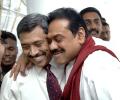
As the island heads for elections, two major factors worry Sri Lankan President Mahinda Rajapaksa. One is the division in the Sinhala vote and the other is the prospect of the Tamils and Muslims voting heavily against him.

'We have nothing to gain by helping any other country to become a threat to India,' former Sri Lanka president Mahinda Rajapaksa, who is on the comeback trail, tells Rediff.com in an exclusive interview.
Unlike in the presidential polls, victory might not have been complete, at least as yet, for Mahinda Rajapaksa's electoral rivals. While his one-time aide and confidant, Maithripala Sirisena, became president without any issues after defeating him, incumbent Prime Minister Ranil Wickremesinghe, who again may not command an absolute majority in the 225-member parliament, would have to count on his 'national government' concept to carry the day and the nation with him, this time round, says N Sathiya Moorthy.
 © 2026 Rediff.com - Investor Information - Advertise with us - Disclaimer - Privacy Policy - Sitemap - Feedback - About us - Terms of use - Grievances