
IMD data shows in the 24 hours between September 1 and 2, Haryana received 806 per cent more rainfall than normal, Punjab 759 per cent, Himachal Pradesh 510 per cent, Delhi 740 per cent, Chandigarh a staggering 1,638 per cent, and Rajasthan 193 per cent.

Delhi is experiencing its first heatwave of the season, with temperatures reaching 40.2 degrees Celsius. Doctors have warned that exposure to extreme heat can lead to a range of health issues, from mild rashes and muscle cramps to serious conditions like heat exhaustion and heatstroke. They advise staying hydrated, avoiding outdoor activities during peak hours, and wearing light, breathable clothes. Vulnerable groups like children, the elderly, and those with pre-existing conditions are at greater risk.

The minimum temperature in Delhi was recorded at 28.6 degrees Celsius, according to the India Meteorological Department (IMD).

India's leading commodity exchange, National Commodity and Derivatives Exchange (NCDEX), and private weather forecasting company Skymet took a significant step towards launching the country's first tradeable weather index on Monday (August 14) by entering into an agreement to deepen their understanding of the impact that weather has on agricultural commodities. The memorandum of understanding (MoU) between NCDEX and Skymet is a profound step in the direction of linking farmers with the weather in a scientific way, according to an official statement. Sources indicate that NCDEX and Skymet will conduct workshops and seminars across the country to educate farmers about how they can scientifically use weather forecasts to hedge risks.

The weather department has said that the skies are expected to be partly cloudy for the next few days in Delhi.

Temperatures in March will be critical to determining the impact of any unusual heatwave conditions on this year's wheat crop in North India. It is that time of the year when the crop enters its vital grain-filling stage, say meteorologists and crop experts. So far, the high day temperatures in the North are not believed to have any significant impact on the final yields since the crop hasn't entered a stage where heat affects yields.

Monsoons have had limited effect on market returns for a given year, report Sachin Mampatta and Sundar Sethuraman.

'Cyclone Nisarga will pass by Mumbai, Thane, Kalyan, Panvel and Navi Mumbai by a safe distance,' says Air Vice Marshal G P Sharma (retd), President, Meteorology and Climate Change, Skymet Weather Services,
.jpg)
An El Nino is a temporary change in the climate of the Pacific Ocean, in the region around the equator.
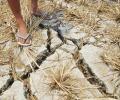
Though their intensity has been less so far and the exact impact on the crop is not yet known.

'Expect very heavy rainfall at some places in Uttar Pradesh and Bihar along with sub-Himalayan West Bengal comprising of Alipurduar, Cooch Behar, Darjeeling, Kalimpong, Siliguri, Jalpaiguri, including Sikkim, parts of Arunachal Pradesh, and parts of lower Assam, Rangia downward like Barpeta, Goalpara, Dhubri along with parts of Meghalaya.'

'It could rain about 200 mm in short span of time.'

IMD will present its month-wise and region-wise forecast in June.
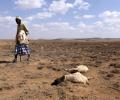
Weather watchers said it can't be known till May whether El Nio will impact the monsoon or not.

The official India Meteorological Department (IMD) and the private Skymet Weather Services have made widely divergent monsoon forecasts.
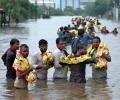
Simultaneous activation of both Arabian Sea and Bay of Bengal low-pressure systems has led to the state receiving an excess 65 per cent rainfall.

Monsoon is expected to cover central and eastern India after Tuesday.
 © 2026 Rediff.com - Investor Information - Advertise with us - Disclaimer - Privacy Policy - Sitemap - Feedback - About us - Terms of use - Grievances