
S Jaishankar, the new Indian ambassador to the United States, on Thursday met top officials of the State Department to convey India's strong protest over the arrest of its senior diplomat in New York over visa fraud charges, even though she had diplomatic immunity.
The West has always preferred a timid, half intelligent and a dependent India rather than a decisively independent and self-reliant one. A pliable Indian leadership suits the West best, says Tarun Vijay.

Prime Minister Narendra Modi during his over four-hour visit to the US Capitol established a personal rapport with top lawmakers and seems to have won over his critics.

The start of Indian lobbying in the US can be traced back to Pakistan's anti-India lobbying. Policy wonk Ashok Sharma documents this journey and its catalytic role in transforming the US-India relationship.

'India was in no position to wage another war in 1965, having suffered a morale-shattering defeat in 1962. The three services were in the middle of a modernisation and expansion phase and therefore not fully trained or battle-ready.'

Stunning images from the Underwater Photography competition
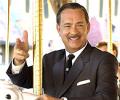
'It might not be supercalafragilisticexpialidocious, sure, but at least it points us in that direction,' Raja Sen says after watching Saving Mr Banks.

Indian Ambassador to the United States Dr S Jaishankar told Rediff.com's Aziz Haniffa that it was "a very nice meeting and President Barack Obama was extremely cordial."

Rush is a rousing, thrilling film, feels Raja Sen.
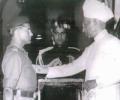
Decorated with a Vir Chakra for leading an attack that destroyed four tanks, Risaldar Ayub Khan shared a name with the Pakistani president who ordered the invasion of India in 1965. India's Ayub came from a family of soldiers and made his country proud.
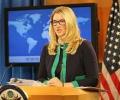
The United States has ruled out acceding to either of the two Indian demands --withdrawal of charges against its diplomat Devyani Khobragade, and an apology for alleged mistreatment, after her arrest in New York last week.
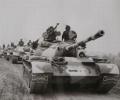
The 1965 war teaches us that war by escalation is a real possibility. Despite clear threats, Pakistan never believed that India will ever cross the international border. In the age of nuclear deterrence, this failure to deter Pakistan is the central lesson of 1965, says Colonel Anil Athale (retd).

From being on the verge of war and violence, West Asia has actually got a sudden reprieve. Seema Mustafa explains

'The origins of the model of planned economic development adopted by independent India was a direct consequence of the war.' 'The war provided an opportunity for groups at the margins of Indian society to find new avenues for mobility.' 'The war also led to the emergence of India as a major Asian power and set the stage for it to play a wider role in international politics.'

'If at all,' says Suhasini Haidar, Foreign Affairs Editor, CNN-IBN, 'Devyani Khobragade is to avoid facing a full trial, the process of that negotiation must start immediately, for which the current acrimonious atmosphere must be improved. It is no more than the US was willing to do for Raymond Davis; the Italian government for its sailors; and India for Captain Sunil James and Vijayan in Togo. Devyani Khobragade is not accused of charges anywhere as serious they were, and whether Preet Bharara's office recognises it or not, she is a diplomat who represents a proud country that has taken the insult to her as a personal insult to the country.'

Bibhu Mohapatra from Odisha gave up a degree in economics to design clothes and hasn't looked back.
 © 2026 Rediff.com - Advertise with us - Disclaimer - Privacy Policy - Sitemap - Feedback - About us - Terms of use - Grievances