
The board meeting also saw Mehta, 57, being re-appointed as MD & CEO for a period of five years after the completion of his term in October

FMCG major Hindustan Unilever Ltd on Thursday reported an increase of 12.74 per cent in its consolidated net profit at Rs 2,601 crore for the fourth quarter ended March 31, 2023. The company had posted a net profit of Rs 2,307 crore in the January-March quarter of the previous fiscal. Its revenue from sales during the quarter under review stood at Rs 14,926 crore, up 10.83 per cent, as against Rs 13,468 crore in the corresponding period a year ago, Hindustan Unilever Ltd (HUL) said in a regulatory filing.

FMCG major HUL on Friday announced the appointment of Rohit Jawa as the managing director & chief executive officer to succeed Sanjiv Mehta who will retire from the company after leading it for a decade. Jawa, presently the Chief of Transformation for Unilever, would take over the leadership role for a term of five consecutive years with effect from June 27, 2023, the company said in a statement. "The appointment of Rohit Jawa as a whole-time director and MD & CEO will be subject to approval of Shareholders and other statutory approvals as may be applicable," it added.

HUL's focus on strengthening the core, leading market development & premiumisation, driving channel transformation and building brands with purpose, continues to serve it well: CMD Sanjiv Mehta.
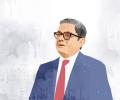
'For our traditional membership base, it would be an access to disruptive ideas,' FICCI President Subhrakant Panda tells Asit Mishra/Business Standard.
Leading FMCG firm HUL on Thursday said it has switched to green fuel alternatives such as biomass and biodiesel and has eliminated the usage of coal across its operations. The company has collaborated with biomass suppliers and local farmers to ensure sustainable supply of green fuel and has made the necessary changes for the renewable transition in its coal-fired boilers, said an HUL statement. Besides, the shift from coal to renewable energy sources has also resulted in savings for the company, it added.

For a product initially positioned as a "closet mate" which could help improve a woman's marital prospects, HUL Chairman Sanjiv Mehta says the communication now is all about women's empowerment.

We'll not take our eyes off volumes, said Sanjiv Mehta, MD of HUD after announcing that demonetisation had reduced the company's sales four percent.

UK-headquartered consumer goods giant Unilever on Tuesday announced a major organisational shakeup to make the company leaner, which involves some of its Indian-origin executives, and plans to lay off 1,500 staff as part of the wider restructuring of its global operations. Sanjiv Mehta retains executive leadership of Mumbai-headquartered subsidiary Hindustan Unilever, while Unilever chief operating officer (COO) Nitin Paranjpe will take on a new role as chief transformation officer & chief people officer, leading the business transformation and heading the HR function for the transformed organisation. The company said Sunny Jain, president of beauty & personal care, has decided to leave Unilever to set up an "investment fund in technology megatrends".
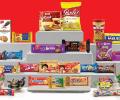
Indian consumers are likely to get respite from rising prices just before the festival season. Some consumer companies, including automakers, have indicated that they are planning to pause price hikes just before demand picks up in August, while keeping a close eye on volatile raw material prices.

After navigating the turbulent pandemic waves, the recovering Indian economy is now sailing through unchartered waters of rising coronavirus cases, spiralling commodity prices and spiking inflation though the lighthouse of sustainable growth remains visible. As 2022 begins, a raft of developments, ranging from Budgetary announcements to continuation of stimulus measures to monetary policy, will set the tone for the domestic economy, which is projected to grow more than 9 per cent in the current fiscal ending March 2022. The country's continuing massive vaccination drive and 'precaution' doses starting for select categories of people this month will provide a firewall against any steep spike in coronavirus cases amid the emergence of the Omicron variant.

'I remain optimistic that 2021 will be better than 2020 because we have visibility of vaccinations this year.'
FMCG major Hindustan Unilever Ltd on Thursday reported a 10.7 per cent increase in its consolidated net profit at Rs 2,100 crore for the first quarter ended June, 2021 led by a volume-based growth despite challenging circumstances due to the second wave of the pandemic. The company had posted a net profit of Rs 1,897 crore in the April-June quarter of the previous fiscal. Net sales during the quarter under review stood at Rs 11,996 crore, up 13.49 per cent, as against Rs 10,570 crore in the corresponding period a year ago, Hindustan Unilever Ltd (HUL) said in a regulatory filing.

Mahindra Group has acquired a minority stake in the East India Company, the global luxury brand owned by Indian-origin entrepreneur Sanjiv Mehta who relaunched the company here in August 2010.
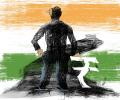
'The classic thing we need as a country is the virtuous cycle where you have robust demand which leads to more capital spending which in turn leads to more job creation and more money in the hands of people.'

In May, Satpal Singh, who runs a dairy business with three buffaloes in Jewar, near Noida, was worried about the steep spike in input costs. Singh said dry fodder rates, which cost Rs 1,500-2000 per tractor trolley last year, were quoting at Rs 4,500-5,000. The price of other cattle feed ingredients (that include mustard meal and similar mixes) had also gone up from Rs 2,000 per quintal to Rs 3,100-3,200 per quintal.

'There will always be a challenge to maintain a fine balance to ensure that the growth keeps happening and inflation is contained.'

While a merger means HUL taking over GSK Consumer's assets, including its employees, any mention of retention of employees beyond the merger is missing in the deal.

Sanjiv Mehta, chairman of the country's largest consumer goods company, HUL, believes that the second wave of the Covid-19 pandemic between April and June this year has been a mere pause in India's consumption story, and that it will not change the country's overall growth trajectory. India is poised for growth, especially in the fast-moving consumer goods (FMCG) sector, Mehta told shareholders at the company's annual general meeting on Tuesday. The signs of recovery are becoming evident with many states lifting lockdown restrictions in recent weeks.

Items to be stocked include furniture, chocolates, leather goods, fruit pickles and sushi.

However, the government's draft policy on e-commerce companies has forced consumer companies to also adapt to the changes. For Dabur India, e-commerce channel continues to be a key driver of growth in urban India. The contribution of online sales to its entire portfolio is at six per cent compared to 1.5 per cent before the pandemic.
If you are interested in a future filled with financial security, wealth management expert Sanjiv Mehta has a few valuable tips for you.
Is it possible for you to achieve financial freedom in your lifetime? Can saving a small portion of your monthly income help you achieve this? Wealth management expert Sanjiv Mehta believes so.

60-65 per cent of the FMCG industry's overall sales come from urban areas; 35-40 per cent from rural areas.

The transaction is an all equity merger with 4.39 shares of HUL being allotted for every share in GlaxoSmithKline Consumer Healthcare India
The haircare brand, acquired for Rs 330 crore, fetches HUL around Rs 400 cr of revenue annually.
Investing in the stock market is one of the best ways of creating wealth, says financial expert Sanjiv Mehta.
What is the right age to start planning for achieving financial freedom? Where should young people invest to become financially free? Wealth management expert Sanjiv Mehta in a chat on August 17 with Get Ahead readers answered these questions.

The Indian IT services sector is scrambling to retain talent since digitisation-led transformation has increased the demand for a digitally skilled workforce. As a result, the pull for jobs for tech professionals is also coming from non-IT sectors, leading to higher attrition among IT companies. The average number of tech jobs from non-IT sectors has seen a 41 per cent uptick in March-May'21 versus March-May'19, according to data from Naukri.com.
From putting together the right team to taking the right decisions at the right time, cricket can teach you a lot about making money.

Experts point to the higher contribution of rural from the north for the growth reported by the region, a point endorsed by companies who've been pushing their presence aggressively there.

In spite of a severe second wave of the coronavirus pandemic, and a widespread disruption in public life therefore, India's fast-moving consumer goods (FMGC) sector seems to have emerged as one of the most resilient segments of the economy. The early numbers and estimates for the April-June quarter indicate a steady recovery in FMCG players' business, which is now set to exceed the pre-pandemic level. Amid nationwide lockdowns because of the first Covid wave, FMCG revenues had been severely affected in mid-2020.
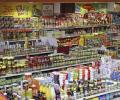
While sales momentum from rural areas may last another three to six months, sales growth in urban areas could stage a comeback by next year's June quarter as people learn to live with the coronavirus and economic activity gradually improves in the cities.
Clearly, the domestic market has taken sharp knocks in April, which is likely to be visible in May as well, said analysts tracking the market, as FMCG companies are grappling with improving capacity utilisation and dealing with labour shortage.

Most companies reporting an improvement in operating margins in Q1 as they cut ad spends and other expenses.
Mandates have been handed out to staffing solutions companies such as Randstad India and TeamLease, officials at these firms have said, as players increasingly push into rural areas to capitalise on the uptick in the hinterlands.

Hindustan Unilever Ltd, India's largest personal care product maker, on Tuesday reported a better-than-expected increase in its September quarter net profit and revenues, signalling a revival of demand following the world's biggest lockdown.

FMCG CEOs indicate that the market should stabilise post the general elections and that some growth should make its way back especially in rural areas

From helping their employees infected with the Covid-19 virus to vaccinating them or supporting the families of those who might have succumbed to the infection, several companies in India are trying to do their bit in this difficult time. Some have even widened their support net to include all stakeholders as well as an extended community. To the families of the employees it lost to Covid-19, Noida-headquartered IT services and consulting company HCL Technologies is, for instance, paying salary for a year, medical insurance for three years and extending support for their children's education for five years.

"Taking forward the brand's journey towards a more inclusive vision of beauty, the company will stop using the word 'Fair' in the brand name 'Fair & Lovely'. The new name is awaiting regulatory approvals and we expect to change the name in the next few months," Hindustan Unilever Ltd (HUL) said in a statement. As part of the rebranding, the company will also be announcing the new name for the 'Fair & Lovely' Foundation, set up in 2003 to offer scholarships to women to help them pursue their education.
 © 2026 Rediff.com - Investor Information - Advertise with us - Disclaimer - Privacy Policy - Sitemap - Feedback - About us - Terms of use - Grievances