
Rajeev Kumar, the Kolkata police commissioner, is known for his impeccable investigating and electronic surveillance skills.

James Wilson tracks down discrepancies in the much-hailed demonetisation policy and the subsequent statements of the government and the Reserve Bank of India.

In the third of a four-part series, Business Standard reporter travels to Nashik to assess how the currency press there is responding to demonetisation.

If RBI has to replace the entire stock of Rs 1,000 and Rs 500 notes with Rs 100 ones, the cost would be more than Rs 10,000 crore.

In the second of a four-part series, Business Standard checks out the currency press in Dewas to find target-based allowances have increased the monthly salary of employees from Rs 10,000 to Rs 30,000, at a time when notes are being printed 24x7.

Lalgarh, once a nerve centre of Naxal insurgency in West Bengal, now represents a different place.

Mamata Banerjee said availability of land won't be a problem in Bengal as the state government has a land bank.

'Now that there is an election in the offing, she is repeating the same old promises. Does she think the people of Bengal are fools to fall for her lies?'
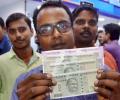
The crux of the problem is change, specifically the Rs 500 note, which India's presses cannot, currently, print in adequate number, says Sahil Kini/IndiaSpend.

Many countries advised the return the high-denomination notes to the central bank for destruction, but these continued to be legal tender. This and the introduction of a new Rs 2,000 note in India are the two major differences between Indian demonetisation and those of other countries.

Banerjee has fulfilled two key electoral promises: Ridding Lalgarh of Naxals and bringing peace to Darjeeling
 © 2026 Rediff.com - Advertise with us - Disclaimer - Privacy Policy - Sitemap - Feedback - About us - Terms of use - Grievances