
The NCMC facilitates convenient travel while integrating last-mile connectivity, a must in India's extensive landscape. It enables travellers to pay for a cross-section of needs, including toll tax, retail shopping, and withdrawing money.
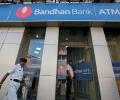
It is 10 years since Bandhan Financial Services became the first microfinance institution (MFI) to receive the universal bank licence. A year later, in 2015, it started operations. Bandhan's entry into banking was seen as a vote of confidence by the Reserve Bank of India (RBI) for the country's microfinance sector. Subsequently, the RBI awarded small finance bank licences to nine MFIs.

The Reserve Bank of India's (RBI's) move to ban Mastercard from issuing new cards for not complying with the local data storage guidelines may hit five private banks, a non-bank lender, and a major card-issuing company. The impact is expected to be felt for a few months as these players transition to other card networks. According to Nomura Research, RBL Bank, YES Bank, and Bajaj Finserv are the ones most impacted by the ban as all their credit card schemes are allied to Mastercard. Among others, IndusInd Bank, Axis Bank and ICICI Bank have 35-40 per cent of their credit card schemes tied to Mastercard, the report said.

It won't be easy for the banking sector to better its performance every quarter, predicts Tamal Bandyopadhyay.

With the rise in interest rates, bond yields have been on the rise; this will dent banks' treasury profits. Also, many retail borrowers may find it difficult to service their loans when the loan rates rise, points out Tamal Bandyopadhyay.

'It is nice that the banking system is in good shape.' 'It is a little early to call it too good because I think it was too bad in the past.'

Private sector lenders have been communicating to their customers about their strong capital positions but it has not put depositors at ease.

Credit card issuers saw significant erosion of their card base during the July-September quarter as the Reserve Bank of India's (RBI) norms mandated deactivation of cards that have been inactive for a year. The second quarter of the current financial year saw outstanding cards-in-force decline by 2.55 million to 77.7 million. Prior to this, the industry, on an average, was witnessing a net addition of over 1.5 million credit cards a month as players became aggressive on the unsecured lending business after the pandemic.

To educate customers on the modus operandi of financial fraudsters and share inputs on safe banking habits, banks are now coming up with awareness campaigns aimed at preventing customers from falling into the trap of fraudsters.
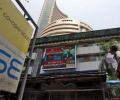
Analysts believe that investors should look at stocks that hit 52-week lows only if they have a dividend paying track record, are debt-free and have sound fundamentals.

We'll need to wait a couple of years to see how many restructured loans turn bad and whether some banks fall victim to their obsession for growth, explains Tamal Bandyopadhyay.

A day after the Reserve Bank of India's (RBI's) Monetary Policy Committee hiked the policy repo rate by 50 basis points (bps), several commercial banks, including ICICI Bank and Bank of Baroda, raised their external benchmark-linked loan rates by an equal amount on Thursday. HDFC, the country's largest mortgage lender, too, increased its interest rates on housing loans by another 50 bps. In total, it has raised rates by 85 bps since May 4, when the RBI had increased the repo rate by 40 bps in an off-cycle meeting.

The drop in net interest margin will separate the men from the boys, explains Tamal Bandyopadhyay.

Banking technology start-up Zeta is the latest entrant to the unicorn club after raising $250 million in its Series C round from SoftBank Vision Fund 2. Sodexo participated as an additional minority investor in the round. Founded by serial entrepreneur and billionaire Bhavin Thurakia, the startup is now valued at $1.4 billion. It is the 14th company this year to cross the $1 billion valuation mark after Meesho, Cred, Pharmeasy, ShareChat, Moglix and others.

MakeMyTrip, RBL Bank, Inox wind and IRCTC are among the firms that have made it to the Fortune Next 500 list of Indian companies.

A total of 25 companies raised Rs 28,220 crore during the financial year.

The strike notices were given by workers' unions of various sectors such as coal, steel, oil, telecom, postal, income tax, copper, banks and insurance.

Ajit Mishra, vice president, research, Religare Broking, answers your queries.

YES Bank, Bank of Baroda, SBI, IndusInd Bank, and RBL Bank are amongst the banks, Jefferies says, are most prune to "high risk" emanating from ADAG, Cox & Kings, CG Power, DHFL and Essar Shipping.

India may adopt norms similar to the US Federal Reserve model, which regulates conglomerate-led banks in the country.

If the banks throw caution to the winds for building loan books, the hydra-headed bad loans may resurface and spoil the party, warns Tamal Bandyopadhyay.

Around 75 per cent, or 372 stocks, that are part of the BSE500 are trading at least 10 per cent below their all-time high levels, despite the index hitting a record high 20,515 points on the BSE in intra-day trade on Wednesday, surpassing its previous high of 20,390 touched in March 12. The index, which accounts for 93 per cent of BSE listed companies' market capitalisation, has gained 8 per cent from its recent low of 18,983, touched on April 19. In comparison, the benchmark S&P BSE Sensex gained 6 per cent over the same period, but is still nearly 4.5 per cent away from its all-time high of 52,517 that it hit on February 16.

Ajit Mishra, vice president, Research, Religare Broking, answers your queries.

Nearly two million e-mandates for recurring payments have been registered with banks and card networks after the Reserve Bank of India (RBI) made it mandatory from October 1 to take prior consent of a customer before debiting her account, sources in know of the matter said. Industry estimates peg the recurring transactions at approximately 2.5 per cent of the total volume of transactions, and about 1.5 per cent in terms of value. Of these, around 75 per cent of domestic recurring transactions, and about 85 per cent international recurring payments are below Rs 5,000.

Apart from SBI, UPI 2.0 partner banks are HDFC Bank, Axis Bank, ICICI Bank, IDBI Bank, RBL Bank, YES Bank, Kotak Mahindra Bank, IndusInd Bank, Federal Bank and HSBC.

Ajit Mishra, vice president, research, Religare Broking, answers your queries.

Asserting that not allowing its officials to withdraw their salaries was in breach of Vienna Protocol, Pakistan has also threatened that in case the matter is not resolved soon, it may consider retaliatory action against salary disbursal for Indian diplomats there.

Investors took the Yes Bank event negatively because it raises a question on the stability of the overall Indian financial system.
'Spends are likely to increase from the current levels because recovery is yet to fully be over.'

Free speech is the soul of a great university. By compromising on it, the founders have bartered away its soul, said Rajan.

While Gupta, 60, can rightfully bask in the glory he has achieved for his bank in the subcontinent, his peers in foreign banks will have to revisit their India play, especially the local incorporation model, says Raghu Mohan.

Ajit Mishra, vice president, research, Religare Broking, answers your stockmarket queries.

Crisil Research expects retail inflation to rise 60 basis points to 4 per cent this fiscal from 3.4 per cent in 2018-19.

'Facilitating conversion of well-run NBFCs into banks is urgently needed.'

Amazon Web Services (AWS) on Friday announced setting up of its second data centre region in India in Telangana that will be operational by mid-2022, and will see the tech giant investing about Rs 20,761 crore. While AWS did not comment on the investment detail, Telangana IT and Industries Minister KT Rama Rao tweeted that AWS will invest Rs 20,761 crore ($2.77 billion) to set up multiple data centres in the state.

In the start-up world, hitting the $1-billion mark, which accords the "Unicorn" tag, is a milestone. Enterprises typically reach the milestone only by series C or series D, or three to four funding rounds later. Zeta achieved it at the first one. On May 25, the six-year-old banking tech firm raised $250 million from Japanese conglomerate SoftBank, at a post-money valuation of $1.45 billion. "This is the first time we have raised institutional money," Zeta co-founder Bhavin Turakhia beamed on the conference call. This trajectory is uncommon in start-ups.

Ajit Mishra, vice president, Research, Religare Broking, answers your queries.

Backed by technology banks are expanding the branch network - and adding more to the workforce.

Interest rate and tenure are not the only two factors to consider.

The amount you can raise via a gold loan is higher than you can get via a personal loan.
 © 2026 Rediff.com - Investor Information - Advertise with us - Disclaimer - Privacy Policy - Sitemap - Feedback - About us - Terms of use - Grievances