
'It is extremely important to take back the domain of both religion from the religious bigots and nationalism from the chauvinists, who are spreading hatred.' Sugata Bose, the Harvard historian-turned-MP, who is Netaji's great-nephew, tells Anjali Puri why it is imperative to speak up for India's students.

Ironically, it was the members of the BJP (which the Indian press loves to dub as fascist) who resisted the assault on democracy and were jailed for 18 months. The RSS too played a stellar role in the resistance movement during the Emergency. Yet by some strange warped logic, the Indian media deems the Congress party with an established record of authoritarianism as a standard bearer of democracy while damning a true champion -- the BJP, says Vivek Gumaste
The real danger in India is not majoritarianism but minorityism, a bane we have already experienced. Majoritarianism in the India context means plurality and tolerance. No one needs to fear, says Vivek Gumaste

Compromise, constitutionality, pragmatism and self-respect. These were Mandela's leadership virtues. For countries such as India and South Africa, these are the qualities leaders must have, says Mihir S Sharma

As the 16th Indian parliamentary elections get underway, Vikas Lather profiles Sukumar Sen, India's first chief election commissioner.
While all political parties have been talking about following in the footsteps of the debutant Aam Admi Party by fielding fresh faces in the coming Lok Sabha polls, Bihar Chief Minister and Janata Dal-U leader Nitish Kumar has set the ball rolling by deciding not to renominate his party's three sitting MPs in the coming biennial elections to the Rajya Sabha scheduled for February 7. Anita Katyal reports.

Article 370 is a golden cage that keeps Kashmiris trapped in a stifling environment, deters other Indians from investing in the state perpetuating its economic penury and expressly hinders the understanding of India; all under the false premise of preserving a narrow parochial identity, says Vivek Gumaste.

'The darkest days of Indian democracy were (during) the Emergency when basic democratic rights were suspended. For a time it seemed as though India would move along the East Asian model -- everybody works hard, nobody asks questions, certainly not of the government.' 'There are people who say we are headed that way, but I am not persuaded by the evidence,' says Mahesh Rangarajan who recently resigned as director of the Nehru Memorial Museum and Library in New Delhi.

The party has tried to downplay its vice-president's sudden move, saying he is the leader and will come back soon to play a pro-active role in party affairs
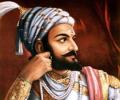
'Shivaji was among a handful of Indian rulers to realise the importance of sea power... Not much attention is paid to his remarkable achievement: Building a modern navy and the revival of Indian maritime power.'

Professor Chintamani Nagesa Ramachandra Rao is the third scientist to be awarded the highest civilian award -- Bharat Ratna, a crowning glory of his inexorable list of outstanding achievements.

In any controversy, the participants cannot decide who is right or wrong. A democracy has a process in place to settle these disputes: the judiciary. Dinanath Batra in true democratic fashion availed of that opportunity citizen and Penguin's decision was the outcome of a legitimate legal battle, says Vivek Gumaste.

Indian shooters continued to shine at the 17th Asian Games, clinching the bronze medal in men's 10m air pistol team event, but Jitu Rai could not emulate his golden feat and finished fifth after promising much in the earlier part of the individual finals in Incheon on Sunday.

'Indian politics has had three-and-a-half master narratives -- secular nationalism, Hindu nationalism, justice for lower castes and regionalism. The AAP seeks to go beyond that. Therein lies its promise and its challenge,' says Ashutosh Varshney, Brown University professor and author of book Battles Half Won, India's Improbable Democracy.

'No PM has said no to anything we have proposed. I am not a politician and I cannot give speeches about things, but a lot of good things have been done in science by previous governments.' 'Under Dr Manmohan Singh, we could do a few important things. I used to meet him once in 6, 8 weeks. He often said, 'Professor Rao, you assume that you have my approval and carry on.' He was shy and decent. He is a real gentleman.' 'Science keeps me going at 80. I feel young.' Professor C N R Rao, the eminent scientist who was honoured with the Bharat Ratna, on the state of science in India.
 © 2026 Rediff.com - Investor Information - Advertise with us - Disclaimer - Privacy Policy - Sitemap - Feedback - About us - Terms of use - Grievances