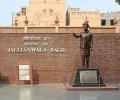
Former Supreme Court judge Justice Rohinton Nariman has warned that events similar to the Jallianwala Bagh massacre could occur if the 'basic structure' doctrine of the Constitution is diluted. In his new book, 'The Basic Structure Doctrine: Protector of Constitutional Integrity,' Nariman argues that the 1973 Kesavananda Bharati judgment, which established the doctrine, is essential for protecting fundamental rights and preventing constitutional amendments that could lead to such tragedies. Nariman's concerns are echoed by Supreme Court judge Justice K V Viswanathan, who applauds the book for its "chilling clarity" and underscores the importance of the Kesavananda Bharati ruling. The book provides a detailed analysis of the doctrine and its implications, highlighting the robustness of the Kesavananda Bharati judgment and the lack of a compelling alternative theory.
The Centre said as a matter of judicial review, the court could declare the provisions to be unconstitutional, however, the relief sought by the petitioner effectively sought to read "life-long" instead of "six years" in all sub-sections of Section 8 of the Act.

New India Assurance and Niva Bupa have invested in the Bima Sugam India Federation.
'It is imprudent on the part of Indian insurance companies to invest out of the shareholders' fund in a private limited company.'

The bill which seeks to put in place a mechanism to hold simultaneous elections in the country has a provision for situations when election to an assembly cannot be held with those of Parliament.
There is an imperative need for holding simultaneous elections for various reasons as polls have become expensive and time-consuming, according to the proposed bill being brought to implement the ambitious 'one nation, one election' plan.
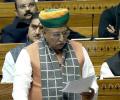
Two bills that lay down the mechanism to hold simultaneous elections were introduced in the Lok Sabha after a fiery debate on Tuesday, with the opposition terming the move 'dictatorial' and Law Minister Arjun Ram Meghwal asserting that the legislation would not tamper with the powers enjoyed by states.

The Supreme Court of India has dismissed petitions challenging the 1976 amendment to the Constitution that added the terms "socialist", "secular", and "integrity" to the Preamble. The court ruled that the inclusion of these terms, made through amendments, is valid and does not affect the original adoption of the Constitution in 1949.

There is nothing "fundamentally inconsistent" with a minority institution being an institution of national importance (INI), the Supreme Court said on Wednesday while hearing arguments on the vexed issue of minority status to Aligarh Muslim University (AMU).

The Supreme Court said on Thursday the surrender of Jammu and Kashmir's sovereignty to India was "absolutely complete" with the accession of the former princely state in October 1947, and it was "really difficult" to say that Article 370 of the Constitution, which accorded special status to the erstwhile state, was permanent in nature.
The Supreme Court on Monday dedicated a web page containing details of arguments, written submissions and the judgment in the historic Kesavananda Bharati case which laid down the path-breaking concept of the 'Basic Structure' of the Constitution.
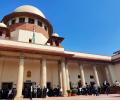
The top court, which on Thursday referred to a constitution bench the Delhi government's plea challenging the ordinance, framed two legal questions in its 10-page order to be dealt by a larger bench on the ordinance which set off a fresh tussle between the two power centres.
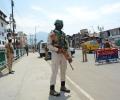
The central government's response was conveyed to the court by Solicitor General Tushar Mehta, after a five-judge constitution bench headed by Chief Justice DY Chandrachud, hearing the pleas challenging the abrogation of Article 370, asked it to set a specific time frame for restoration of electoral democracy in the erstwhile state.
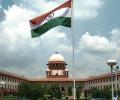
Is there no mechanism to abrogate Article 370 even when the people of Jammu and Kashmir want it, the Supreme Court asked on Thursday and wondered if the now repealed provision can't be touched, will it not amount to creating a "new category" beyond the basic structure of the Constitution.

The opposition bloc also got support from Telanagana Chief Minister K Chandrashekar Rao's BRS, which saw the bill as a move to usurp powers of an elected government in Delhi, and asked the House to vote against it.
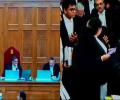
Who can recommend the revocation of Article 370 in Jammu and Kashmir when no constituent assembly exists there? The Supreme Court on Wednesday put this question to the petitioners who have challenged the abrogation of the constitutional provision that bestowed special status on the erstwhile state.
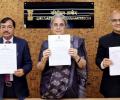
The Supreme Court on Monday dismissed a plea challenging the government's decision to constitute the delimitation commission for redrawing the legislative assembly and Lok Sabha constituencies in the Union territory of Jammu and Kashmir.

Vice President Dhankar's and Law Minister Rijuju's recent interventions have the danger of destabilising the Constitutional equilibrium, cautions N Sathiya Moorthy.

The government will have to move a bill in Parliament to repeal the three agri laws, which were at the centre of protests by farmers for the past year, Constitution and legal experts said on Friday.

The 102nd Constitution Amendment Act of 2018 inserted articles 338B, which deals with the structure, duties and powers of the National Commission for Backward Classes, and 342A that deals with the powers of the president to notify a particular caste as an SEBC and the power of Parliament to change the list. Article 366 (26C) defines SEBCs.

A bench comprising Justices L Nageswara Rao and B R Gavai said it has perused the judgments submitted and was of the view that the issue does not need consideration by a larger bench.

The 97th constitutional amendment, which dealt with issues related to effective management of co-operative societies in the country was passed by Parliament in December 2011 and had come into effect from February 15, 2012. The change in the Constitution has amended Article 19(1)(c) to give protection to the cooperatives and inserted Article 43 B and Part IX B, relating to them.

President Vladimir Putin proposed sweeping constitutional changes that could extend his hold on power for many years. Russian Federal Tax Service head Mikhail Mishustin to be the new PM.
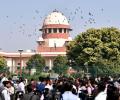
A five-judge Constitution bench, headed by Justice Ashok Bhushan, gave a week time to all the states to submit their brief note of submissions after some of them sought time.

A constitutional amendment bill to restore the powers of the states to make their own OBC lists was passed by Parliament on Wednesday, with the opposition and treasury benches joining hands in the Rajya Sabha to approve the legislation.

The Lok Sabha on Tuesday passed the Constitution amendment bill to restore the power of states to make their own OBC lists after a thaw in the logjam as Opposition parties backed the legislation but demanded the removal of the 50 per cent cap on reservation, with many of them also calling for a caste-based census.
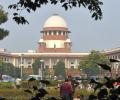
The Centre has moved the Supreme Court seeking review of the May 5 majority verdict which held that 102nd Constitution amendment took away the power of state governments to declare Socially and Educationally Backward Classes (SEBC) for grant of quota in jobs and admissions.
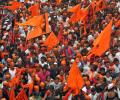
The judgment came on a batch of pleas challenging the Bombay high court verdict which had upheld the grant of reservation to Marathas in admissions and government jobs in the state.

In 1970, Bharati, the hereditary head of Edneer Hindu 'Matha' in Kasaragod district of Kerala, had moved the top court challenging the state government's two land reform Acts meant to restrict the management of religious properties. The case had a number of firsts to its credit.

Police said the 79-year old Kerala-based seer Kesavananda Bharati Sripadagalvaru died at the Edaneer Mutt in Kasaragod due to age related ailments. The case in which Bharati had challenged a Kerala Land Reform Act nearly four decades ago set the principle that the Supreme Court is the guardian of the basic structure of the Constitution and the verdict involved 13 judges the largest bench ever to sit in the apex court.

The government and the farmers must come back to the negotiating table with only the interest of the country in mind, suggests Vivek Gumaste.

Congress member of Parliament, Shantaram Naik has expressed grave concern over the dangerous trend of the Supreme Court laying down "laws" in the name of interpretation, thereby diluting Parliament's supremacy to frame laws.
Senior advocate Ram Jethmalani said that neither House had the jurisdiction to terminate or punish its elected members.

'Modi has shown political courage by instituting several economic reforms which include demonetisation, ushering in GST, eradication of benami transactions...'

GST rates would depend upon whether the commodity is used by a rich person or a common man
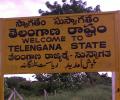
Lok Sabha secretariat has sought an opinion from the Union law ministry whether the constitution needs to be amended to form a new state. Vicky Nanjappa reports

'We have to find a way out of this confrontational politics.'

'In the name of cultural nationalism, Modi wants to impose another ideology on Muslims.' 'His agenda, we feel, is saffronisation of Indian culture.'
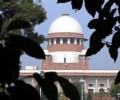
The Supreme Court on Tuesday tersely told the Centre that appointment of judges in higher judiciary is a "serious" business and cannot be left either to the "hit-and-trial" method or to the mercy of God.

Following objection from petitioners who claimed conflict of interest.
 © 2026 Rediff.com - Investor Information - Advertise with us - Disclaimer - Privacy Policy - Sitemap - Feedback - About us - Terms of use - Grievances