
Top government officials in New Delhi have started discussions with stakeholders ranging from shipping and container companies to export promotion councils to understand the impact of the Iran-Israel tensions and plan ahead. Inter-ministerial talks are also being lined up amid the crisis situation in West Asia, sources confirmed. While the crude flows are not directly under any threat, elevated oil prices remain a concern, according to officials.


Key infrastructure sectors -- from railways to power, and from coal to petroleum -- will not only be part of the achievements but promises too, as the BJP fights to get a third term at the Centre.

The oil industry experienced three upheavals between 1973 and 1991, which seem to be etched in the memory of the industry's decision makers. Naturally, at the sign of a new crisis, the decision makers like to dip into those tumultuous decades to find ways to deal with the new shock, in addition, of course, to expert reports and forecasts. So, the industry bigwigs turned the pages of history to get a peek into the future of oil price movements after Russia invaded Ukraine in 2022, Israel attacked Gaza in 2023, Iran-linked Houthi rebels pounded tankers crossing the Red Sea in support of Palestine the same year, and Iran rained missiles on Israel in 2024.

According to a new subsidy sharing formula, the payout of upstream oil producers like ONGC is to be reduced to the extent of Rs 4,500 per tonne oil development cess they pay to the government, sources privy to the development said.

Petrol and diesel prices were cut by Rs 2 per litre each as state-owned oil companies ended a nearly two-year-long hiatus in rate revision, just hours before the general election schedule was announced.
In 49 years since the ministry was set up in 1962, there have been 41 ministers.
"For 2010-11 and beyond, the Kirit Parikh report will be the benchmark. The report is being studied.These decisions are politically sensitive issues and have to be sustained over a period of time," Petroleum Secretary S Sundareshan told Business Standard. "It is impossible to insulate the Indian consumer against the movement in international oil prices."
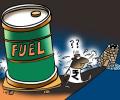
India's climate change goals are turning combustible. On the one hand, a protracted dispute between the government and manufacturers over subsidies threatens to slow the pace of electric vehicle (EV) sales. On the other hand, repeated assertions by different arms of the government over banning sales of new fossil fuel-fired vehicles have queered the pitch for energy investments. Before we address the issue of the recommended diesel vehicle ban in the recent report on energy transition, issued months before the next round of global climate talks begin in Dubai in November, let's look at what's at stake.

The Petroleum Ministry has asked for Rs 26,000 crore (Rs 260 billion) as fuel subsidy for the third quarter of this financial year, but the finance ministry is inclined to provide only Rs 10,000 crore (Rs 100 billion) cash support.

OMCs are currently incurring daily under-recovery of Rs 230 crore.
Forwarding a letter written to Prime Minister Manmohan Singh, wherein the younger Ambani had sought a direction to the ministry of petroleum and natural gas 'to cease from overtly and covertly attempting to intervene in our commercial dispute with RIL," the PMO asked the ministry to examine the matter and submit their comments urgently.

The company had initially objected to audit by CAG for time barred years as per Production Sharing Contract and had not accepted the 'exceptional circumstances' advanced by the ministry

With rupee depreciation leading to jump in oil import bill, Petroleum Minister S Jaipal Reddy on Tuesday said there is an immediate need to raise fuel prices, but refused to say when the hike will actually take place.
The finance ministry, in the explanatory memorandum to the Finance Bill 2008-09, proposes to withdraw the tax holiday which has been a window the petroleum ministry has been using to market the oil and gas exploration blocks under the New Exploration and Licensing Policy (Nelp) since 1999. The commitment to give a 7-year tax holiday to companies producing gas from Nelp blocks was finalised by the Union Cabinet after consultation with the finance ministry.

The CII feels the 20-year scheme was introduced to boost domestic industry and provide a platform to Indian industry to compete with their foreign counterparts.
It added this wasn't aimed at benefiting Reliance Industries Ltd alone.

Arun Kumar Singh, former chairman of oil refining and marketing company BPCL, was on Wednesday appointed chairman and managing director of ONGC -- the first instance of a retired person being appointed the head of a Maharatna PSU. "The Appointments Committee of Cabinet (ACC) has approved the proposal of ministry of petroleum and natural gas for appointment of Arun Kumar Singh, ex-CMD, BPCL as chairman, ONGC for a three-year tenure with effect from the date of his assumption of charge of the post," an official order said. PTI first reported of Singh's appointment on November 17.
The Prime Minister's Office on Thursday forwarded to Oil and Petroleum Ministry a letter written by Delhi Chief Minister Arvind Kejriwal in which he has demanded that the decision to hike gas price extracted from KG basin be kept in abeyance till completion of a probe into the issue.
Government has no role in fixing prices of natural gas produced from areas auctioned under NELP and only approves the pricing formula, petroleum ministry has told a committee of Secretaries appointed to look into the vexed issue.
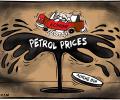
A proposal in the Union Budget 2022-23 to raise excise duty on dirtier, unblended retail petrol and diesel has met with some resistance from the petroleum ministry. However, finance ministry officials say no such communication arguing against the levy of extra duty on diesel has been received from the oil ministry. Until there are discussions between the two departments, the proposal will not be tweaked in the Finance Bill. The Rs 2 per litre additional excise duty proposed on unblended fuels in the Finance Bill will result in a uniform hike of diesel prices across the country from October 1.

Prices of natural gas, which is used to generate electricity, make fertiliser and is converted into CNG to run automobiles, were on Friday hiked by a steep 40 per cent to record levels, in step with global firming up of energy rates. The rate paid for gas produced from old fields, which make up for about two-thirds of all gas produced in the country, was hiked to $8.57 per million British thermal units from the current $6.1, according to an order from the oil ministry's Petroleum Planning and Analysis Cell (PPAC). Simultaneously, the price of gas from difficult and newer fields like the ones in Reliance Industries Ltd and its partner bp plc operated deepsea D6 block in KG basin, was hiked to $12.6 per mmBtu from $9.92, the order said.
The petroleum ministry has recommended a hike in the foreign direct investment cap in government-owned refineries to 49 per cent from the current 26 per cent.
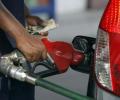
A looming global shortage of diesel in Europe presents India with more than one opportunity to profit from strong margins. A shortage of the fuel, a key contributor to inflation, has been exacerbated by the conflict in Ukraine, and western sanctions on Russian fuel supplies. The slowdown in natural gas supply means the West needs diesel to heat their homes this winter.

The Organization of the Petroleum Exporting Countries (Opec) and its partners, such as Russia, collectively termed Opec+, have decided to cut crude oil production by 100,000 barrels per day (bpd) from October onwards, at a meeting on Monday. In a step that may increase prices in India, the group has decided to reduce output quotas for October, after a fall in global oil demand outlook. The cut in output is equal to 0.1 per cent of global supply.
Officials from State-run refiners contend that savings from purchase of Russian oil are used to offset a part of the losses in revenues from selling transport fuels and LPG at State-set rates.
India must be prepared for a big, fat fuel import bill in FY23 - barring any further avatars of the Covid virus - as refiners crank up runs, or crude processing rates, to meet the growing demand for fuels, and crude prices soar. Capacity additions by an Indian state-run refiner will reinforce the need for foreign crude. Demand for all fuels is expected to increase by 3-8 per cent next fiscal from 2021-22, reaching pre-pandemic levels, according to analysts and industry experts.

Equity benchmark Sensex slumped over 1,000 points to sink below the 55,000-level on Friday, tracking deep losses in IT, finance, banking and energy stocks amid widespread selling in the global markets. A weak rupee, surging crude prices and relentless foreign capital outflows further weighed on sentiment, traders said. The 30-share BSE index ended 1,016.84 points or 1.84 per cent lower at 54,303.44.

The divestment of Bharat Petroleum Corporation (BPCL) may hit a fuel price hurdle, according to officials dealing with the matter. They pointed out that the inconspicuous administered price regime could hamper the prospects for potential buyers of BPCL. A senior oil ministry official said public-sector oil-marketing companies (OMCs) take a hit when they sell petrol, diesel, and liquefied petroleum gas (LPG), three of the most popular petroleum products in the country.
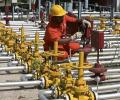
The oil ministry has stopped making fresh allocation of natural gas from domestic fields to the city gas sector, threatening the viability of Rs 2 lakh crore investment planned in the sector besides leading to a hike in CNG and piped cooking gas prices to record levels, sources said. Despite a decision of the Union Cabinet to give 100 per cent gas supply under 'no cut' priority to the city gas distribution (CGD) sector, current supplies have been maintained at March 2021 demand level. Besides, the process of allocating gas on a six-monthly average drawl also is punishing the CGD entities driving growth.

CNG price in the national capital and adjoining cities on Tuesday was hiked by Rs 0.50 per kg, while an imminent increase in petrol and diesel price has been put on wait-and-watch mode for more clarity on global oil prices. CNG price in NCT of Delhi has been increased to Rs 57.51 per kg from Rs 56.51, according to the information posted on the website of Indraprastha Gas Ltd - the firm which retails CNG and piped cooking gas in the national capital. Following the firming up of international gas rates, IGL has been raising CNG rates by up to 50 paise (Rs 0.50) per kg periodically. Prices have gone up by about Rs 4 per kg this year alone.
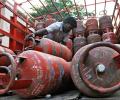
Cooking gas LPG price was on Thursday hiked by Rs 3.50 per cylinder, the second increase in rate this month following the firming of international energy rates. Non-subsidised LPG now costs Rs 1,003 per 14.2-kg cylinder in the national capital, up from Rs 999.50 previously, according to a price notification of state-owned fuel retailers. This is the second increase in LPG rate this month and the third in less than two months. The price was hiked by Rs 50 per cylinder on March 22 and again by the same quantum on May 7.

India will need to travel back in time and seek inspiration from football greats Tulsidas Balaram and Chuni Goswami to deftly dribble around and sidestep the West-imposed price cap on exports of Russian seaborne crude oil. India depends on imported oil to meet 86 per cent of its needs, of which nearly a quarter now comes from Russia. The copious flows are roughly 10 per cent cheaper than competing suppliers helping India save billions of dollars in fuel costs.

Price said India's relationship with Russia developed over several decades.
India on Wednesday asserted that its energy purchases from Russia remain 'minuscule' in comparison to its total consumption and that legitimate energy transactions cannot be politicised as energy export from Russia are yet to be sanctioned. The world's third-biggest oil-consuming and importing nation has in recent weeks snapped few cargoes available from Russia at deep discounts as part of its plans to diversify its import basket. These purchases have been commented upon.
 © 2026 Rediff.com - Investor Information - Advertise with us - Disclaimer - Privacy Policy - Sitemap - Feedback - About us - Terms of use - Grievances