
As many as 29,557 COVID-19 patients have recuperated in the past 24 hours.

While the numbers of fresh COVID cases and active cases are going up, the administration is focussing on testing, contact-tracing and treatment.
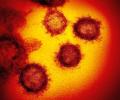
The WHO said that studies have highlighted that the spread of the second wave has been much faster than the first in India.

The last sero-prevalence survey was held from August 1-7, which showed that 29.1 per cent of the people surveyed had antibodies against the coronavirus infection.v
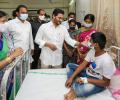
In their preliminary findings presented to the Andhra Pradesh government, the experts noted that it was a point source epidemic and a likely case of acute intoxication of toxins, but not chronic.

In a press briefing, officials said the virus outbreak is under control in the country and credited a robust surveillance network along with implementation of the lockdown and other containment measures for it.
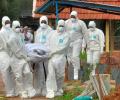
The minister said there has been no cases of Nipah reported from anywhere in the country

For communities, inadequate shelter and overcrowding are risk factors in the transmission of diseases with epidemic potential such as COVID-19, the National Centre for Disease Control, which falls under the health ministry, said.

He further said that stern action will be taken against people who do not wear masks and do not follow social distancing norms in the national capital.
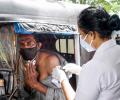
'In the coming two-three months, we need to be cautious that there is no upsurge'
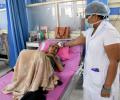
There is no current evidence from randomised controlled trial to recommend any specific treatment for suspected or confirmed patients with COVID-19.

According to the latest health department bulletin, the positivity rate has also jumped to 9.55 per cent, amid the festive season and the rise in pollution level.
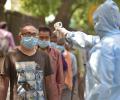
The plans also state that highly suspected cases testing negative on Rapid Antigen Test should be examined again using the gold standard RT-PCR test.

Scientists associated with Indian SARS-CoV-2 Consortium on Genomics (INSACOG), the government panel that conducts research on different variants of the coronavirus, said they were surprised at noted virologist Shahid Jameel's decision to quit the group and wondered whether he was disillusioned with the government's handling of the pandemic.

'There is no data to show this virus is more deadlier.'

A total of 116 persons, who had come in contact with some of the infected persons, have been put under quarantine-- 94 in their homes and 22 in various hospitals, the sources said.

The Zika virus has already been found in some mosquitoes taken as samples from Sindhi Camp while few mosquitoes collected from densely populated Shastri Nagar had already been found to be carriers of the virus leading to suspicion they are behind the spread of the infection.

People aged 45 and above account for about 88 per cent of all COVID-19 deaths in India making them the most vulnerable section, the Union health ministry said on Wednesday, a day after the government opened up vaccinations for all those in the age bracket from April 1.

Director of the National Centre for Disease Control (NCDC) Dr Sujeet Kumar Singh said the remaining 77 per cent are still vulnerable to the viral disease and containment measures need to continue with the same rigour.
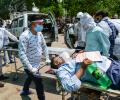
A rise in the number of daily COVID-19 cases and mortality has been observed in Assam, West Bengal, Odisha, Bihar and Jharkhand, indicating the pandemic is moving eastwards, the Union health ministry said.

Union Health Secretary Rajesh Bhushan has written to these states to draw their attention 'to the low and declining testing rates in the states, stating that any laxity at this crucial junction may squander the results of our collective actions in containing the transmission', according to a health ministry statement.
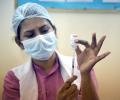
The Centre has asked states and union territories witnessing surge in new COVID-19 cases and high active caseload to continue with the strategy of 'test, track and treat' that had yielded rich dividends at the height of the pandemic and accelerate vaccination for priority population groups in districts reporting higher infections on mission mode.

A control room has also been set up and the Strategic Health Operations Centre (SHOC) of the National Centre for Disease Control (NCDC) has been activated, phone number for which is 011-23978046, a health ministry statement stated.

India has flattened its Covid-19 graph and 146 districts have reported no new case of the viral disease in the last seven days, 18 in 14 days, six in 21 days and 21 districts in the last 28 days, Union Health Minister Harsh Vardhan said on Thursday.
"Lockdown and containment (measures) have been successful in keeping it low and preventing rapid spread," ICMR Director General Balram Bhargava said, citing the sero-survey on COVID-19 spread.

'We have the technical expertise, and international collaborations. We also have robust real-time data. We are a university of pandemic management. If the ministry neglects the role of NCDC, it is the loss of the country'

The Centre on Wednesday deployed multi-disciplinary teams in bird flu-affected areas of Kerala and Haryana, while Madhya Pradesh, where crows have died due to the influenza, banned the entry of chicken consignments from southern states for 10 days as a precautionary measure.

Long-term exposure to chronically high PM2.5 levels weakens the ability of the lungs to fend off infections, therefore making people more susceptible to COVID-19, the scientists said.

Chairing the 19th meeting of the Group of Ministers (GoM) on COVID-19 through video-conference on Friday, Vardhan said India has achieved the milestone of more than 10 lakh recoveries, a recovery rate to 64.54 per cent.

The ministry, however, said it could not be sufficiently established yet if these variants were behind the recent spike in COVID-19 cases in some states.
The GoM was told that six states -- Maharashtra, Delhi, Gujarat, Tamil Nadu, Uttar Pradesh and West Bengal -- account for 86 per cent of the deaths caused by COVID-19 and 32 districts account for 80 per cent of such fatalities, the Union health ministry said.
There has been an increase of 6 per cent to 50 per cent in prevalence of antibodies among people in various districts compared to the prevalence found in the previous survey

Three new categories -- all asymptomatic healthcare workers working in non-COVID hospitals/areas of COVID hospitals/blocks, asymptomatic frontline workers such as surveillance workers deployed in containment zones and paramilitary/police personnel involved in COVID-19 related activities -- have now been included.

A day after the WHO declared emergency over the "explosive" spread of the mosquito-borne Zika virus, the Centre on Tuesday issued detailed guidelines for combating the disease, including a travel advisory that asks pregnant women to either defer or cancel their travel to the affected areas.

"Coming festivals (Chhat, Puja, Dussehra, Deepavali, Id, Xmas, New year) pose a huge challenge in the pandemic control. It has been seen that Onam in Kerala and Ganesh Chaturthi in Maharashtra escalated the pandemic seriously. This must not be allowed to happen in Delhi," the report stated.
According to SOP, those testing positive will be isolated in a separate unit of an institutional facility.

The dreaded encephalitis, a mosquito-borne disease, claimed has claimed the lives of over 20 children in Bihar, health officials have said.

The first part of the study conducted by the Indian Council of Medical Research (ICMR) revealed that 0.73 per cent of the population surveyed showed evidence of past exposure to SARS-CoV-2, and that urban slum population was the most vulnerable to the infection, ICMR Director General Balram Bhargava said at a press conference.

India's COVID-19 fatality rate has dropped significantly to 2.43 per cent from 3.36 per cent on June 17 due to effective clinical management of coronavirus cases, the health ministry and asserted that the country has handled the pandemic 'relatively well'.

With these states imposing lockdowns anew, the health ministry emphasised that the restrictions should be utilised to focus on containment, surveillance and testing in the containment and buffer zones as the key strategy for early detection of cases and fatality management.
 © 2026 Rediff.com - Investor Information - Advertise with us - Disclaimer - Privacy Policy - Sitemap - Feedback - About us - Terms of use - Grievances