
'Only when India's adversaries are convinced that India has both the necessary political and military will and the hardware to respond to a nuclear strike with punitive retaliation that will inflict unacceptable loss of human life and unprecedented material damage, will they be deterred,' says Brigadier Gurmeet Kanwal (retd).

The White House said that Obama, who has been often accused by critics of making an "apology tour" to the Middle East and Europe during the first year of his presidency.

The Japanese prime minister's visit to the memorial in Hawaii, the spot that was bombed 75 years ago, shows that it is possible for two powerful former enemies to transcend recriminatory impulses, observes Rajaram Panda.

According to a report by the Institute for Economics and Peace, an independent, think tank dedicated to shifting the world's focus to peace as a positive and tangible measure of progress, India ranks 143rd

Accompanied by Japanese Prime Minister Shinzo Abe, Obama lay flowers at the cenotaph in Hiroshima, which sits in the shadow of a domed building, whose skeleton has been left standing in silent testament to the victims of the first ever nuclear attack.

It is an important film but that doesn't translate to it being good, writes Raja Sen.

India's breakthrough in countering a 'dirty bomb'.

Celebrated novelist Kazuo Ishiguro, who has just won the 2017 Nobel Prize for Literature, spoke to Arthur J Pais of Rediff.com in 2009, recalling his wonderful association with Sonny Mehta, editor-in-chief of Alfred A Knopf and chairman of the Knopf Doubleday Publishing Group, who had just won a special award.

The strategic pacts were inked after the summit between Prime Minister Narendra Modi and his Japanese counterpart Shinzo Abe during which they also discussed international and regional issues of mutual importance including UN security reforms.
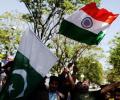
'The talks held in Bangkok, virtually on Indian terms, is an event where Pakistan seems to have blinked first.'

North Korea is unlikely to strike first, but its response in retaliation, if attacked, could be massive even at the expense of its own destruction, says Rajaram Panda.

When a Chinese warship entered Japanese waters, the Indian commander called on China to maintain discipline at sea. Dr Rajaram Panda explains the significance of the Malabar exercises between India, Japan and the US.
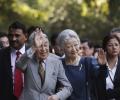
In the media frenzy over inconsequential issues, the visit of the Emperor of Japan to India has been pushed to the margins of public discourse. Colonel (retd) Anil Athale explains the great historical and political significance of the visit.

The prime minister's outreach to Japan is a recognition of the civilisational potential that the two nations hold and can wield in evolving an era of 'Asianism' in global politics, says Anirban Ganguly.

Japan has the capital and needs to pull out of China, which has been its major destination. India, on the other hand, desperately needs capital especially for infrastructure, argues Rajeev Srinivasan.

Atal Bihari Vajpayee would seek to placate the hawks in the RSS by stating that the writing of history should not be one-sided. At the same time, he would project a moderate 'Nehruvian' image of himself as the archetypal liberal politician who would strive to attain a balance between conflicting viewpoints. A fascinating profile of the former prime minister and Bharat Ratna by Paranjoy Guha Thakurta and Shankar Raghuraman.
 © 2026 Rediff.com - Investor Information - Advertise with us - Disclaimer - Privacy Policy - Sitemap - Feedback - About us - Terms of use - Grievances