
The Chinese have just one commander for all the forces confronting India. Commanders of all these forces answer to one man, and one headquarter. India, on the other hand, offers a diversity of options that is a military embarrassment in the 21st century. In Arunachal and Sikkim-Bhutan, the Eastern Army Commander is in charge. In the Uttarakhand (central) sector, it will be the Central Army Commander. The Himachal-Tibet border is the domain of the Western Army Commander. And all of Kashmir and Ladakh further on, the Northern Army's. Effectively, an array of at least eight 'three-star' commanders will be arrayed against one Chinese, says Shekhar Gupta.

'The military aim in a future conflict, if it can't be avoided, should be to cause maximum damage to the adversary's war waging capability and capture limited amount of territory as a bargaining counter,' says Brigadier Gurmeet Kanwal (retd).

India's cumbersome arms procurement procedures and a plodding Ministry of Defence bureaucracy have long been blamed for shortfalls in combat capability. Now there is another, more worrying, reason - a growing crisis of funds, magnified by the lack of tri-service coordination.

It is worrisome that salaries are consuming as much expenditure as equipment.
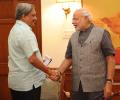
The National Democratic Alliance government has adopted half measures instead of moving decisively on defence.

Both India and China have realised that if border incursions keep reoccurring, other issues of mutual interest will remain unstable. Sheela Bhatt reports

The defence ministry has signed off on a national security plan that it cannot fund. Ajai Shukla reports

The failure to restructure our armed forces in line with contemporary needs 14 years after the Kargil war will impose strategic costs beyond just delays and scandals, says Nitin Pai

The allocation in the defence budget is inadequate to meet India's long-term threats, especially from China and Pakistan, says Gurmeet Kanwal.

'India-US defence pacts are seen by many analysts as a subtle move to jointly contain China's growing militarism, especially in the strategic Indian Ocean Region.'

'India's military posture has become significantly stronger than China's on the 3,500-kilometre Line of Actual Control.' 'This is enhancing confrontation between the two sides,' points out Ajai Shukla.

Will China's new military reforms endanger Xi Jinping's rule?

China is spending billions of dollars to improve infrastructure in Tibet and other parts of its border with India. Claude Arpi explains why New Delhi can't afford to ignore Beijing's plans.
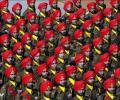
The finance minister hiked the total defence expenditure from Rs 203,672 crore in FY 2013-2014 to Rs 229,000 crore for FY 2014-2015. Though the increase appears substantial, it is insufficient to undertake the military modernisation necessary to meet the emerging threats, feels Brigadier Gurmeet Kanwal (retd).
 © 2026 Rediff.com - Investor Information - Advertise with us - Disclaimer - Privacy Policy - Sitemap - Feedback - About us - Terms of use - Grievances