
While Pakistan has been showing considerable interest in having a bilateral trade deal with India that would help them access the country's booming markets, India has stated this can only become a possibility only when it recognises India as their non-discriminatory trading partner, commerce secretary Rahul Khullar told in an interview.
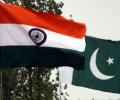
Amid a spike in tensions over clashes along the Line of Control, Pakistan said it has no immediate plans to give Most Favoured Nation-status to India as there is a need to normalise bilateral relations.
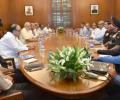
The meeting is also understood to have taken stock of ceasefire violations and infiltration attempts.
A senior government official said the issue had come up during the foreign secretary-level talks earlier this week and Pakistan expressed its willingness to re-engage in the discussion.

Dampening hopes of economic ties receiving a boost during President Pervez Musharraf's visit, Pakistan has ruled out granting the Most Favoured Nation status to India and said that bilateral trade was linked to 'substantial political dialogue.'
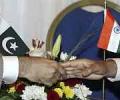
President Asif Ali Zardari said that granting Most Favoured Nation-status to India was a "paradigmatic shift in policy driven by the business sectors on both sides of the border".
Pakistan has said it could grant Most Favoured Nation status to India if New Delhi ensured a level playing field by removing tariff and non-tariff barriers on Pakistan's finished goods.

The remarks by Dar, a close aide of Prime Minister Nawaz Sharif, came within days of the World Bank saying in a report that Pakistan will benefit from granting Most Favoured Nation-status to India.
As India and Pakistan agreed to resume talks at political level, Islamabad has said it is ready to discuss bilateral trade, including the grant of most favoured nation status to India
The United States has welcomed Pakistani cabinet's move to grant the much-delayed Most Favoured Nation trade status to India, terming it a positive development towards the economic integration of the region.
Hours after announcing that it would grant the much-delayed Most Favoured Nation status to India, Pakistan government issued several confusing statements that made no direct mention of the significant step aimed at boosting bilateral trade.

Islamabad is scheduled to abolish its negative list of tradable goods by the end of 2012 but according to the foreign office, Pakistan is still going through the internal process of granting the status of MFN to the neighboring country.

Exporters are of the view that while direct exports to Pakistan will be nearly nil this month, and in the coming few months, alternative markets can be explored for exporting tea, which was originally meant for Pakistan.

The objection based on the fear that domestic industry in Pakistan would be swamped by imports from India is specious.
Officials from the ministries of defence, railways, sports, culture, interior, foreign office and commerce will discuss this issue on Monday, according to a report.
India's seeking Most Favoured Nation status from Pakistan will be the top agenda during the two-day Commerce Secretary level talks beginning in New Delhi on Monday.
Apart from the Kashmir issue, past Pakistani reluctance to grant the MFN status to India had strong economic reasons too; namely, its fears that the MFN status would be more beneficial to India than to Pakistan, and could reduce the latter to a position of economic dependence on India. It is important to remove these fears from Pakistan's mind, feels B Raman.
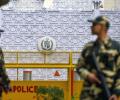
India on Friday revoked the 'most-favoured nation' status to Pakistan following the Pulwama terror strike.

China, the Ukraine crisis and Quad will dominate the discussions, observes Dr Rajaram Panda.

Fitness model and entrepreneur Krishna Shroff shares her inspiring career journey.
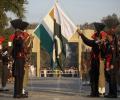
The talks for normalising trade had begun in November 2011.

The neighbouring country has to abolish the negative list of 1,209 tradable items.
Political tensions have cast a long and troubled shadow over cooperation between India and Pakistan. Cross-border terrorism, Kashmir and water rights remain the core issues of contention.
Gilani wants power from Punjab and fought hard to get India MFN status. Nikhil Lakshman listens in on Air India One
Gilani wants power from Punjab and fought hard to get India MFN status. Nikhil Lakshman listens in on Air India One
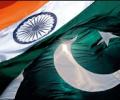
Amidst high expectations by India on the MFN issue, Pakistan on Monday asked New Delhi to have "trust and faith" in it, as "times have changed" and Islamabad wants complete normalisation of the bilateral trade.
An alliance of religious and extremist groups on Saturday said Pakistan should settle the Kashmir issue and differences over sharing river water before it normalises trade relations with India and gives it Most Favoured Nation-status. The Defence of Pakistan Council, which includes the Jamaat-ud-Dawah and Ahl-e-Sunnat Wal Jamaat, made the demand in a joint declaration adopted at a meeting of the top leaders of the various groups.
Prime Minister Manmohan Singh on Thursday met his Pakistani counterpart Yousuf Raza Gilani in Maldives to give a push to normalisation of bilateral relations marked by "shrinking" trust deficit.
To the chorus of the usual suspect television news brigade in New Delhi, Pakistan seems to have launched a 'Peace Offensive' of sorts vis a vis India. After a delay of 15 years it now wants to reciprocate by granting the Most Favoured Nation status to India for trade. For the uninitiated, MFN is an obligation under the World Trade Organisation regime.

Borrowing from Narendra Modi's phraseology, Pakistan on Tuesday said 'acche din aa rahe hain' for bilateral ties with India.
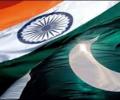
The MFN (Most Favoured Nation, meaning non-discriminatory treatment for each other) issue is of prime importance to India, as it wants to have greater access in the Pakistani markets.

Protectionist and exclusionary FTAs weaken multilateralism.
.jpg)
Pakistan on Friday said a meeting between Prime Minister Nawaz Sharif and his Indian counterpart on the margins of the United Nations General Assembly would be an "useful opportunity" to build trust and consolidate ties.
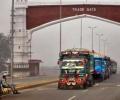
The chances of the posts opening remain slim, with security agencies recently identifying 10 suspects who smuggled in weapons, narcotics and fake currency.
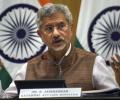
The external affairs minister also made it clear that with Pakistan, the issue is not Article 370, the issue is cross-border terrorism and the first thing that has to come to table for any talks with Pakistan has to be the terrorism issue.

India continues to apply import quotas on marble.

"Our neighbouring country thinks such terror attacks can weaken us, but their plans will not materialise," he said at a function to flag off a new semi-high speed train from Delhi to Varanasi.

These risks are viewed as more acute in the online world.
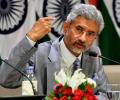
Jaishankar said that the situation in the region has now stabilised and lots of restrictions have been rolled back including the operationalising of landlines and mobile towers and resumption of economic activity.
 © 2026 Rediff.com - Investor Information - Advertise with us - Disclaimer - Privacy Policy - Sitemap - Feedback - About us - Terms of use - Grievances