
From the Sensex pack, Tata Motors, NTPC, Bajaj Finserv, Power Grid Corp, Titan, Asian Paints, IndusInd Bank, Maruti Suzuki India and Tata Steel were among the biggest gainers. Sun Pharmaceuticals, ITC, Hindustan Unilever, Bharti Airtel, UltraTech Cement and Reliance Industries were among the laggards.

'The favourable rupee-dollar exchange rate, there are opportunities we can tap.'

'Currently, EVs are about 30-50 per cent more expensive than ICE vehicles. I believe the inflection point for EVs will come when this price gap narrows to 20-25 per cent. That's when people will start coming in.'

Internship opportunities have been posted by 193 companies, including Jubilant Foodworks, Maruti, Eicher Motor, L&T, Muthoot Finance and Reliance.

Benchmark equity indices Sensex and Nifty pared early gains to settle lower on Wednesday due to late selling in index major Reliance Industries, ITC and HDFC Bank even as the RBI took the first step towards a rate cut in its monetary policy review. Erasing its early gains, the 30-share BSE Sensex fell 167.71 points or 0.21 per cent to close at 81,467.1. During the day, it surged 684.4 points or 0.83 per cent to hit an intra-day high of 82,319.21.
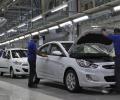
Leading automakers Maruti Suzuki, Hyundai and Tata Motors on Friday reported robust sales for February as demand for sports utility vehicles continued to remain strong. Mahindra & Mahindra, Toyota Kirloskar Motor and Honda Cars also witnessed higher vehicle dispatches to dealers last month. February turned out to be the third-best month for sales for the industry ever.
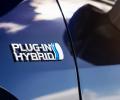
Plug-in hybrids have two engines and the electric part has a much larger battery than in the regular hybrids. Car companies, led by the Japanese, are pushing the Indian government to look at hybrids in the interim if it wants to reduce carbon emission.

Among the Sensex stocks, JSW Steel, Asian Paints, Maruti Suzuki India, NTPC, Adani Ports and Special Economic Zone, Bharti Airtel, ITC and Tech Mahindra were the major gainers. Reliance Industries, Tata Motors, Infosys, Mahindra and Mahindra, Bajaj Finance and Axis Bank were the laggards.

Automakers Maruti Suzuki, Mahindra & Mahindra and Audi India on Monday announced plans to hike prices of their passenger vehicles in January 2024 citing reasons, including cost pressure driven by overall inflation and increased commodity rates. Besides, Tata Motors and Mercedes-Benz India are mulling increasing the prices of their models from January. The country's largest carmaker Maruti Suzuki India, which sells a range of vehicles from entry-level small car Alto to multi-utility vehicle Invicto, priced between Rs 3.54 lakh and Rs 28.42 lakh (ex-showroom Delhi), on Monday said the price hike would vary from model to model.

The Mahindra's Scorpio-N becomes the first body-on-frame chassis SUV to secure a five-star Global NCAP rating.

'Bilateral trade has suffered seriously because of the growing unrest.' 'There is a standstill on both sides amid the curfew.'

'At present, hybrids emit lesser carbon despite using fuel than pure play electric cars.' 'That is because EVs have to be charged and 76 per cent of the country's electricity is still coal-based and not renewables.'
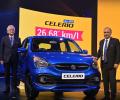
'It will take some more time because the affordability of these cars have changed drastically.'

Stock markets snapped their five-day losing run on Friday with the benchmark BSE Sensex closing higher by 75 points on value-buying in banking and oil shares after recent losses. The 30-share BSE Sensex rose by 75.71 points or 0.10 per cent to settle at 73,961.31. During the session, it hit a high of 74,478.89 points and a low of 73,765.15 points.

The first luxury car will be launched in the first quarter of 2025 and the company is planning to open 12 'MG Select' showrooms in the next six months.
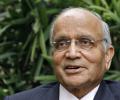
Maruti Suzuki chairman RC Bhargava has said that reducing carbon emissions does not require making a choice between hybrid and electric cars, and that both can play key and complementary roles if the government wants to achieve its aggressive emissions target. Responding to the fact that the sales numbers of hybrid cars have been higher than electric cars in the last quarter of 2024, Bhargava pointed out: "It has never been about electric versus hybrid. "Both have a clear role to play. By 2030 we expect electric car penetration to be around 20 per cent.

Prices of various car models -- ranging from entry-level hatchbacks to high-end luxury offerings -- are set to rise as automakers have announced price hikes with effect from January. Carmakers cite an increase in input costs and operational expenses as the main reason to implement price increases from the next month. Industry experts, however, note that the exercise is also undertaken by automakers every year in December to shore up sales volume in the last month of the year, as customers postpone buyouts to later months to get the new year manufactured units.

Overall, volume growth is likely to be in the range of 3-8 per cent for two-wheelers and 5-7 per cent for passenger vehicles owing to healthy demand from urban and rural areas and pending order books.

Maruti Suzuki India on Tuesday said it is recalling 9,125 units of its models Ciaz, Brezza, Ertiga, XL6 and Grand Vitara to fix possible defects in a part of the front row seat belts. The affected vehicles were manufactured between November 2-28, 2022, Maruti Suzuki India said in a regulatory filing.

A shortlist using artificial intelligence would be prepared to identify eligible candidates and match them to the suitable internship opportunity. The shortlist would be shared with the companies on Tuesday, October 15.
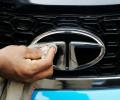
The company has the largest car park in EVs in India, estimated to be around 170,000 units. As a pilot, it has already started work with used online car marketplace Spinny.

Passenger vehicle wholesales in India witnessed a marginal growth in May on account of high base effect and muted demand due to general elections. The overall passenger vehicle dispatches from companies to dealers stood at 350,257 lakh units last month as compared to 335,436 in the same month a year ago, registering a growth of 4 per cent.

Maruti Suzuki is set to launch a new multi-purpose vehicle (MPV) -- Invicto -- next month. It will be the company's first passenger vehicle with an ex-showroom price tag of Rs 20 lakh or more, said Shashank Srivastava, executive director (sales), on Tuesday. The upcoming MPV will compete with the likes of Toyota Innova Hycross, Kia Carnival, Hyundai Alcazar, MG Hector Plus, Tata Safari, Mahindra & Mahindra XUV700, and Mahindra & Mahindra Scorpio-N - all having three rows of seats. Invicto will be based on the Hycross by Toyota, which will manufacture Maruti's most expensive car at its Bidadi plant in Karnataka.
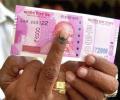
These are the top buyers of the scrapped electoral bonds, the data for which was released by the Election Commission on Thursday.

Hyundai Motor India (HMIL) raised Rs 8,315 crore from anchor investors on Monday, setting the stage for the country's biggest-ever maiden share sale. The Indian arm of the South Korean carmaker Hyundai Motor Company (HMC) allotted 42.4 million shares to 225 funds at Rs 1,960 apiece, the higher end of its price band. Among the investors receiving allotments were the Singapore government's sovereign wealth fund (GIC), New World Fund, and Fidelity.

For the first time, the event will take place across three locations in Delhi: Bharat Mandapam at Pragati Maidan, Yashobhoomi Convention Centre at Dwarka, and India Expo Mart at Greater Noida.
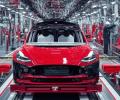
The meltdown in Dalal Street that wiped out investor wealth to the tune of 44 trillion in 2025 also seems to be having a ripple effect on the country's vibrant automobile retail sales.
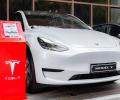
With India's EV penetration at just 2.5 per cent, the market presents an opportunity -- provided Tesla gets its pricing right.

Passenger vehicle sales in India touched a record high of 41.08 lakh units in 2023, growing by 8.3 per cent over the previous year driven by SUVs, which accounted for almost half of the total dispatches from manufacturers to dealers. The record sales have been achieved despite an increase in the average price of vehicles to Rs 11.5 lakh last year as compared to Rs 10.58 lakh in 2022. Market leader Maruti Suzuki, Hyundai Motor India, Tata Motors and Toyota Kirloskar Motor reported their best-ever annual sales in 2023.

Maruti Suzuki India on Monday said it has hiked prices of its vehicles across models by about 1.1 per cent. This is the second price hike that the carmaker is undertaking in the ongoing fiscal year, after increasing it in April 2022. In December last year, the company had said it would hike prices of its vehicles to offset the impact of rising input costs and make provisions to update the model range to conform to stricter emission norms which will kick in from April 2023.
Automobile exports from India rose 15.5 per cent year-on-year in the June quarter with all verticals, barring three-wheelers, recording growth in shipments, according to the latest SIAM data. Overall shipments stood at 11,92,577 units in the first quarter the current fiscal year, as compared with 10,32,449 units in the same period of the last fiscal. Passenger vehicle exports stood at 1,80,483 units in the first quarter, registering a jump of 19 per cent over 152,156 units in the same period last year.

South Korean carmaker Kia was on Tuesday declared the top mass-market performer in the overall customer experience index (CEI), an annual survey done by the Federation of Automobile Dealers Associations (Fada) to assess and quantify customer experience across 97 parameters related to sales, product, and after-sales quality. Fada conducted this survey in collaboration with consulting firm Frost & Sullivan, with a sample size of 8,685 respondents.
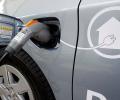
At a time when consumers increasingly embrace green mobility solutions, it is not electric cars but hybrids that are taking the lead, as automotive sales data indicate. Since January, 64,097 electric cars have been sold compared to 266,465 hybrids, according to data from the ministry of road transport and highways' Vahan dashboard. Hybrid car sales have surged from 4.42 per cent of the 4.1 million cars sold in calendar year 2022 to 7.2 per cent this year.
At a time when consumers increasingly embrace green mobility solutions, it is not electric cars but hybrids that are taking the lead, as automotive sales data indicate. Since January, 64,097 electric cars have been sold compared to 266,465 hybrids, according to data from the Ministry of Road Transport and Highways' Vahan dashboard. Hybrid car sales have surged from 4.42 per cent of the 4.1 million cars sold in calendar year 2022 to 7.2 per cent this year.

These 10 stocks represent the best mix of value and growth, offering relatively low price-to-earnings and price-to-book ratios, a high return on equity, and sufficiently high potential from current levels.

10 largecaps stocks which stand to gain from the Budget.
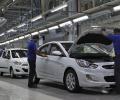
Passenger vehicle wholesales in India increased 4 per cent year-on-year in May to 3,47,492 units, as compared to the same month last year, industry body SIAM said on Tuesday. Overall passenger vehicle (PV) dispatches from companies to dealers stood at 334,537 units in May 2023.

Prime Minister Narendra Modi and Congress leaders Sonia Gandhi and Mallikarjun Kharge were among the top leaders who paid homage to former prime minister Manmohan Singh at his home in New Delhi on Friday.
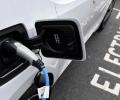
Proliferation of home chargers of around 7 KWh and above, which take six to seven hours to fully charge a car depending on the model, bring running costs down by a third or so. That, coupled with the increasing range of modern electric cars, can lead to a massive increase in sales.
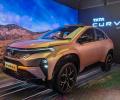
Tata Motors is looking to consolidate its position in the SUV segment as it marks its entry into the highly competitive mid-size space which is currently dominated by South Korean and Japanese carmakers. The Mumbai-based auto major on Monday launched midsize SUV coupe Curvv with petrol and diesel powertrains with a price starting at Rs 9.99 lakh. The company has already unveiled the electric version of the model in August.
