
Maruti Suzuki growing in double-digits; Suzuki's Japan Q1 top line rose only 1%.

Starting January, the market is expected to welcome models like the Tata Punch 2025 which is expected to be around 6 lakh, Mahindra BE 07 EV around 29 lakh, Maruti WagonR Electric around 8.5 lakh, Toyota 3-Row SUV around 14 lakh, and Volkswagen Tera to be around 8 lakh.
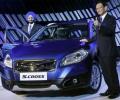
Speaking after the meeting, Maruti Suzuki chairman R C Bhargava said the company will export 'Baleno' at the moment

Passenger vehicle dispatches from companies to dealers increased 19 per cent year-on-year in November as demand remained robust post festive period, industry body SIAM said on Friday.

Set to be unveiled at the Auto Expo in New Delhi, it is likely to be priced below Rs 400,000, and will come with air-conditioning and the option to choose from six colours.

Former managing director of Maruti Suzuki India, Jagdish Khattar, passed away on Monday morning following a cardiac arrest, according to people close to him. Khattar (79), a former bureaucrat, was considered as one of the most high profile leaders of the Indian automotive industry, laying the foundation for Maruti's future growth after the government began its disinvestment in 2002 and gradually exited from its joint venture with Suzuki Motor Corporation (SMC). He had joined the then Maruti Udyog Ltd in July 1993 as director (marketing) and went on to become executive director (marketing) in the next six years.

The slowdown in growth is an industry-wide trend and companies are adjusting production to bring down the inventory levels at plants as well as dealerships.

In absolute terms, both types of cars must cut emissions by about 28-29 g/km. But in percentage terms, the lighter 900-kg car must reduce emissions by 27 per cent, while the 1,500-kg car needs a 22 per cent cut. And the target becomes progressively stringent for both -- but, once again, the tightening is sharper for the 900-kg car than for the 1500-kg car.

In the domestic market, the car has been well accepted and currently the company has over 80,000 bookings for the model.

The country's largest carmaker Maruti Suzuki India (MSI) on Monday said it has increased prices of its entire product range, except Celerio, by up to 1.9 per cent with immediate effect. In a regulatory filing, the company noted that it has taken the decision to hike prices due to an increase in various input costs. The weighted average price rise in ex-showroom prices (New Delhi) across select models is 1.9 per cent, it added. This is MSI's third price hike this year.

The country's largest carmaker Maruti Suzuki India (MSI) on Wednesday reported a consolidated net profit of Rs 475 crore for the first quarter ended June 30. The auto major had posted a consolidated net loss of Rs 268 crore in the April-June quarter of 2020-21. It noted that during the first quarter its sales and production were adversely impacted due to the second wave of the COVID-19 pandemic.
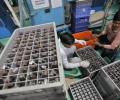
The automobile and auto-ancillary sector is expected to show strong Q3FY26 results, aided by festival-led demand, rationalisation in goods and services tax (GST) rates for select categories of vehicles, easing interest rates, and improving rural sentiment.

MSI sells a range of models from entry-level hatchback Alto to S-CROSS, priced between Rs 2.99 lakh and Rs 12.39 (ex-showroom prices Delhi) lakh, respectively.
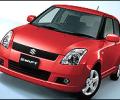
MSI's exports increased by 54.34 per cent to 14,386 units in January, from 9,321 units in the year-ago period.

In May, MSI recorded domestic sales at 89,478 units, compared to 93,519 units in the year-ago period, registering a fall of 4.32 per cent.

Among the Sensex constituents, Eternal, Tata Steel, Kotak Mahindra Bank, UltraTech Cement, Maruti Suzuki India, Sun Pharmaceuticals, Tech Mahindra, HDFC Bank, Tata Motors Passenger Vehicles, Infosys, Trent, Mahindra & Mahindra, Reliance Industries and HCL Technologies were the gainers. However, Asian Paints, Bharti Airtel, Bajaj Finance, PowerGrid, Axis Bank, ICICI Bank and Titan were among the laggards.

The company's earlier highest for total and domestic sales stood at 1,21,952 units and 1,10,424 units respectively in March 2011.
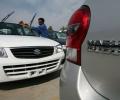
The country's largest carmaker Maruti Suzuki India (MSI) witnessed a 3 per cent drop in production last month. In a regulatory filing, the auto major reported total production of 145,560 units in November compared to 150,221 units in November 2020. "The shortage of electronic components had a minor impact on the production of vehicles during the month," it noted.

From the Sensex pack, Eternal, Maruti Suzuki India, Kotak Mahindra Bank, Mahindra & Mahindra, Tech Mahindra, Titan, HDFC Bank, PowerGrid, Bajaj Finserv, HCL Technologies, Bajaj Finance and Larsen & Toubro were among the gainers. On the other hand, Tata Motors Passenger Vehicles, Asian Paints, UltraTech Cement, Bharat Electronics Ltd, Tata Steel, Adani Ports, Hindustan Unilever, ITC, Tata Consultancy Services and Reliance Industries were the only laggards.
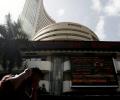
Among Sensex firms, Mahindra & Mahindra was the biggest gainer, gaining 1.7 per cent after the October sales data. Tata Motors Passenger Vehicles (TMPV) rose by 1.69 per cent. Eternal, State Bank of India, Bharti Airtel and Kotak Mahindra Bank were also among the major gainers.

Maruti Suzuki India on Wednesday reported a 42 per cent rise in consolidated net profit to Rs 2,671 crore for the fourth quarter ended March 2023, driven by higher sales, improved realisation and favourable forex movement. The country's largest carmaker logged a net profit of Rs 1,876 crore in the January-March of 2021-22. Net sales during the fourth quarter rose to Rs 32,060 crore compared to Rs 26,749 crore in the year-ago period, Maruti Suzuki India (MSI) said in a regulatory filing.
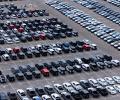
Manufacturers of passenger vehicles (PVs) in the first half of the calendar year (2025) reported a modest 0.5 per cent year-on-year increase in wholesale dispatches, while retail sales grew 2.5 per cent for the same period, reflecting a calibrated approach by automakers amid elevated dealership inventories and cautious consumer sentiment. According to the Society of Indian Automobile Manufacturers (Siam), dispatches rose marginally to 2.16 million units, up from 2.15 million units a year earlier.

From the Sensex pack, Eternal, Bharat Electronics Ltd, Trent, Axis Bank, State Bank of India, Bajaj Finance, Sun Pharmaceuticals, Asian Paints, Adani Ports, Hindustan Unilever, Reliance Industries, ITC, PowerGrid, Tata Motors Ltd's Commercial Vehicles business, and Bajaj Finserv were the gainers. Infosys, Tata Motors Passenger Vehicles, Tata Steel, ICICI Bank, Tech Mahindra, Titan, UltraTech Cement, Maruti Suzuki India, and Larsen & Toubro were the laggards.

Police have cordoned off areas within a 200-metre radius of the red Ford EcoSport car allegedly linked to suspects behind the deadly blast in Delhi, a day after it was seized from Haryana's Faridabad district, police sources said on Thursday.

Maruti Suzuki India on Wednesday said it plans to invest over Rs 925 crore to expand its captive solar capacity to 319 MWp by FY2030-31. The car market leader announced the expansion of its solar capacity by 30MWp with two new projects.

The edge that Maruti Suzuki enjoys over Hyundai and other rivals stem primarily from its gigantic scale, reports Ajay Modi.

The country's largest carmaker Maruti Suzuki India expects auto sales to bounce back to the glory days of 7 per cent growth by FY 27, helped by the proposed GST rate cut which is expected to bring down car prices by 3.5 to 8.5 per cent.

The company also recorded its highest-ever annual sales in 2008-09 at 792,167 units as against 764,842 units in the previous fiscal, a rise of 3.57 per cent. The previous highest annual sales were in 2007-08. '2008-09 marked Maruti Suzuki's silver jubilee year in India. Over these 25 years, the company sold over 70 lakh cars in the domestic market. Additionally, over 5 lakh cars have been exported the world over,' Maruti Suzuki India said in a statement.

Network scale seen as central to tapping smaller markets.

EV manufacturers point out that converting a regular petrol car into a flex-fuel vehicle requires only about Rs 17,000-25,000 per unit, whereas developing an EV demands vastly greater investments in research, battery development, and localisation.

Among the Sensex constituents, Asian Paints, Tech Mahindra, HCL Technologies, Tata Steel, Maruti Suzuki India, Sun Pharmaceuticals, Tata Consultancy Services, ICICI Bank, Bajaj Finance, UltraTech Cement, Mahindra & Mahindra and Tata Motors Passenger Vehicles were the laggards. However, Eternal, Titan, Adani Ports, Bharat Electronics Ltd, State Bank of India, Bajaj Finserv, NTPC and Bharti Airtel were among the gainers.

The new Seltos has grown in size with a length of 4460mm and that's 95mm longer!

In terms of safety, the Victoris has scored 5 stars in both GNCAP and BNCAP tests and that's a first for Maruti, observes Somnath Chatterjee.

High price, combined with the decision to go only for diesel and position it as a crossover, resulted in its limited success

With the government not continuing with lower excise duty beyond December 31, major car makers, including Maruti Suzuki, Hyundai, GM India and Honda have raised vehicle prices by up to Rs 127,000.
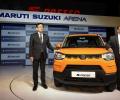
Maruti's strategy for the SUV segment is to arrest the decline in customers for entry level hatchbacks.
The automobile sector has started seeing volume growth, the crucial economy segment included. Maruti Suzuki India (MSIL) could be a big beneficiary as the country's largest passenger vehicle (PV) maker has seen several favourable developments including volume recovery. Demand for its new sports utility vehicles (SUVs) appears to be good, and the company has 4 lakh outstanding orders by April 2023, (up from 3.6 lakhs in January 2023). Siam (Society of Indian Automobile Manufacturers) estimates that passenger vehicle demand would grow by 5-7 per cent in the 2023-24 financial year (FY24) and MSIL is likely to beat the market growth.

"Export will not be better in this fiscal. It will remain more or less the same as last year or may be even worse. Situation in many global markets has not improved yet," Maruti Suzuki India (MSI) Chairman R C Bhargava said on the sidelines of Hero Mindmine Summit.

All three Bharti group companies outperformed in CY25 but the biggest gain came from Bharti Airtel, the flagship.
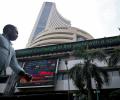
From the Sensex pack, Asian Paints, ICICI Bank, PowerGrid, Larsen & Toubro, Bajaj Finserv, Bharti Airtel, Sun Pharmaceuticals, Maruti Suzuki India, Axis Bank, UltraTech Cement and HCL Technologies were the only gainers. On the other hand, Eternal, Tata Motors' commercial vehicles arm, Mahindra & Mahindra, Tata Steel, Bharat Electronics Ltd, Tata Motors Passenger Vehicles, Trent, Tata Consultancy Services, Hindustan Unilever, and Infosys were among the laggards.
