
The India-EU free trade deal could help Indian-made cars enter Europe at lower costs and challenge Chinese dominance.

Market sentiment is likely to remain cautious as investors position themselves for the upcoming Union Budget and the US Fed's interest rate decision, where expectations are muted.

The country's largest carmaker Maruti Suzuki India (MSI) on Thursday said it has appointed Hisashi Takeuchi as the new managing director and CEO with effect from April 1, 2022. The company's board in its meeting held on Thursday, appointed Takeuchi as the managing director and CEO from April 1, consequent to the completion of the term of Kenichi Ayukawa on March 31, 2022, MSI said in a statement. In order to facilitate a smooth transition, Ayukawa will continue as a whole-time Director designated as Executive Vice Chairman till September 30, 2022, and will continue to provide guidance to the auto major, it added.

Indian stock markets recovered from early losses to close higher, driven by value buying in IT and banking shares and a rebound in the rupee.
Equity benchmark indices Sensex and Nifty rebounded sharply by nearly 1 per cent on Monday, driven by strong buying in power, banking, and financial stocks.

Benchmark equity indices Sensex and Nifty extended their gains for the third straight session on Wednesday, driven by last-hour buying in bank, metal, and FMCG shares.

Maruti Suzuki India and Hyundai reported single-digit sales growth in July with the sports utility segment continuing to drive overall demand in the market. Mahindra & Mahindra witnessed a 29 per cent increase in passenger vehicle dispatches while Tata Motors saw a marginal increase in the wholesales last month. Maruti Suzuki on Tuesday said its total domestic passenger vehicle sales stood at 152,126 units last month as compared to 142,850 units in the year-ago month, a growth of 6 per cent.

Indian equities on Dalal Street saw volatility. Track Sensex, Nifty50 movement and key market drivers for Feb 25, 2026.

The country's largest car maker Maruti Suzuki India on Friday reported a 47.8 per cent rise in net profit for the March quarter of FY24 to Rs 3,877.8 crore, on account of higher sales volume and favourable commodity prices.
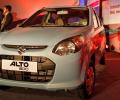
The country's largest automobile maker Maruti Suzuki India (MSI) on Monday said it will hike prices of its cars in the second quarter of the current fiscal due to increase in the input costs. "Over the past year, the cost of the company's vehicles continue to be adversely impacted due to increase in various input costs. "Hence, it has become imperative for the company to pass on some impact of the above additional cost to customers through a price rise," Maruti Suzuki India said in a regulatory filing.

'If the targets become unscientific and unjust, Then, just to meet CAFE-III regulation, a small car -- which produces a very low absolute carbon dioxide -- will have to be discontinued.'

Speculation about rising competition from global majors has led to shares of major Indian automobile manufacturers such as Mahindra & Mahindra (M&M), Maruti Suzuki India, and Tata Motors taking a hit on the BSE.

With demand continuing to be strong post the festive season, leading automakers, Maruti Suzuki, Tata Motors and Mahindra & Mahindra, saw robust growth in sales in November as compared to the same month last year. Maruti Suzuki India reported the best-ever total sales, including exports, last month at 229,021 units, a year-on-year growth of 26 per cent as compared to November last year.

Maruti takes a leap in terms of technology with features like ADAS, a 360-degree camera, ventilated seats, a powered tailgate, audio system with Dolby Atmos and much more.

Stock market is gearing up for an eventful week ahead where key triggers such as quarterly earnings from corporates, the US Fed interest rate decision and the upcoming Union Budget for 2026-27 would grab the limelight, analysts said.

Maruti Suzuki India Ltd (MSIL), the largest passenger vehicle manufacturer in India, has set a road map to expand its global presence by targeting exports of 800,000 units by the end of this decade -- almost double the approximately 280,000 units sent abroad in 2023-24, Rahul Bharti, executive director, corporate affairs, told Business Standard. The company's upcoming electric vehicle (EV) strategy is expected to play a crucial role in its global ambitions.
Equity benchmark indices Sensex and Nifty advanced for the third straight session on Tuesday driven by firm global cues and optimism over India-US trade agreement, even as investors turned to profit-booking at higher levels.
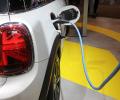
Maruti Suzuki India will launch electric vehicles in the country only after 2025 as demand for such vehicles at the moment is less and it would like to sell around 10,000 units a month whenever it enters the electric mobility space, company chairman RC Bhargava said on Wednesday. Addressing a virtual conference on the company's second quarter earnings, he said under the current circumstances a lot of things in the EV ecosystem such as batteries, charging infrastructure and electric supply are done by other parties and therefore the costing is not in the hands of the company. Also with fuel prices going up, car market leader Maruti Suzuki India is intensifying its focus on more CNG offerings of its models.
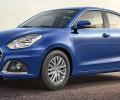
Maruti Suzuki India on Tuesday reported a 28 per cent rise in exports at 263,068 units in 2022, its highest ever overseas shipments. The company's previous highest exports was achieved in 2021 with 205,450 units. The highest exported models in 2022 were Dzire, Swift, S-Presso, Baleno and Brezza, the company said in a statement.

Stock markets rebounded on Friday with the benchmark Sensex closing higher by 316 points after heavy buying in banking and metal shares amid optimism over trade deal progresses and India's participation in Pax Silica.
Benchmark stock indices Sensex and Nifty closed on a flat note in a choppy session on Wednesday as gains in PSU banks and auto shares were offset by losses in IT stocks.

Maruti Suzuki, India's largest producer of small cars, stands to benefit the most.

In October, small car wholesales of the auto industry -- excluding Tata Motors -- went up by 8.4 per cent Y-o-Y to 116,601 units, the data showed. However, the utility vehicle (UV) segment which includes sports utility vehicles (SUVs) as well as multi-purpose vehicles (MPVs), saw a bigger growth in October.

Indian automakers are reviving legacy nameplates to leverage brand recall and stand out in a crowded market, as classic badges like Sierra, Safari, Baleno and Scorpio return to attract buyers.

Stock markets closed higher for the second straight session on Tuesday, driven by gains in bank, IT and capital goods shares.

'The market is still very bullish. The demand is so strong that for eight models, we have no units in our factories to dispatch to dealers,' said Partho Banerjee, senior executive officer, marketing & sales, Maruti Suzuki India (MSIL).

The country's largest car maker, Maruti Suzuki India, on Tuesday launched a new version of its small car Estilo with a fuel efficient engine at an introductory price between Rs 3.12 lakh and Rs 3.95 lakh (ex-showroom, Delhi).

Maruti Suzuki's e-Vitara marks its high-stakes EV debut with strong export ambitions, lifting its stock even as analysts caution over pricing and fierce competition.

Mexico on Thursday imposed a tariff of up to 50 per cent on imports from its non-preferential trade partners, including India, a move that might hit New Delhi's annual $5.75 billion shipments to its third-largest car export market.

Toyota's first standalone electric SUV, the Urban Cruiser Ebella, delivers strong range and performance with premium quality, but rear space and features could have been better, says Somnath Chatterjee.

A deep split has emerged within India's auto industry over the proposed CAFE exemption for small cars, with only Maruti Suzuki and Renault backing the move in the final SIAM vote.

Maruti Suzuki India on Friday reported an over four-fold increase in consolidated net profit to Rs 2,112.5 crore in the second quarter ended on September 30, 2022, riding on record sales. The company had posted a consolidated net profit of Rs 486.9 crore in the same period last fiscal, Maruti Suzuki India said in a regulatory filing. Total revenue from operations was at Rs 29,942.5 crore as against Rs 20,550.9 crore in the year-ago period.

The country's largest carmaker Maruti Suzuki India (MSI) on Thursday said it is planning to increase vehicle prices from January next year to offset the impact of the rise in input costs. The price increase would vary from model to model, the auto major said, without sharing the details.

Mahindra and Mahindra (M&M) recorded the sharpest acceleration among large players, with EV retail jumping to 33,513 units from 7,139 units, an almost 5-fold jump, aided by strong demand for new launches.

Its production declined for the third consecutive year in financial year 2020-21 (FY21) to an 11-year low, while sales volume contracted for the second year to the lowest since FY15. The company manufactured around 1.08 million vehicles last fiscal, a decline from 1.17 million the previous year, and a steeper fall from its all-time high tally of 1.62 million reported in FY18.

Among the key concerns of the Street is market share losses in growth segments, led by higher competitive pressures.

Japanese automaker Suzuki Motor Corporation will invest Rs 70,000 crore in the next five to six years in India to strengthen its operations in the country, its representative director and president Toshihiro Suzuki said on Tuesday. Prime Minister Narendra Modi on Tuesday kicked off exports of Maruti Suzuki India's first electric vehicle e VITARA to 100 countries and also inaugurated the production of lithium-ion battery cells for strong hybrid electric vehicles at its facility in Gujarat.
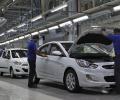
Top carmakers led by Maruti Suzuki, Mahindra & Mahindra, Tata Motors Passenger Vehicles and Kia India on Saturday reported record sales in the domestic market riding on festive demand boosted by GST rate cut. Other manufacturers such as Skoda Auto India and Toyota Kirloskar Motor also posted impressive growth in sales in October.
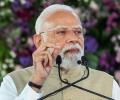
A day before US President Donald Trump's additional 25 per cent tariff kicks in, Prime Minister Narendra Modi on Tuesday made a vehement pitch for swadeshi and Make in India that should help create jobs in the country.

Concerned over sales growth coming mainly from two of its models - Dzire and Swift - country's largest carmaker Maruti Suzuki India said unless its other products contribute equally the company could face problems in the long-term.
