
Maruti Suzuki India said it would be investing Rs 1,250 crore (Rs 12.50 billion) to double capacity at its K-series petrol engine unit in Gurgaon to 500,000 by 2012.

Around 75 per cent, or 372 stocks, that are part of the BSE500 are trading at least 10 per cent below their all-time high levels, despite the index hitting a record high 20,515 points on the BSE in intra-day trade on Wednesday, surpassing its previous high of 20,390 touched in March 12. The index, which accounts for 93 per cent of BSE listed companies' market capitalisation, has gained 8 per cent from its recent low of 18,983, touched on April 19. In comparison, the benchmark S&P BSE Sensex gained 6 per cent over the same period, but is still nearly 4.5 per cent away from its all-time high of 52,517 that it hit on February 16.

Maruti Suzuki India, country's largest car maker, on Wednesday said it will increase the prices of its entire range of models by up to Rs 10,000 from October first week, mainly due to depreciation of rupee.

Maruti Suzuki India, which last year dropped Udyog as its middle name and appointed its first Japanese managing director, has set up a new management structure installing five Indians in crucial decision-making positions. This layer forms the second rung of the company's executive management, just below managing director S Nakanishi. Earlier, when Jagdish Khattar was the managing director, he was the only Indian in the top management.
Nissan Motor Company, Japan's third-largest auto maker, has decided to cut its small car sourcing target from India's biggest car company Maruti Suzuki by 80 per cent in view of the severe downturn in Europe's automobile market.
The country's largest carmaker, Maruti Suzuki, on Monday said it has stopped working on LPG models as it will roll out CNG variants of the entire range of its cars from early 2010, the first of which could be its highest selling model Alto.

The country's largest carmaker Maruti Suzuki on Tuesday said it plans to have an output of 15 lakh (1.5 million) units by 2015 to maintain its 50 per cent market share in the Indian car market.
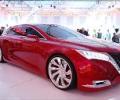
The country's largest carmaker, Maruti Suzuki, on Tuesday said it expects sales to grow around 10 per cent in 2010.

After the launch of Audi's crossover utility vehicle Q5, June will see two more heavyweight car launches within days of each other, making this month the one with the most number of launches in the last nine months.
Maruti has shortlisted 10 candidates so far. Tata Motors declined to give details, but confirmed it is looking at recruiting specialists for different functions of product development, given their research and development expansion plans in India. Both companies are looking at people with relevant knowhow on emission and safety norms in Europe and the US.
IT major Wipro's promoter Azim Premji is investing Rs 80 crore (Rs 800 million) to acquire a significant minority stake in a company floated by Jagdish Khattar, former managing director of Maruti Suzuki India who has recently turned entrepreneur.
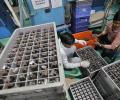
Auto component makers in India are bracing for a tough time. High absenteeism among workers owing to Covid-19, shortages of critical parts, and temporary closures of plants by automobile manufacturers have thrown a spanner in the works for the Rs 3.2-trillion sector, which derives 60 per cent of its revenues from automobile original equipment manufacturers (OEMs), with the balance split equally between replacement demand and exports. Car market leader Maruti Suzuki India on Saturday said it was extending the maintenance shutdown, which was from May 1 to 9, till May 16, "keeping in view the current pandemic situation". Some activities will continue in the plants.

The country's largest carmaker Maruti Suzuki India on Wednesday said its flagship export model, A-Star, has crossed one lakh-mark of overseas shipments in less than a year of selling the car in the global markets.

The latest data suggests that the country's leading auto companies have made some really strong sales for the month of November.

The designer Nano will hit the streets soon. The world's cheapest car has generated interest of designers like Dilip Chhabria and former Maruti Suzuki India chief Jagdish Khattar, both of whom are working on a re-designed avatar of the car.
Maruti Suzuki, India's largest car company by sales, is working on an ambitious plan to launch electric cars and compressed natural gas variants for three or four models in the domestic market.

The global semiconductor shortage hit passenger vehicle sales in September, with major manufacturers like Maruti Suzuki, Hyundai and Mahindra & Mahindra reporting a decline in sales on Friday. Kia India and Honda Cars also reported a dip in wholesales last month as compared with the year-ago period. Carmakers like Tata Motors, Toyota Kirloskar Motor, Nissan and Skoda, however, reported an increase in passenger vehicle dispatches last month despite supply chain issues.
The story about India enticing world auto majors will add another feather in European giant Volkswagen's (VW) cap as it prepares for its first fully-original Indian Volkswagen car, made with the help of expertise provided by Indian engineers and designers.
The programme was initially launched by O Suzuki, chairman and chief executive officer, Suzuki Motor Corporation in Japan about a month back and has been replicated in the Indian operations as well. Each Maruti car has around 10,000 components and subcomponents that can be classified into 1500 categories.

Currently, the new series of engines is being used in the latest models of the Maruti stable -- Estilo, Ritz and the 'A' Star. Asked whether all the entry level cars would be equipped with the KB Series engine, Maruti Suzuki India chairman R C Bhargava told PTI that it could happen over a period of time.

The company had launched the DZire in March 2008 in both petrol and diesel variants priced between Rs 4,49,000 and Rs 6,70,000. This follows the company's recent milestones, including achieving 80 lakh units of cumulative production for all its brands, followed by roll-out of one lakh units of its KB-series engines and launch of the 1,00,000th units of its flagship export model 'A-Star'.
The three companies would jointly invest in setting up a manufacturing unit at Manesar in Haryana, expected to be operational by end of calendar year 2008. The facility, when fully operational, would have a capacity to produce five lakh units per annum, MSIL said in a statement.
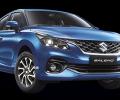
Maruti Suzuki India (MSI) will keep consolidating its existing product line-up, including hatchbacks, while bolstering presence in the fast growing SUV segment to power its way back to 50 per cent market share in the domestic passenger vehicle market, as per a senior company official. The country's largest carmaker, which has seen its market share drop to 43.38 per cent in FY22 from 47.7 per cent in FY21, aims to bring in multiple SUV products with focus on new technologies like hybrid powertrains in order to enhance fuel efficiency, making them comparable or better than diesel-powered models that are currently being sold in the market, especially by its Korean rivals. With no intention of making a comeback in the diesel segment, MSI is also focusing on increasing its play in the CNG segment to bring in additional volumes.
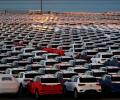
Reflecting the mood, passenger vehicle sales in November either remained muted or skidded for most manufacturers as high fuel prices and the higher cost of borrowing dampened buying sentiment.
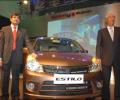
The country's largest car maker, Maruti Suzuki India, on Tuesday launched a new version of its small car Estilo with a fuel efficient engine at an introductory price between Rs 3.12 lakh and Rs 3.95 lakh (ex-showroom, Delhi).

Maruti Suzuki India, is expecting its sales to grow by over 10 per cent during the current fiscal on the back of last year's low-base and is planning to upgrade all its models to Bharat Stage-IV emission norms compliant by March 2010.
Despite the current economic slowdown in the auto industry, the country's largest car maker, Maruti Suzuki India on Thursday said it will hire around 700 people in various departments in the next fiscal, even as it has raised its headcount by 745 in the current fiscal itself.
India's largest car manufacturer Maruti Suzuki India Ltd has resumed its small car exports to Europe after four years and hopes to export about 150,000 cars in the 2010-11 fiscal, a top company official said here on Saturday.

MSI exported 70,023 units in the 2008-09 fiscal.
The company, which has been negotiating contract manufacturing deal for its A-Star model with Nissan, also expects to start exports for the Japanese car maker by around February-March next year. The company, which has been negotiating contract manufacturing deal for its A-Star model with Nissan, also expects to start exports for the Japanese car maker by around February-March next year.
Maruti Suzuki India has rejigged its management structure appointing five Indians in crucial decision-making positions.
The unit has a manufacturing capacity of 700,000 cars in two shifts. This means the Japanese major is cutting production by 35,000 cars as higher loan rates and a slowing economy sapped demand for automobiles. Sales at Maruti, 54 per cent owned by Suzuki, fell 7 per cent in October. India is the biggest global market for Suzuki, Japan's second-largest minicar maker.
The company has proposed to launch the 'made-in-India' car in the next three years. Given its nascent engineering strength, the Indian auto co is looking at existing platforms. The company will, therefore, save a fortune by not opting for a completely new car platform. Generally, the cost of developing a new platform constitutes a substantial part of the expenditure incurred on a new car's production.
A-Star, Suzuki's new world car that will be made only by its Indian subsidiary, Maruti Suzuki India, will have four different names in markets across the world, which will indicate the role it is expected to play in the Japanese car maker's stable as well as of compatriot Nissan Motor.
The model's engine being upgraded to comply with BS IV norms. Engineers at Maruti Suzuki India can upgrade the engine that powers the car to comply with the Bharat Stage IV emission norms set to kick in by April next year.
Domestic passenger car sales declined by 4.36 per cent in August to 94,584 units from 98,893 units in the same month last year.
The company also recorded its highest-ever annual sales in 2008-09 at 792,167 units as against 764,842 units in the previous fiscal, a rise of 3.57 per cent. The previous highest annual sales were in 2007-08. '2008-09 marked Maruti Suzuki's silver jubilee year in India. Over these 25 years, the company sold over 70 lakh cars in the domestic market. Additionally, over 5 lakh cars have been exported the world over,' Maruti Suzuki India said in a statement.
Along with the M800, MSI will also be phasing out its second oldest model, the utility van Omni. In the initial phase, the two models will be done away with in 11 cities from next year, where the Bharat Stage-IV emission norms (which is equivalent to Euro-IV norms) will become applicable. The company would not upgrade the engines of these two models to meet better emission standards, he said while also ruling out their replacements.

MSI chairman R C Bhargava said auto sector would like to see GST benefits linked to greener/cleaner cars. The government gave tax cut on EVs but hybrid should be given duty cut. There should be tax cut on CNG vehicles.
Sales of Maruti Suzuki India during January-December 2008 stood at 697,850 units while those of Suzuki Motor Corporation for the same period stood at 679,215 units. The comparable growth for MSIL in India comes on the back of an almost 2 per cent decline for the company in a year-on-year basis during the calendar year. Its sales were higher in calender year 2007 at 710,532 units, according to the data provided by the company.
 © 2026 Rediff.com - Investor Information - Advertise with us - Disclaimer - Privacy Policy - Sitemap - Feedback - About us - Terms of use - Grievances