
Maruti Suzuki India (MSI) on Wednesday reported over two-fold jump in its consolidated net profit to Rs 1,036 crore for the first quarter ended June 30, mainly due to a low base in the year-ago period. The auto major had posted a net profit of Rs 475 crore in the COVID-hit April-June quarter of the last fiscal. Its net sales rose to Rs 26,512 crore in the June quarter compared to Rs 17,776 crore in the same period of 2021-22.
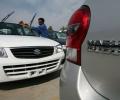
The country's largest carmaker Maruti Suzuki India (MSI) witnessed a 3 per cent drop in production last month. In a regulatory filing, the auto major reported total production of 145,560 units in November compared to 150,221 units in November 2020. "The shortage of electronic components had a minor impact on the production of vehicles during the month," it noted.

With rising petrol and diesel prices driving up demand for its CNG vehicles, the country's largest carmaker Maruti Suzuki India plans to widen its CNG portfolio by offering the fuel option in four more models 'very shortly', according to a senior company official. The company, which plans to launch an electric vehicle (EV) in the Indian market by 2025, is also currently keeping a close watch on the country's EV ecosystem "to find out what is the best way of evolution" to be able to offer affordable EVs with hassle free charging infrastructure in order to clock high volumes for a sustainable business.

Maruti Suzuki's contribution to the sales revenue of its Japanese parent, Suzuki Motor Corporation (SMC), has touched the highest-ever figure during April-December of FY23. According to SMC's results declared on Tuesday, Maruti's share in its global revenues jumped from 33.42 per cent in April-December of FY22 to 40.93 per cent in the corresponding period of FY23.

'It leads to more investment, more money put in R&D, expansion and modernisation.'

Benchmark indices Sensex and Nifty gave up early gains to close lower for a fourth straight session on Thursday due to selling in IT and banking shares amid weak global equities. The 30-share BSE benchmark settled 98 points or 0.18 per cent lower at 53,416.15. During the day, it hit a high of 53,861.28 and a low of 53,163.77. The broader NSE Nifty also pared initial gains and ended 28 points or 0.18 per cent down to settle at 15,938.65.

Automobile retail sales in India rose 11 per cent in September as better supplies from manufacturers enabled dealers to ramp up customer deliveries amid the ongoing festive period, Federation Of Automobile Dealers Associations said on Tuesday. Last month, total retail sales stood at 14,64,001 units as compared to 13,19,647 units in September 2021. FADA noted that October is expected to witness even better overall sales due to the festive season further gathering steam.

Continuing its decline for the third day on Friday, the BSE gauge plummeted 1,214.96 points or 2.20 per cent to 53,887.72 during the day. It settled at 54,333.81, a decline of 768.87 points or 1.40 per cent.

Almost all of these companies either unveiled their new electric vehicle or alternative energy-powered models.

While commercial vehicles are expected to benefit from strong replacement demand, the two-wheeler and tractor segments are expected to gain from a recovery in the rural economy.
Carmakers Mercedes-Benz, Audi, Renault, Kia India and MG Motor on Wednesday announced plans to hike vehicle prices from January to partially offset the impact of rising input costs. They join the likes of market leader Maruti Suzuki India and Tata Motors, which have also made the year-end announcements to raise prices from next month. Audi India said it will increase prices of its entire model range by up to 1.7 per cent, while Mercedes-Benz India noted it will hike the prices by up to 5 per cent from January 1.

Maruti Suzuki India (MSIL) - the market leader in small cars - is eyeing the top spot in the sports utility vehicle (SUV) segment within a year - with a 33 per cent share of the pie. The company has been selling two SUVs - the Brezza and the Grand Vitara - and will start deliveries of the Jimny and the Fronx from March-end, and has set a target of growing its share from the current 11.5 per cent of the SUV market to 33 per cent by the end of 2023-24. The SUV segment is roughly about 42 per cent of the total passenger vehicle market, or around 1.3 million units.

Tata Motors on Tuesday said it will increase prices of its passenger vehicles by an average of 0.9 per cent with effect from January 19, in order to partially offset the impact of rise in input costs. The Mumbai-based automaker sells various models like Tiago, Punch and Harrier, in the domestic market. Effective January 19, 2022, an average increase of 0.9 per cent will be implemented, depending on the variant and model, the automaker said in a statement.

Corporate India continues to be generous in rewarding its shareholders with big dividend payouts. This is especially true for shareholders of companies such as Tata Consultancy Services (TCS), Hindustan Zinc (HZL), and Coal India (CIL) which are seen as cash cows of large business groups and the government. Boosted by a big payout by these three companies, the combined equity dividend payout by listed companies was up 38 per cent year-on-year (YoY) to a record high of Rs 2.27 trillion in 2022-23 (FY23), compared with Rs 1.65 trillion in 2021-22 (FY22).

These cars were most appreciated on India s roads.
There is a possibility of fuel smell and in extreme condition there may be some fuel leakage.
In February, Maruti cut vehicle prices by between Rs 8,502 and Rs 30,984 across models after the excise duty reduction was announced.

In four days, Sensex has fallen by 5,815.25 points. From the 30-share pack, 22 companies closed the day lower, led by Bajaj Finance, Maruti Suzuki India, Axis Bank, M&M, Tech Mahindra and ONGC, plunging up to 10.24 per cent.
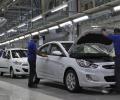
India's passenger vehicle exports rose by 26 per cent in April-June 2022 aided by enhanced shipments to Latin America and Africa and a low base of the year-ago quarter that was hit by the second wave of COVID-19. As per the latest data released by the Society of Indian Automobile Manufacturers (SIAM), passenger vehicle shipments rose to 1,60,263 units in the April-June period of this fiscal as compared with 1,27,083 units in the same quarter of 2021-22. Passenger car shipments saw an 88 per cent year-on-year growth at 1,04,400 units while utility vehicle exports rose 18 per cent to 55,547 units during the period under review, SIAM data showed.

The company is voluntarily undertaking a recall for WagonR (1 litre) manufactured between November 15, 2018, and October 15, 2019, and Baleno (petrol) manufactured between January 8, 2019, and November 4, 2019, MSI said in a regulatory filing.

The new model, which is based on the company's fifth generation HEARTECT platform, comes with a BS-VI compliant one-litre petrol engine with a claimed fuel efficiency of 21.7 km per litre.

The country's largest car maker Maruti Suzuki India (MSI) on Friday said it is recalling 1,81,754 units of petrol trims of various models, including Ciaz, Vitara Brezza and XL6, to replace faulty motor generator unit. This is the company's largest vehicle recall till date. As a responsible corporate, keeping in mind customer safety, the company has announced to proactively undertake a recall of some petrol variants of Ciaz, Ertiga, Vitara Brezza, S-Cross and XL6, MSI said in a regulatory filing.
The crippling strike at the country's largest car-maker Maruti Suzuki India's Manesar plant entered its 13th day on Thursday, with production completely shut down.

The country's largest carmaker Maruti Suzuki India on Tuesday reported 17.8 per cent increase in net profit at Rs 802.2 crore (Rs 8.02 billion) for the third quarter ended December 31, 2014

The S&P BSE Auto Index has been one of the biggest outperformers among sectoral indices over the past year with returns of 26 per cent. By comparison, the benchmarks - the National Stock Exchange Nifty50 and the S&P BSE Sensex - managed about 6-8 per cent during this period. Improving demand, falling raw material costs, and rising product realisations, led by the premiumisation of portfolios, have led to a revision of growth estimates and upgrades by domestic brokerages.

The company, which already has around 66 per cent market share in the hatchback segment and about 50 per cent in the overall domestic passenger vehicle segment, currently sells Vitara Brezza and S-Cross in the SUV segment. In an interaction with PTI, MSI managing director and CEO Kenichi Ayukawa acknowledged that there was some lag in launching new products due to the pandemic but the company is now on track regarding new model launches.

Even as India's passenger-vehicle sales touched a record high of 3.9 million units in 2022-23, growing 27 per cent over the previous financial year, the country's largest carmaker, Maruti Suzuki India (MSIL), said on Monday uncertainties in the electronic-component supplies might affect production in FY24. MSIL said the shortage of electronic components had some impact on production in FY23. "The company took all possible measures to minimise the impact.
Maruti, Hyundai and General Motors posted negative results whereas Honda car sales zoomed in November.

Demand for models such as Ertiga, DZire and Swift were robust in the quarter despite slowdown in auto industry.

The company has been gradually ramping up production at the plant, which had been locked out for a month following the July 18 violence in which one senior official was killed.

Currency fluctuation has been affecting margins.
The country's largest car-maker has also issued termination notices to 500 regular workers.
Maruti Suzuki India may have taken pride in its 'Gypsy' model with defence forces as its main customers but Mahindra & Mahindra Vice-Chairman and MD Anand Mahindra has likened it to a rabbit compared to the company's cheetah-inspired 'XUV500'.
The company had recently stopped production of petrol models, including the Alto, M800, A-Star, Estilo and Omni for three days to prevent inventories piling up further.
Maruti, M&M report weak sales, Hyundai up marginally.
The country's largest carmaker Maruti Suzuki India on Thursday said it will increase the prices of its vehicles across all models by up to Rs 20,000 from January due to increasing pressure on its margins due to currency fluctuation. Honda Cars India and Volkswagen India said they, too, are contemplating the same.
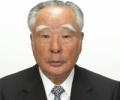
Maruti Suzuki India will set up a skill development centre in Gujarat, where it is investing Rs 4,000 crore to set up a manufacturing facility, even as it is trying to restore normalcy at its Manesar plant in Haryana.

According to Siam data, Indian auto companies sold 982,456 units of utility vehicles in the first half of FY23, a 50.29 per cent growth over the corresponding period last year.

The union is organising a protest rally this afternoon at Gurgaon against the sacking, apart from making other demands.

LIC sold a total of 58,29,103 shares of the company aggregating 2.018 per cent stake between August 24, 2009 and November 11, 2012 through the open market, Maruti Suzuki India said in a filing to Bombay Stock Exchange.
 © 2026 Rediff.com - Investor Information - Advertise with us - Disclaimer - Privacy Policy - Sitemap - Feedback - About us - Terms of use - Grievances