
http://im.rediff.com/money/2023/jul/20uv.jpg

Maruti Suzuki India is eyeing a leadership position in the SUV segment as it continues to add new products across various sub segments, a top company official said on Wednesday. The country's largest carmaker has bolstered its presence in the high volume entry and mid level SUV segments with new Brezza and all new model -- Grand Vitara. "In every segment except SUV, we are the market leader by a distance. "It is only in the SUV that we are behind, so we need to catch up. Clearly, we have to become number one in the SUV space also," Maruti Suzuki India MD and CEO Hisashi Takeuchi said in an interaction on the sidelines of the global unveiling of Grand Vitara.

'Interim Budget has ignited the entrepreneurial spirit.'

With sentiment for the automotive (auto) sector turning positive, stocks of two-wheeler auto majors have been hitting their 52-week highs. Hero MotoCorp, Bajaj Auto, TVS Motor Company, and Eicher Motors recently reached their yearly highs on strong sales in the festival season and the expectation of faster growth rates ahead. Since the start of this month, listed two-wheeler majors have delivered returns in the 12-17 per cent range, compared to the 7 per cent gains for the S&P BSE Auto Index and 3 per cent for the benchmark S&P BSE Sensex.

High cost of acquisition due to a variety of reasons, including higher GST than all other major countries, is slowing down car demand in the country and unless the Centre and states take steps to reduce it, the industry is unlikely to experience reasonable growth, according to Maruti Suzuki India Chairman R C Bhargava. Addressing shareholders in the company's Annual Report for 2020-21, he said after the devastating second wave of the coronavirus pandemic hitting the first quarter of FY22, the performance in the next three quarters will largely depend on how effectively people get vaccinated and observe safety protocols.

A new era of Indian equity market outperformance compared to China "appears to be dawning", according to Morgan Stanley. The firm has upgraded India to overweight in its Asia Pacific-excluding Japan (APxJ) list, making it their most preferred market not only in the region but also in the global emerging market (GEM) pack. India now holds the top position in this category, with an overweight of 75 basis points, a significant increase from nil previously.

The country's largest carmaker Maruti Suzuki India will not "walk away" and fight to get back to 50 per cent market share in the domestic passenger vehicle segment, according to company Chairman R C Bhargava. The auto major, which is commemorating 40 years of operations, has seen its market share drop to 43.38 per cent in FY22 from a peak of 51.21 per cent in FY19. In order to get back its dominant leadership, the company plans to drive in models catering to both urban and smaller cities and rural areas.

Even as the slowdown in the information technology (IT) services sector deepens, banking, financial services and insurance (BFSI), as well as oil and gas companies, emerge as the primary drivers of corporate earnings in the country. The IT services sector's share in corporate earnings declined to a five-year low of 17.4 per cent in the second quarter (Q2) of 2023-24 (FY24), whereas banks and finance companies accounted for 46.5 per cent, and oil and gas firms contributed 16.8 per cent. At their peak, IT services firms like Tata Consultancy Services (TCS), Infosys, HCLTech, and Wipro represented just over a third of the combined net profit of all listed companies in the Business Standard sample.

Maruti Suzuki India and Hyundai reported single-digit sales growth in July with the sports utility segment continuing to drive overall demand in the market. Mahindra & Mahindra witnessed a 29 per cent increase in passenger vehicle dispatches while Tata Motors saw a marginal increase in the wholesales last month. Maruti Suzuki on Tuesday said its total domestic passenger vehicle sales stood at 152,126 units last month as compared to 142,850 units in the year-ago month, a growth of 6 per cent.

Benchmark indices gained for the third day running on Friday, with the Sensex climbing over 300 points amid mixed global market trends. The 30-share BSE benchmark advanced 303.38 points or 0.56 per cent to settle at 54,481.84. During the day, it jumped 448.68 points or 0.82 per cent to 54,627.14. The broader NSE Nifty went higher by 87.70 points or 0.54 per cent to end at 16,220.60.

Prime Minister Narendra Modi on Wednesday said the world looks at India as an important pillar of stability, a trusted friend, an engine of growth in the global economy, a technology hub for finding solutions and a powerhouse of talented youth. He also said that in the rapidly changing world order, India is moving forward as 'vishwa mitra' (friend of the world). Speaking at the inauguration of the 10th edition of the Vibrant Gujarat Global Summit, which saw participation of state hea

Equity benchmark Sensex extended its winning run to the fourth day running on Monday and reclaimed the 58,000-level, tracking firm global trends and fresh foreign fund inflows. Buying in index major Reliance Industries added to the momentum. The 30-share BSE benchmark climbed 545.25 points or 0.95 per cent to settle at 58,115.50. During the day, it jumped 600.42 points or 1 per cent to 58,170.67. The broader NSE Nifty advanced 181.80 points or 1.06 per cent to 17,340.05.

Indian automakers dispatched nearly 2.92 lakh passenger vehicles, the highest ever for February so far, driven by strong demand for cars and utility vehicles, industry body SIAM said on Friday. The total passenger vehicle dispatches from companies to dealers last month increased 11 per cent to 2,91,928 units from 2,62,984 units in February 2022. Passenger car sales rose to 1,42,201 units in February against 1,33,572 units in the year-ago period.

Equity benchmarks continued their winning momentum for the third day on Thursday and jumped over 1.50 per cent, tracking an overall bullish trend in Asian equities. On the political front, the BJP headed for a second straight win in politically crucial Uttar Pradesh and dominated the trends chart in three other states. The 30-share BSE benchmark Sensex opened in the green and further zoomed 1,595.14 points or 2.91 per cent to 56,242.47 during early trade.

Amid better semiconductor chip supplies, the Indian automotive industry posted an 8 percent growth in production of vehicles across categories for the month of May, with three-wheelers (20 per cent) and passenger vehicles (16 per cent) leading the pack. Exports, however, dipped 21 per cent at an industry level. The industry also recorded its highest-ever May wholesales of domestic passenger vehicles (334,802 units), riding on high demand for sport utility vehicles (SUVs) and better supplies of semiconductor chips.

At a time when consumers increasingly embrace green mobility solutions, it is not electric cars but hybrids that are taking the lead, as automotive sales data indicate. Since January, 64,097 electric cars have been sold compared to 266,465 hybrids, according to data from the ministry of road transport and highways' Vahan dashboard. Hybrid car sales have surged from 4.42 per cent of the 4.1 million cars sold in calendar year 2022 to 7.2 per cent this year.
The previous May peak was observed in 2018 when the domestic PV wholesales stood at 301,238 units.

The country's largest carmaker Maruti Suzuki India on Tuesday said its models Swift, Baleno, WagonR, Alto and Dzire have emerged as best selling cars in 2020-21 and the top five models have come from its stable for the fourth consecutive year. Swift with over 1.72 lakh units was at the number one position followed by Baleno with 1.63 lakh units, the company said in a statement. Maruti Suzuki India's (MSI) tall boy WagonR was in the third spot with 1.60 lakh units while Alto and Dzire were at fourth and fifth with 1.59 lakh units and 1.28 lakh units respectively, it added.
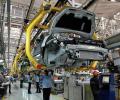
Automobile manufacturers are likely to report strong numbers for the September quarter of Financial Year 2023-24 (Q2 FY24), riding on growth across segments and offset by a marginal drop in overall two-wheeler (2W) volumes. Higher average selling price (ASP) year-on-year (YoY), which was necessitated by price hikes taken by original equipment manufacturers (OEMs), and an improved product mix will also aid revenues and margins. Moreover, commodity prices are down on a YoY basis, leading to higher margins in earnings before interest, taxes, depreciation and amortisation (Ebitda).
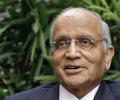
The regulatory burden is the highest on small cars, a key segment of the Indian automobile industry and having a uniform tax structure across all segments of vehicles will not augur well for the sector growth, according to Maruti Suzuki India chairman RC Bhargava. He also said India's economic growth rate could be higher if the manufacturing sector grows fast, which 'unfortunately' has remained a laggard despite the best efforts of the Narendra Modi-led government at the Centre due to implementation gaps at the ground level. "The burden of regulatory changes on the small cars is far higher than the regulatory burden on big cars and that is changing the whole market behaviour.
At a time when consumers increasingly embrace green mobility solutions, it is not electric cars but hybrids that are taking the lead, as automotive sales data indicate. Since January, 64,097 electric cars have been sold compared to 266,465 hybrids, according to data from the Ministry of Road Transport and Highways' Vahan dashboard. Hybrid car sales have surged from 4.42 per cent of the 4.1 million cars sold in calendar year 2022 to 7.2 per cent this year.

The company, which currently sells a range of vehicles from Alto to S-Cross, said it has taken the decision to hike prices due to an increase in input costs. The weighted average price rise, with effect from April 18, in ex-showroom prices (New Delhi) across models is 1.3 per cent, it added.

The country's largest carmaker Maruti Suzuki India on Thursday launched a new version of its multi-purpose vehicle XL6 as it gears up to bring a slew of new products this fiscal and take the challenges of prevailing uncertainties head-on. The new XL6 is powered by a 1.5-litre petrol engine with a peak power of 75.8 kW. It is available in manual and automatic transmission options, priced between Rs 11.29 lakh and Rs 14.55 lakh (ex-showroom). Speaking at the launch, newly appointed Maruti Suzuki India managing director and CEO Hisashi Takeuchi said, "With the uncertainties prevailing today, the business realities are continuously evolving.

Maruti Suzuki India (MSIL) does not anticipate growth in the small car segment because people continue to find these vehicles unaffordable, chairman R C Bhargava said on Wednesday. He said the market had clearly shifted towards the sport utility vehicle (SUV) segment and the company will go in the same direction. The domestic sales of utility vehicles jumped in India by 34.54 per cent to about 2 million units in FY23.

Maruti Suzuki, Hyundai and Tata Motors reported their highest-ever dispatches to dealers last fiscal, enabling the domestic passenger vehicle industry to log in best-ever performance to date. The country's largest carmaker Maruti Suzuki India reported its highest wholesales to date at 19,66,164 units, up 19 per cent from 16,52,653 units in 2021-22. Its domestic dispatches rose to 17,06,831 units in 2022-23, up 21 per cent from 14,14,277 units in 2021-22 fiscal.Hyundai Motor India said its overall wholesales last fiscal were the highest ever since commencing operations in the country.

Japanese auto major Suzuki Motor Corporation (SMC) on Wednesday said its long-serving chairman Osamu Suzuki will retire and assume the role of senior advisor subject to shareholders' approval in the ordinary general meeting to be held in June this year.

Jimny will be priced between Rs 12.7 lakh and Rs 15.05 lakh.

Automotive (auto) and auto ancillary stocks have been in the fast lane thus far in 2023-24 (FY24), with the National Stock Exchange Nifty Auto Index surging nearly 27 per cent, outperforming the Nifty50, which has gained roughly 11 per cent during this period. The top-gear performance of auto stocks at the bourses, according to A K Prabhakar, head of research at IDBI Capital, has been triggered by the premiumisation of products across vehicle manufacturers, which has seen vehicle sales remaining relatively stable. "It is not about higher sales figures now, but about premiumisation.
The country's largest carmaker Maruti Suzuki India on Thursday reported 14 per cent increase in total wholesales at 159,044 units in November. The company had dispatched 139,184 units to dealers in November 2021, MSI said in a statement. Last month, the company's domestic sales rose 18 per cent to 139,306 units as against 117,791 units in November 2021, it added.

Benchmark BSE Sensex on Tuesday gave up intra-day gains to close lower by a little over 100 points on emergence of fag-end selling in FMCG, banking and IT stocks and weak opening in European stock markets. The 30-share BSE index declined 100.42 points or 0.19 per cent to settle at 53,134.35. During the day, it jumped 631.16 points or 1.18 per cent to 53,865.93.

With Onam and Raksha Bandhan just around the corner, the festival season is ready to kick off in full swing. As people embrace the celebratory spirit, companies anticipate a surge in sales this year. Consumer durables firms are expecting strong growth of 40-50 per cent in the premium segment during the upcoming season. Appliance makers also foresee increased demand for cooling appliances - refrigerators and air conditioners - which were impacted by unseasonal rainfall.

Overseas shipments at auto firms expanded at a brisk pace year-on-year (YoY) in March, bumping up the overall annual exports for FY22 and taking it to a record level for some like Maruti Suzuki India and Bajaj Auto. Amid a semiconductor shortage, a depreciating rupee and a strong demand in various export destinations, passenger vehicle makers diverted capacity meant for the local market in favour of the more-lucrative export market. Among the passenger vehicle makers, market leader Maruti Suzuki led the rally with its overseas shipments touching a record level of 238,376 units in FY22 - the highest for the company in any financial year.

Benchmark indices fell on Monday with the BSE Sensex declining 306 points, mainly dragged down by Reliance Industries. Foreign funds outflow also added to the overall bearish trend in equities on Monday. The 30-share BSE benchmark fell 306.01 points or 0.55 per cent to settle at 55,766.22. During the day, it declined 535.15 points or 0.95 per cent to 55,537.08. The broader NSE Nifty dipped 88.45 points or 0.53 per cent to 16,631.

The limited availability of flexible (flex)-fuel vehicles in the Indian market and the slow rollout of ethanol-blended petrol by oil-marketing companies (OMCs) remain major obstacles to achieving widespread use of biofuels in the transportation sector in India. Recently, two Union ministers have emphasised India's biofuel potential, arguing that it has the capacity and potential to lead a transition towards widespread biofuel adoption. Road Transport Minister Nitin Gadkari signalled that this transition is well underway and urged car manufacturers to quickly adapt and introduce new biofuel-run vehicles, lest the government resort to taxing diesel vehicles.

Benchmark Sensex trimmed early gains to close marginally higher while Nifty settled flat in choppy trade on Tuesday as gains in auto shares were offset by selling pressure in banking and energy shares. The 30-share BSE barometer closed marginally up by 37.08 points or 0.06 per cent to 60,978.75 with 15 of its stocks ending in green and the rest in red. The index opened higher and gained over 300 points to a high of 61,266.06 in early trade.

Priced at Rs 754,689, this is the sixth model from the company's portfolio after Alto, WagonR, Swift, Baleno and Dzire to be BS-VI compliant.
Maruti Suzuki India (MSIL) will issue equity shares on a preferential basis to parent Suzuki Motor Corporation (SMC) to acquire 100 per cent stake in the latter's Gujarat plant. This deal is expected to increase the share base of MSIL by about 4 per cent. And consequently, it will raise SMC's shareholding in Maruti by around 1.8 percentage point. "Whether it is in terms of PAT (profit after tax) or earnings per share (EPS) or dividend per share (DPS) of MSIL, the share-swap option will give shareholders a better deal than any other option such as cash payment," MSIL chairman RC Bhargava told reporters during a press conference.

Equity indices slipped in the negative territory on Wednesday after a two-day breather, with the BSE Sensex tumbling 709.54 points following weak trends in global markets. Unabated foreign fund outflows also played spoilsport for the bourses. The 30-share BSE Sensex tanked 709.54 points or 1.35 per cent to settle at 51,822.53. During the day, it declined 792.09 points or 1.50 per cent to 51,739.98.

Maruti Suzuki India (MSI) on Wednesday reported over two-fold jump in its consolidated net profit to Rs 1,036 crore for the first quarter ended June 30, mainly due to a low base in the year-ago period. The auto major had posted a net profit of Rs 475 crore in the COVID-hit April-June quarter of the last fiscal. Its net sales rose to Rs 26,512 crore in the June quarter compared to Rs 17,776 crore in the same period of 2021-22.

The country's largest carmaker Maruti Suzuki India (MSI) witnessed a 3 per cent drop in production last month. In a regulatory filing, the auto major reported total production of 145,560 units in November compared to 150,221 units in November 2020. "The shortage of electronic components had a minor impact on the production of vehicles during the month," it noted.
 © 2026 Rediff.com - Investor Information - Advertise with us - Disclaimer - Privacy Policy - Sitemap - Feedback - About us - Terms of use - Grievances