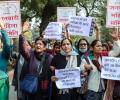
The Supreme Court on Monday stayed the Delhi high court's order suspending the life sentence of expelled Bharatiya Janata Party leader Kuldeep Singh Sengar in the 2017 Unnao rape case.

The Supreme Court of India has directed the NHAI and MCD to consider relocating or temporarily closing toll plazas at Delhi's borders to alleviate traffic congestion and reduce air pollution. The court also addressed school closures and financial aid for construction workers affected by pollution control measures.

The Attorney General has granted consent for initiating contempt action against an advocate, Rakesh Kishore, who hurled a shoe towards Chief Justice of India B R Gavai. The Supreme Court was informed of this development on Thursday.
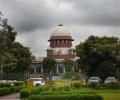
The Supreme Court has agreed to hear a plea challenging the Election Commission's decision to conduct Special Intensive Revision (SIR) of electoral rolls in Tamil Nadu, Kerala and West Bengal. The court is also addressing concerns about disenfranchisement and citizenship issues related to the revision process.
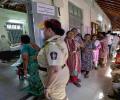
The Supreme Court has addressed the issue of reservation quotas in Maharashtra local body elections, stating that the final results of elections in 57 local bodies, where the 50% quota ceiling has been breached, will depend on its judgment in the case.

Describing the act as the 'grossest kind of indiscipline', the Supreme Court on Tuesday dismissed a former Christian officer's plea challenging his termination from the armed forces, after he allegedly refused to participate in regimental religious activities at the sanctum sanctorum of a temple at a place of his posting.

Surendra Koli, accused in the infamous Nithari serial killings, has been released from the Luksar district jail in Greater Noida, a day after the Supreme Court acquitted him in the last pending case linked to the 2006 serial murders that had shocked the nation, officials said on Thursday.

Justice Surya Kant, on his first day as Chief Justice of India, established a new procedural norm requiring written requests for urgent case listings, with oral requests reserved for extraordinary circumstances. He also addressed various cases, including those related to extrajudicial killings and the removal of a lawyer from a government post.
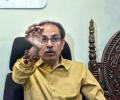
The Supreme Court has scheduled a hearing for January 21 on pleas challenging the Election Commission's decision to allot the 'bow and arrow' symbol to the Eknath Shinde faction of the Shiv Sena. The court will also hear arguments on a similar dispute concerning the Nationalist Congress Party (NCP) on January 22.
The Supreme Court intervened to ensure a tragedy-struck widow received compensation from the Railways after a 20-year legal battle following her husband's death in a train accident.

The Supreme Court of India has questioned the legal status of Rohingya refugees living in the country, raising concerns about providing resources to illegal entrants while Indian citizens face poverty.
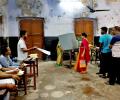
The Supreme Court has directed the Maharashtra government and its state election commission to conduct local body elections, clarifying that the results will be subject to the court's final verdict, especially concerning the 50% quota limit. The court will hear pleas regarding OBC reservation in local bodies in January 2026.

The Supreme Court has directed states to consider deploying additional staff to ease the workload on booth level officers (BLOs) engaged in the special revision of electoral rolls, following concerns about extreme work pressure and related issues.
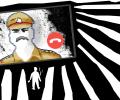
The Supreme Court has taken serious note of the digital arrest of a senior citizen couple in Haryana based on forged orders, highlighting the rising number of such cases and seeking responses from the Centre and CBI.
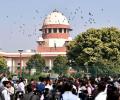
The Supreme Court of India has ruled that no timelines can be imposed on governors and the president to grant assent to bills passed by state assemblies, clarifying the extent of their powers under Article 200 of the Constitution.
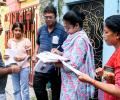
The Election Commission has defended its Special Intensive Revision of electoral rolls in West Bengal and Tamil Nadu in the Supreme Court, refuting allegations of mass deletion of genuine voters as exaggerated and politically motivated.

The Supreme Court has directed the Election Commission to address typographical errors and other mistakes in the final Bihar electoral roll. The court will hear further arguments on November 4.

The Supreme Court is examining the validity of the Election Commission's decision to conduct special intensive revisions of electoral rolls in several states, focusing on concerns about democratic participation and the burden on ordinary voters.

The Supreme Court on Thursday held that the Governor can reserve a bill for consideration of the President even in the second instance, when the bill is again sent by the state assembly to him whether in its amended or unamended form.
The Supreme Court on Thursday refused to accept the preliminary objections raised by opposition-ruled states like Tamil Nadu, West Bengal and Kerala to maintainability of Presidential Reference, saying the issues raised in it pertain to the very core and foundational modalities of the constitutional machinery.

'Judges have transmitted a terrible message to citizens across the nation. All right-thinking individuals will be disturbed by what the Delhi high court judges have done.'
The Supreme Court has expressed serious concern over the rising cases of digital arrest cybercrime in India, where fraudsters extort money from victims by posing as law enforcement officials. The court has vowed to deal with such cases with an iron hand and has sought reports from the Ministry of Home Affairs and the CBI.
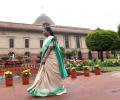
The Supreme Court of India has ruled that a governor has discretion under Article 200 to refer a state bill to the President or return it to the legislature, and is not bound by the advice of the council of ministers. The court clarified that a governor cannot simply withhold a bill.
The Supreme Court expressed deep regret that the actual perpetrator of the Nithari killings was not established despite a prolonged investigation, while acquitting Surendra Koli in the last Nithari murder case.
The Supreme Court has restrained lower courts from releasing the accused in a digital arrest fraud case where a 72-year-old lawyer was duped of Rs 3.29 crore. The court expressed concern over the growing cybercrime and the targeting of elderly citizens.
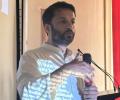
Ashoka University professor Ali Khan Mahmudabad, previously booked for social media posts, has petitioned the Supreme Court for the release of his passport, a condition of his bail. The court will consider the plea on November 18.
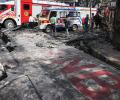
The Supreme Court has raised concerns about the preliminary report on the Air India crash and has asked for a more independent and thorough investigation.
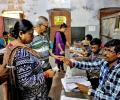
The Supreme Court has requested the Election Commission to respond to petitions challenging the Special Intensive Revision of electoral rolls in Tamil Nadu and West Bengal. The court has also asked the Madras and Calcutta High Courts to keep proceedings on similar petitions in abeyance.
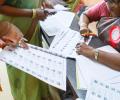
The Election Commission of India clarified that claims, objections, and corrections to the draft electoral roll in Bihar's special intensive revision exercise can be filed beyond September 1, but will be considered after the roll is finalized. The Supreme Court directed assistance for voters and parties in filing claims.

The Supreme Court on Friday said no one blamed the chief pilot of the Air India Dreamliner for the June 12 crash, which claimed 260 lives, and asked his 91-year-old father not to carry any emotional burden.
The Supreme Court declined to entertain a plea seeking a special investigation team (SIT) probe into alleged electoral roll manipulation in Bengaluru Central and other constituencies, advising the petitioner to approach the Election Commission of India.
The Supreme Court of India resolved a decades-old land dispute in the Union Territory of Dadra and Nagar Haveli, involving land originally vested in the Portuguese government.

The Supreme Court of India dismissed a Public Interest Litigation (PIL) seeking safety measures for tourists in remote hilly areas of Jammu and Kashmir, criticizing the petitioner for seeking publicity without a genuine public cause. The PIL was filed in response to a terror attack in Pahalgam that killed 26 people, mostly tourists. The court stated that the petitioner had a history of filing similar PILs primarily for publicity.

The Supreme Court declined to initiate contempt action against a lawyer who hurled a shoe at the Chief Justice of India, citing the CJI's own refusal to proceed against him. The court is considering guidelines to prevent such incidents.

The Supreme Court is considering entrusting the CBI with the investigation into digital arrest cases, citing the magnitude and pan-India spread of such crimes. The court has sought details of FIRs registered in different states and union territories and is monitoring the progress of the investigation.

The Supreme Court has allowed podcaster Ranveer Allahbadia to travel abroad after the Assam and Maharashtra governments said the investigation against him was complete. Allahbadia, known as BeerBiceps, was booked for his comments on parents and sex on comic Samay Raina's YouTube show "India's Got Latent".
The Supreme Court reprimanded an Israeli businessman residing in India, questioning his presence in Goa while seeking to halt the repatriation of his two daughters and their Russian mother, who were rescued from a Karnataka forest.
The Supreme Court of India has cautioned against the dangers of unregulated social media, emphasizing that freedom of speech cannot be exercised at the expense of others' dignity and integrity. The court was addressing a plea related to a recent incident where a shoe was thrown at the Chief Justice of India.
The Supreme Court has granted protection from arrest to The Wire's founding editor Siddharth Varadarajan and Consulting Editor Karan Thapar in connection with an FIR registered by Assam Police over a news article.

The Supreme Court has directed the Maharashtra State Election Commission to complete the stalled local body polls by January 31, 2026, criticizing the commission for non-compliance with previous orders.
 © 2026 Rediff.com - Advertise with us - Disclaimer - Privacy Policy - Sitemap - Feedback - About us - Terms of use - Grievances