
Roopam Asthana, CEO and whole-time director, Liberty General Insurance Ltd, answers your queries about HEALTH insurance and AUTO insurance.

Irdai will maintain a centralised list of the details of all agents appointed by insurers.

For financial sector companies setting up shop in India, as of now the go-to regulators are obviously Sebi and the RBI with carve-outs for IRDAI or possibly PFRDA. But this could change soon with the International Financial Services Centres Authority, observes Subhomoy Bhattacharjee.
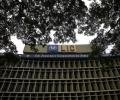
The government is unlikely to come up with the IPO of Life Insurance Corporation (LIC) in the current financial year ending March 2022, as the valuation of the state-owned behemoth is taking more than anticipated time, and the preparatory work is still far from complete. There are still some issues that need to be addressed with regard to the valuation of LIC, a senior official of one of the merchant bankers said. Even after the valuation, there are several regulatory processes that have concluded, the official said.

Neeraj Prakash, MD, Shriram General Insurance, explains how new measures proposed in the Motor Vehicles Act can smoothen the lives of the insured and insurer and how the government plans to make more vehicles owners buy insurance.

Union Road Transport and Highways Minister Nitin Gadkari on Wednesday pitched for formulating a policy for using the Reserve Bank of India's rising foreign exchange reserves for funding road projects, saying the country needs low cost finance for such infrastructure projects. Addressing a virtual event organised by industry body CII, Gadkari further said that the National Highways Authority of India (NHAI) should also have a financial arm like the power ministry's Power Finance Corporation (PFC). "We have a surplus of dollar reserves in the country. I have decided to talk with the RBI Governor, about how we can formulate a policy by which we can use this foreign exchange reserves for development of infrastructure in the country," he said.

A lot of work is needed to be done on the part of the insurance sector behemoth, and the government, before it is ready for its market debut.

The new draft guidelines issued by IRDAI proposes a minimum sum assured of Rs 50,000 and a maximum of Rs 5 lakh. A General Insurance Council official said the guidelines were still being worked on and would only be finalised next week.
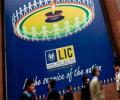
Amendment to the Act, sovereign guarantees, investment portfolio, realty holdings, and governance issues to shape valuation.

The government hopes to use this data to assess the extent of financial support needed to recover from the pandemic.

The change in policy for the three companies, from listing to merger, shows the level of discomfort within the government about their ability to take on the expanded load for insurance coverage with their current financial strength, including the massive premium and claim settlement cover under the proposed universal health coverage plan announced in Budget 2018.

Rakesh Kaul, CDO, Edelweiss General Insurance, answers your health insurance queries.

The rise in premiums could be in the range of 5-25 per cent, depending on the features that each insurance company adds on its products. Insurance firms have been given time till September 30 to include modifications mandated by the regulator.
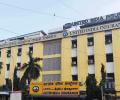
The NITI Aayog has recommended privatisation of state-owned insurer United India Insurance Company as the government aims to move ahead with its new public sector enterprise (PSE) policy for Atmanirbhar Bharat. The policy think tank has suggested that the public sector insurer be considered for privatisation in the banking, insurance and financial services sector, which has been classified as 'strategic' in the PSE policy, said an official. The policy proposes the "bare minimum" presence of government-owned companies in strategic sectors, and privatisation, merger or closure of remaining public sector undertakings (PSUs).

From July 10, when it was launched till August 7, 1,087,030 lives have been covered under Corona Kavach through 648,276 policies with premium of Rs 182 crore and sum assured for Rs 42,956 crore. In addition, 186,347 lives have been covered under Corona Rakshak through 156,695 policies with premium of Rs 25.5 crore and sum assured for Rs 3,293 crore, an Irdai official said.

Government is framing a rule that will make it compulsory for regulators like Sebi, Irdai and PFRDA to deposit a significant portion of their reserves into the Consolidated Fund of India.

The Rajya Sabha on Thursday approved a bill to raise the foreign investment limit in the insurance sector to 74 per cent, with Finance Minister Nirmala Sitharaman saying while control will go to foreign companies, the majority of directors and key management persons will be resident Indians who will be covered by law of the land.

Sanjib Jha, CEO, Coverfox Insurance Broking, answers your health insurance related queries.

Insurance companies are seeking a separate deduction limit of Rs 1 lakh for insurance premium payment under Section 80C of the Income Tax Act in the upcoming Union Budget to bring in more people under the ambit of insurance. The insurers also want reduction in the goods and services tax (GST) rate of 18 per cent currently applied on health insurance products to 5 per cent to make such products more affordable to common people. Finance Minister Nirmala Sitharaman will present the Union Budget for 2022-23 on February 1.

Kunnal Prem, chief executive officer of the Insurance Information Bureau of India, tells Mayank Jain on what they're doing.

The regulator has made it mandatory for insurers to have a minimum percentage of motor third-party business underwritten.
These changes will entail a relook at the various laws governing banks in the country - the two Bank Nationalisation Acts (passed in 1970 and 1980); the State Bank of India (SBI) Act of 1955; and the Companies Act of 2013.

'Last year (FY21), we had about 1 million intimated claims for Covid.' 'This year (FY22), in six months, we got about 1.6 million claims.'

Motor insurance is expected to generate largest claims for the companies whereas for crop insurance, the Agriculture Insurance Company is expecting claims of about Rs 15-16 crore
LIC identifies the problems well, but what the markets will watch is how nimble it is with the solutions.

Insurance of vehicle, including cars and bikes, will become costlier from April 1 as insurance regulator Irdai has decided to increase premiums by up to 40 per cent from the next fiscal.


Unlike other health insurance policies, which mostly covers hospitalisation expenses alone, the specialised cover is likely to include the cost of treatment during quarantine and payment of cash for incidental expenses.

The meeting will review the current global and domestic economic situation and financial stability issues, including those concerning banking and NBFCs.

Cost of the diagnostic test for Covid-19 has been fixed at Rs 4,500 per test by the government. Hospitals, however, do not think this is feasible.

'In FY21, as of October, LIC has booked a profit of Rs 18,800 crore through sale of equities.'

Advait Rao Palepu reports how a recent Supreme Court order will impact motor vehicles insurance policies.
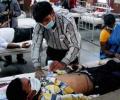
As a result of the mass state-led scheme, the processes in the health insurance market could get simplified over time and become uniform

The Insurance Regulatory and Development Authority of India (Irdai) will look at Indian executives for all top posts at insurance companies.

Ashish Mehrotra, MD and CEO, Max Bupa Health Insurance, explains the changes we can expect in health insurance this year.

With at least three IPOs in the offing this year, stock market investors have a lot to look forward to.

A customer can also appoint a surveyor on his own expense
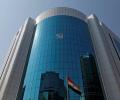
Markets regulator Sebi on Tuesday proposed to rationalise the definition of 'promoter group' and move to the concept of 'person in control' as well as reduce the minimum lock-in periods for promoters' and other shareholders post an IPO. In a consultation paper, the watchdog has also suggested streamlining the disclosures requirement of group companies. The Securities and Exchange Board of India (Sebi) has sough comments from public on the proposals till June 10.

Investors in LIC's insurance and other schemes are receiving a lower rate of return because LIC is subsidising incompetence at best and malfeasance at worst in institutions such as IDBI Bank and IL&FS, says Jaimini Bhagwati.

The banking, financial services and insurance sector was the most targeted by scamsters, says Indeevar Krishna, head, operations and customer service, Max Life Insurance
 © 2026 Rediff.com - Investor Information - Advertise with us - Disclaimer - Privacy Policy - Sitemap - Feedback - About us - Terms of use - Grievances