
With just a month left in this financial year, electric two-wheeler sales, so far, are at just 62 per cent of the ambitious target of 1 million units set for 2022-23 by the NITI Aayog. According to VAHAN data, compiled by the Society of Manufacturers of Electric Vehicles (SMEV), 620,006 units of electric two-wheelers were sold across the country in FY23 until February 21. Though the industry may miss the 1-million target, sales in FY23 are already up 146 per cent from 249,621 units sold in FY22.

Billionaire Mukesh Ambani's Reliance Industries on Saturday said it will raise as much as $5 billion in foreign currency-denominated bonds and use the proceeds to retire existing borrowings. In a stock exchange filing, the company said the Finance Committee of the company board at its meeting on Saturday approved a "proposal for issuance of senior unsecured US Dollar-denominated fixed-rate notes from time to time, for an aggregate amount up to $5 billion, in one or more tranches".
'I have personally been very keen on investing in lithium ion battery technology for some time.'

Last year, China held a meeting with some South Asian countries on COVID-19 vaccine cooperation without the participation of India.

David Julius and Ardem Patapoutian jointly won the 2021 Nobel Prize for Physiology or Medicine for their discoveries of receptors for temperature and touch, announced the award-giving group on Monday.

The Union Budget on Wednesday outlined several initiatives to drive India's technology agenda and boost digital infrastructure, including new centres of excellence for artificial intelligence, National Data Governance Policy, and Entity DigiLocker.

Railways is testing waters for locomotives to run on lithium-ion batteries, the most common ones used in electric vehicles.
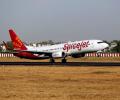
Aviation regulator DGCA has temporarily suspended SpiceJet's licence for the transportation of 'dangerous goods' for alleged violations, according to sources. The suspension is for 30 days, and during this period, SpiceJet will not be allowed to carry dangerous goods, including lithium-ion batteries, on its domestic as well as international flights, the sources told PTI on Friday. When contacted, a SpiceJet spokesperson did not directly mention the suspension.
India's traditional companies are now moving full scale into the renewable and alternative energy space that had been dominated by smaller players over the past decade. Companies such as government-owned NTPC and the Adani and the Tata groups restructured their businesses well in time to become major players in the green space. At the same time, other conventional companies, such as Larsen & Toubro and Reliance Industries Ltd (RIL), which have a presence both in the energy sector as well as myriad other activities - construction, technology and retailing - are tying up with new-age companies to hitch a ride to a greener path.

E-vehicles may face pollution hurdle with hazardous batteries. One lithium-ion battery has a potential to poison the whole water aquifer of Delhi.

On Thursday, the four-stage, 44.4 metre tall PSLV-C53 that blasted off from the second launch pad of Satish Dhawan Space Centre and placed the three Singapore satellites--DS-EO, NeuSAR and SCOOB-1 in intended orbit.

German luxury car maker Audi on Thursday launched three all-electric SUVs under its e-tron range with prices starting from Rs 99.99 lakh kicking off its electrification journey in the country. The three all-electric SUVs -- e-tron 50, e-tron 55 and e-tron Sportback 55 -- are priced at Rs 99.99 lakh, Rs 1.16 crore and Rs 1.18 crore respectively (all prices ex-showroom), Audi India said in a statement. Commenting on the launch of the e-tron brand in India, Audi India Head Balbir Singh Dhillon said, "we are launching not one, but three electric SUVs that begin our electrification journey." The three electric SUVs are "the perfect confluence of luxury, zero emissions, performance and everyday usability", he added.

Ola Electric on Monday said it will foray into the electric car segment with plans to launch its first model by 2024. The company, which struggled with deliveries for its electric scooters after it announced entry into the segment exactly a year ago, has set an ambitious target of selling 10 lakh electric cars by 2026-2027. In a press conference, Ola founder and CEO Bhavish Aggarwal said Ola Electric aims to provide a range of electric two-wheelers to electric cars which are priced in the range of Rs 1 lakh to Rs 50 lakh.

Tamil Nadu secured investments worth Rs 1.44 trillion on Monday by signing of memoranda of understanding (MoU) with 60 companies, laying of foundation stones and inauguration of new projects.

While Vicky made some interesting revelations about his relationship and wedding with Katrina Kaif, Siddharth gave quite a few hints about the lady in his life, Kiara Advani.
'The global semiconductor shortage has inadvertently provided an immense fillip to the pre-owned car market'

Every week, we bring you fascinating videos, chosen by you, through your likes.

Bhavish Aggarwal, the founder of ride-hailing firm Ola who disrupted the electric scooters market in the country, is planning to launch an electric sports car in 2024. The plan will put it in competition with Indian players, such as the Tata group and Mahindra & Mahindra, and global giants like Tesla and Hyundai. Aggarwal, recently, took a group of reporters to the firm's design studio at the Ola campus in Bengaluru where his teams are working on several EVs, including scooters, motorcycles, sedans, and SUVs - and even robotaxis.

The Navi Mumbai international airport will boast three interconnected multi-level terminals with a lotus-inspired design, according to the master plan prepared by its outgoing developer. The GVK group, which completed 15 years of airport business, shared the first look of the Navi Mumbai airport. The group in 2018 had commissioned British firm Zaha Hadid Architects to design the main terminal and air traffic control tower. The master plan of the airport was approved by the City and Industrial Development Corporation (CIDCO) in 2019.
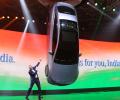
The first all electric Mercedes AMG launched in India

Exam centres will not only ensure social distancing among examinees -- there will also be a strong focus on avoiding malpractices and conducting the test with minimal human intervention.

Tata Motors on Wednesday expanded its electric vehicle range in the country with the launch of Nexon EV MAX, priced between Rs 17.74-19.24 lakh (ex-showroom). Equipped with a 40.5 kWh lithium-ion battery pack, the Nexon EV Max offers 33 per cent higher battery capacity than the Nexon EV, delivering ARAI certified range of 437 km (under standard testing conditions), ensuring uninterrupted inter-city travel. ARAI refers to Automotive Research Association of India. The model produces 105 kW (143 PS) of power and delivers a torque of 250 Nm, resulting in 0 to 100 sprint times in under 9 seconds.
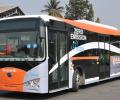
In view of cost, these vehicles will justify deployment only as public buses, taxis, three-wheelers

The inexpensive aluminium battery has been developed by Stanford scientists.

The national budget 2019-20 had an outlay of Rs 10,000 crore for Phase-II of the Faster Adoption and Manufacturing of Hybrid and Electric Vehicles scheme to boost electric mobility and increase the number of EVs in commercial fleets.

Researchers have developed a new architecture for lithium-ion battery anodes that could enable charging of portable electronics in 10 minutes, instead of hours.

Images from Saturday's IPL match between SunRisers Hyderabad and Kolkata Knight Riders, in Abu Dhabi.
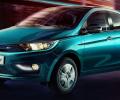
Tata Motors on Wednesday unveiled Tigor EV, its second electric model in the personal mobility space after Nexon EV. The auto major has tasted success with Nexon EV, which currently commands about 70 per cent market share in the domestic electric vehicle segment. The Tigor EV comes powered by the company's high voltage electric architecture - Ziptron - and has been developed based on three pillars of technology, comfort and safety.

As a tech services company, Ola has never been in hardcore manufacturing. And unlike in ride hailing, which is a two-player market (Uber is the only other competitor), in two-wheelers it faces many entrenched players. But most of all, rivals say Ola's targets are out of sync with most, even ambitious, projections.

'If our body is able to mount a very successful immune response, we can negate the virus.'

Only a few thousand chargers dot the Indian landscape, some in working condition, others not, with some held hostage to the power supply vagaries of local utilities, reports S Dinakar.

Suzuki will produce EVs for the Indian market and will supply some of them to Toyota, which will provide technical support.
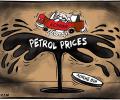
The logic of deregulation was that the consumer was protected no matter what the price of crude. But now the reverse has happened. The government is protected no matter what the price of crude, observes Aakar Patel.

Nearly a decade ago, the first fully electric vehicle (EV) caught fire on the road in the US. It was a model from Tesla, the world's most admired EV maker. A metal fragment punctured the underbelly of the vehicle, penetrating its battery pack, leading to a fire. Indian lawmakers and automakers have had nine years to study the incident (in fact, three Tesla Model Ss caught fire in two months in 2013) but seem to have learnt little.

The Madrid Open, which was rescheduled to take place from Sept. 12-20 and features both men's and women's events, is an important tournament for the players to prepare for the French Open which now begins on Sept. 27.
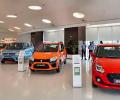
Ratings agency ICRA on Wednesday revised downwards growth forecast for the domestic passenger vehicles industry to 8-11 per cent in the ongoing fiscal from the earlier estimate of 14-17 per cent on account of the ongoing semiconductor shortage. Similarly, for the two-wheeler segment, it said the volumes are expected to contract by 1-4 per cent in FY2022 against an earlier prediction of 6-8 per cent growth as affordability and demand sentiments of target clientele was hit sharply by the second wave of COVID-19 pandemic. With around 5 lakh units of production lost by various automakers in the passenger vehicles segment due to the semiconductor shortage, ICRA said the earnings loss for the OEMs (Original Equipment Manufacturers) could be around Rs 1,800 crore to Rs 2,000 crore for the ongoing fiscal.
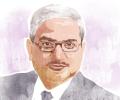
On February 19, India's largest private low-fare airline IndiGo announced the resignation of one of the two founders, Rakesh Gangwal, from the airline's board and his intentions of offloading his stake in the airline over the next five years. The announcement came on a Friday, giving the stock markets the weekend to absorb the news but the markets registered a tepid response on Monday's opening. In contrast, in July 2019, when the fight between the two founders and erstwhile friends first became public, the markets reacted savagely. The IndiGo scrip at the time fell 19 per cent, wiping out millions of rupees of shareholder wealth before bouncing back. For readers who may be hazy on the details of the dispute, here is the context.

Reliance Industries on Friday reported a 41.5 per cent jump in its third quarter net profit as oil, retail and telecom businesses fired on all cylinders. Net profit of Rs 18,549 crore in October-December compared with Rs 13,101 crore a year back, the company said in a stock exchange filing. Income from operations rose to Rs 1.91 lakh crore from Rs 1.28 lakh crore.

India has a history of jugaad, and retrofitting vehicles is one such manifestation of the legendary Indian skill. Not so long ago autorickshaws and small Marutis used to strap on subsidised LPG cylinders and power themselves to a cheap ride. There were the odd explosions, lives were lost, but the jugaad continued. Then compressed natural gas (CNG) was introduced in Delhi following a court order. Initially, customised CNG kits were fitted to conventional (internal combustion engine or ICE) autos cheaply, enabling commuting at less than half of what you would cough up for diesel. The industry is better organised now with Suzuki and Hyundai designing CNG-fired vehicles, and Mahindra and TVS manufacturing liquefied petroleum gas (LPG)-powered three wheelers.

Don't let your phone hit the red zone. Keep it at 65 to 70 per cent.
 © 2026 Rediff.com - Advertise with us - Disclaimer - Privacy Policy - Sitemap - Feedback - About us - Terms of use - Grievances