
The Planning Commission on Wednesday said that the proposed Goods and Services Tax (GST) is likely to miss the deadline of April 1, but it could be introduced in the next fiscal only.

The new tax is expected to subsume various indirect taxes, including excise and value-added tax.

The collection from borrowings and other liabilities will be 20 paise, while income tax will yield 17 paise to every rupee collection.

The CBEC will itself be rechristened as the Central Board of Indirect Taxes and Customs and will supervise GST and Customs activities and provide the government policy inputs.

Warning that the new year will be riskier than the previous two in terms of growth, inflation and the perils of monetary policy normalisation on consumption demand in particular, along with other external risks, a Wall Street brokerage has pencilled in an 8.2 per cent GDP growth next fiscal, with more downside risks to the projection. The biggest risk to the projection is a derailed consumption demand that has been the main growth driver in the past many years, said the Bank of America Securities India house economists who still believe that consumption demand will remain the key driver of growth next fiscal as well.

'The low tax to GDP ratio of the country will go up, helping the government to adhere to fiscal discipline and keep inflation in check.'

Modi on Friday invited the Congress leaders at his Race Course Road residence at 7 PM, sources said.
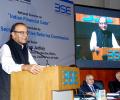
The government has proposed to implement GST from April 1, 2016, and the new Finance Commission may be set up ahead of its schedule to look into the issues related to the new indirect tax regime.
Central Board of Indirect Taxes and Customs said despite the electronic way or E-way bill mechanism there has been rampant evasion and there is a need to increase compliance.

Increased income tax collection is going to be a major consequence of going cashless and this should promise a future of lower taxes and higher purchase power soon, says Anil Rego

'Modi had not discussed demonetization with me prior to his announcement on 8 November 2016. 'I learnt of it along with the rest of the country. 'I was not surprised when he did not discuss the issue with me prior to making the public announcement. 'It fitted in with his style of making dramatic announcements.' A fascinating excerpt from Pranab Mukherjee's The Presidential Years: 2012-2017.

'Higher than expected inflation in the US or the European Union, faster than expected tightening by the major central banks, break out of a war in Europe, and withdrawal of portfolio equities from the emerging markets are factors which can result in equity market corrections.'

When the Centre collects money through cess, it can retain the entire fund for the particular scheme.
CAG recommended fixing a definite time frame for rolling out simplified GST return forms.
Goods and Services Tax (GST) collections at Rs 95,480 crore in September touched the highest level so far this fiscal, the finance ministry said on Thursday.
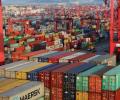
Since January this year, Indian exporters have begun to dread the shipping news. That's because most of it would be about another lot of shipping companies deciding to avoid Indian ports on account of delays.

With tax related cases mounting in various courts, government on Thursday appointed two senior counsel as Additional Solicitors General exclusively to deal with direct and indirect tax cases in Supreme Court and high courts across the country.
The government is keen to get the GST Bill approved during the Monsoon Session of Parliament ending on August 12.

The government has budgeted for total expenditure of Rs 34.83 lakh crore or 6.8 per cent of GDP. While the net tax revenue rose from Rs 5,75,697 crore in October 2020 to Rs 10,53,135 crore till October 2021, a growth of 82.93 per cent annualized, total expenditure rose only by 9.95 per cent, led by infra spending to Rs 18,26,725 crore from Rs 16,61,454 crore during the same period, the RBI said in the financial stability report.
Finance Minister Nirmala Sitharaman will present the much-awaited 2022-23 Union Budget on February 1. While there has been strong recovery in some sectors, touch services like hospitality, tourism and leisure continue to suffer after two Covid-19 waves. Household savings have been hit due to increased spending on health care. Consumption has still not reached pre-pandemic levels.

Insurance companies are seeking a separate deduction limit of Rs 1 lakh for insurance premium payment under Section 80C of the Income Tax Act in the upcoming Union Budget to bring in more people under the ambit of insurance. The insurers also want reduction in the goods and services tax (GST) rate of 18 per cent currently applied on health insurance products to 5 per cent to make such products more affordable to common people. Finance Minister Nirmala Sitharaman will present the Union Budget for 2022-23 on February 1.
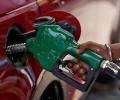
While consumers feel that petrol pinches directly, diesel hurts indirectly, as it is an input in almost all the goods and services we use.

Industrial output rose to nearly three-year high of 6.4% in August.

How should one billion Indians, for whom deprivation has become an inescapable way of life, join us in celebrating 75 years of Independence? And where do we go from here? asks Kalyan Singhal.

GST mop-up likely to fall in May, June after touching record levels in April and March.

Certain technical problems are being faced by the taxpayers as a result annual return for the period July 1, 2017 to March 31, 2018 could not be furnished.

E-way bill generation, which is related to paying Goods and Services Tax (GST) and a key high-frequency indicator of economic activity, may have fallen to a five-month low in April as more cities experience lockdowns due to a surge in Covid-19 cases. In April e-way bill generation may decline to 55-58 million, which is the lowest since at least November. On the higher side, it is a 17 per cent decline over March.

Businesses need to get on board in 15 days, ahead of indirect tax roll-out

The forthcoming Budget, the last full one before the 2019 Lok Sabha elections, is expected to contain a number of sops and feel-good announcements, especially regarding social sector schemes.
SEZs should be judged in the same way you would many other export promotion schemes such as Drawback, Duty Entitlement Pass Book and Export Promotion Capital Goods while discussing indirect taxes.
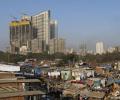
The fiscal gains from implementing the GST and demonetisation, while almost certain to occur, will probably take time to be fully realised

But their trajectory and direction have been largely influenced by politics and the political leadership's understanding of how the economy needs to be managed, explains A K Bhattacharya.
Tax experts said historically in July and August indirect tax collections remain subdued and pick up with the onset of the festive season post Ganesh Chaturthi.
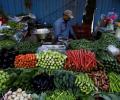
The wholesale price-based inflation rose for the second consecutive month in February to 4.17 per cent, as food, fuel and power prices spiked. The WPI inflation was 2.03 per cent in January and 2.26 per cent in February last year. After witnessing months of softening of prices, the food articles in February saw 1.36 per cent inflation. In January it was (-) 2.80 per cent.

Congress leader and ex-finance minister P Chidambaram on Tuesday said the Union Budget was the "most capitalist" with nothing for the poor and farmers while sops were being provided to big industrialists turning India into a very "unequal country". At a press conference after Union Finance Minister Nirmala Sitharaman unveiled a Rs 39.45 lakh crore Budget, he said because of the ruling party's "brute majority" the Lok Sabha pass the Budget but people will reject it. He claimed the Bharatiya Janata Party was going to elections, scheduled in five states, not with their performance or with the promises and assurances to the people, but solely "with the agenda of dividing the country and bringing Hindutva back to power".

As freebies/gift vouchers attract GST, retailers are opting for straight discounts this festive season.
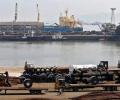
Companies are worried that any staggered roll-out of GST could result in cash flow issues with businesses not able claim tax credit due to breakage in the chain
The Centre's revenue from GST registered a decline of 10 per cent in 2017-18 compared to revenue of subsumed taxes in 2016-17.

Corporation tax is the single largest source of income, contributing 21 paise to each rupee earned.
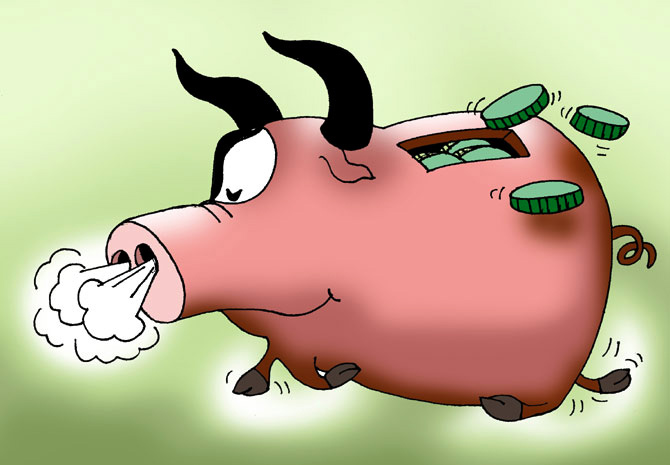
It would perhaps make more sense if the finance ministry gave greater emphasis on the need for a similar exercise to phase out exemptions and concessions in indirect taxes like customs and excise.
 © 2026 Rediff.com - Advertise with us - Disclaimer - Privacy Policy - Sitemap - Feedback - About us - Terms of use - Grievances