
The government of India holds 24.5 per cent stake in GSTN while states together hold another 24.5 per cent

The Income tax department to come down heavily on errant taxpayers from India Inc.

"Of the structural reforms, the GST has been the most historic in our country. Its chief architect is not with us today. I pay homage to the visionary leader late Arun Jaitely. GST has been gradually maturing into a tax that has integrated the country economically," she said during her budget speech.

Since its rollout 13 months ago, the new indirect tax has yielded Rs 1 trillion only in in April 2018
The CJI has also kept with himself matters concerning arbitration, habeas corpus, criminal cases, contempt of court and ordinary civil matters.

The government has sacked these officers ranging from the ranks of principal commissioner to assistant commissioner, some of whom were already under suspension.
Businesses with monthly turnover of over Rs 50 lakh will have to mandatorily pay at least 1 per cent of their GST liability in cash, the finance ministry said as it moved to curb evasion by fake invoicing. The Central Board of Indirect Taxes and Customs (CBIC) has introduced Rule 86B in Goods and Services Tax (GST) rules which restricts use of input tax credit (ITC) for discharging GST liability to 99 per cent. "... The registered person shall not use the amount available in electronic credit ledger to discharge his liability towards output tax in excess of 99 per cent of tax liability, in cases where the value of taxable supply ... in a month exceeds Rs 50 lakh," the CBIC said.

While she primed up spending on infrastructure to create jobs and boost economic activity, Sitharaman did not tinker with income tax slabs or tax rates. Her Budget for the fiscal year beginning April 2022 proposed a massive 35 per cent jump in capital expenditure to Rs 7.5 lakh crore, coupled with rationalisation of customs duty, an extension of time for setting up new manufacturing companies and plans for starting a digital currency and tax crypto assets.

Conformity assessment procedures will be put in place to verify that goods and services sold on e-commerce platforms meet required standards and technical regulations, according to the draft e-commerce policy. The policy, which is under discussion, also stated that actions and things which cannot be done by the online platform entities "can also not be done" by any of its associates and related parties. Government may, from time to time, notify parties which fall in the definition of associates and related parties, it said.

The demand for extension of the GST cess regime among others was made by several state finance ministers at a pre-budget consultation called by Union Finance Minister Nirmala Sitharaman in New Delhi. Besides, many states also demanded raising the share of the Union government in the Centrally Sponsored Schemes (CSS). Currently, the central government and state government share in some CSS is 60:40 while in others it is 75:25.


The stalemate over compensating states for the shortfall in GST collections continued on Monday with a meeting of the GST Council ending without reaching any consensus. The panel, which is the highest decision-making body on indirect taxes, for the second time in a week failed to reach a consensus on the Centre's proposal of states borrowing against future GST collections to make up for the shortfall.

A record GST tax collection, an overhaul of the income tax return filing portal and the landmark move to scrap retrospective taxation have set the stage for the next level of reforms in tax administration that include bringing a framework for cryptocurrencies and rationalising the GST rate structure. With tax reforms such as faceless assessment taking roots, 2021 will go down as the year that pivoted the tax administration in a country aspiring to become the world's favourite investment destination. The task ahead is going to be a tough one as the tax department would grapple with taxing cryptocurrencies, rationalising Goods and Services Tax (GST) rates to shore up revenues and post June 2022, the scenario of how the GST revenue plays out for states without the Centre's support of compensation.

The government's plan to mop-up additional revenue from indirect tax may not materialise

In a rare face off, captains of the auto industry have hit out at the government for not walking the talk. At an industry event in the capital on Wednesday, R C Bhargava, chairman of India's largest carmaker Maruti Suzuki, and Venu Srinivasan, chairman of TVS Motor, questioned the government's intent to support the auto sector. Revenue secretary Tarun Bajaj sat in the audience listening, before his turn came to counter them.

The time the companies have to get ready for GST is 6 to 12 months.

Finance Minister Nirmala Sitharaman on Thursday said taxpayer base has almost doubled to 1.28 crore in four years of rollout of the historic tax reform and the enhanced GST mop up in the recent months should now be the "new normal". In a written message to tax officers on the fourth anniversary of GST rollout, she said implementing any reform of this scale in a large and diverse country like India can be highly challenging, but GST has brought about ease in taxpayer compliance and reduced common man's tax burden.

The CAG audit and other data suggests it could be far from the efficient new alternative that was once conceptualised. A conclusive review remains elusive till the government begins to release more granular and comparable data on the complex backend of GST to a deeper scrutiny, by researchers, auditors and the public.

The government last year introduced the Insolvency and Bankruptcy Code.

The passage of the bill will pave the way for setting up of a GST council that will decide the tax rate, cess and surcharges.

'Pump prices of petrol and diesel have reached historical highs. An unwinding of taxes on petroleum products by both the Centre and the states could ease the cost-push pressures,' the Monetary Policy Committee (MPC) has said.

'So far, the government has sanctioned more than Rs 300 billion as GST refunds,' Ansh Bhargava and Aditya Singhania point out.

By November 3, only 17,000 applications with tax payable amounting to Rs 1,100 crore have been received by the government, under the Sabka Vishwas Legacy Dispute Resolution Scheme. The scheme gives a deep discount of 70 per cent for cases pending appeal where tax demand is more than Rs 50 lakh, and 50 per cent waiver beyond that amount.

The finance minister said the government was open to suggestions.
With Goods and Services Tax (GST) officers under pressure to exceed the Rs 1-trillion collection mark per month, industry has faced a barrage of recovery notices and summons issued over the last one month across sectors, according to company executives. Industry bodies have claimed harassment by field officers, blocking of input tax credit, cancellation of GST registration, threats of arrest and steep penalties, impacting their working capital and operations. Company executives pointed at an atmosphere of apprehension and fear due to such notices and summons.

The government could look at providing deductions for expenses incurred by salaried employees while working from home in the upcoming Budget as it looks to boost demand, consulting firm PwC India said on Thursday. Addressing a pre-Budget session, Pwc India senior tax partner Rahul Garg said demand creation is particularly focussed on money being given or left in the hands of the individuals.

If oil prices rise, the government would face an uncomfortable political decision.

During April-October 20 period, the tax department has made refunds to the tune of Rs 80,850 crore.
For every rupee in the government coffer, 70 paise will come from direct and indirect taxes, while the government will spend 23 paise towards the states' share of taxes and duties.

'GST will bring in much needed transparency and higher investments in the coming years and we hope that a few percentage points to India's GDP.'
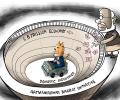
'The first year of the Modi government's second term has laid the roadmap for the future and we will embark on it with gusto,' promises Gopal Krishna Agrawal, the BJP's national spokesperson on economic affairs.
However, where the directors' remuneration is in the nature of professional fees and not salary, GST will be levied on a reverse charge basis.
'We have already given Rs 1.59 trillion to states.' 'So, there is no question of giving them more.'

Data on the new series given by a panel on real sector statistics shows that GDP grew by 10.23 per cent in 2007-08 and 10.78 per cent in 2010-11. There are some years for which the new figures show a deceleration in growth as well. The new series has 2011-12 as the base year while the earlier series had 2004-05 and 1993-94.
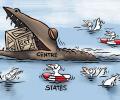
This provision is a very smart rule against fraudster and would not affect any genuine business entities or Ease of Doing Business in any manner, said a source.
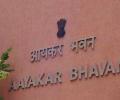
The income tax department will share PAN and bank account details of any entity with 10 investigative and intelligence agencies, including the CBI and NIA, under the integrated counter-terrorism platform NATGRID, according to an official order.

The constitution amendment Bill on a national GST is likely to be tabled in the current session of Parliament. However, the government is not confident of passing the Bill this session.

A rise in petrol and diesel consumption can help the government cut cesses on the fuels by Rs 4.5 a litre without impacting revenue collections of FY21, and help cool off the pressure on inflation, domestic rating agency ICRA said on Friday. Petrol consumption is estimated to increase 14 per cent in 2021-22 and diesel by 10 per cent on the lower base, rise in mobility and economic recovery, ICRA said. The rating agency added that it will result in an additional Rs 40,000 crore in revenue for the government through higher collections of the cess.

Any business that makes inter-state supply is outside the ambit of the scheme
 © 2026 Rediff.com - Advertise with us - Disclaimer - Privacy Policy - Sitemap - Feedback - About us - Terms of use - Grievances