Of the top 10 valued firms, eight including Reliance Industries, Tata Consultancy Services (TCS), HDFC Bank, Hindustan Unilever Ltd, HDFC and ITC witnessed gains in their market valuation. From the top-10 pack, the valuation of HDFC Bank jumped Rs 31,553.45 crore to Rs 929,752.54 crore.

The biggest bounce is in the realty sector, where the industry index jumped 80%. There's been a turnaround also in automobiles and ancillaries (up 45%). The pharma and health care indices have a welcome return of roughly 35%.

The government, which currently holds 29.5 per cent stake in HZL and 49 per cent stake in Balco, is looking at exiting from the two firms in which Anil Agarwal-led Vedanta Group holds majority stake.

The HAL and GE from the US would be producing these engines jointly in a facility in India.

It's fashion flashback Friday. The actress takes you back to the 90s in her flared pants and K3G style salwar suits.

With land acquisition completed and infrastructure work streamlined, India's bullet train dreams are slowly, but finally, inching closer to reality.

A girl climbed the stage, threw a black cloth towards the idols, and started chanting slogans 'Islam zindabad', 'Pakistan zindabad' and 'Hindustan murdabad'

As a group of Bharatiya Janata Party workers chanted 'Jai Shri Ram' and raised 'Modi, Modi' slogans in front of Rahul Gandhi's Bharat Jodo Nyay Yatra bus in Nagaon, the Congress leader waved, gave flying kisses and stepped down to meet them.
State-owned fuel retailers are losing close to Rs 3 per litre on selling diesel while the profit on petrol has trimmed due to recent firming up in international oil prices, industry officials said detailing reasons for continuing to hold retail prices. Indian Oil Corporation (IOC), Bharat Petroleum Corporation Ltd (BPCL) and Hindustan Petroleum Corporation Ltd (HPCL), who control roughly 90 per cent of India's fuel market, 'voluntarily' have not changed petrol, diesel and cooking gas (LPG) prices for almost two years now, resulting in losses when input cost was higher and profits when raw material prices were lower.

Mahindra & Mahindra was the top laggard in the Sensex pack, sliding 2.05 per cent, followed by Bajaj Finance, Tata Steel, SBI, Asian Paints, Kotak Mahindra Bank and Titan. However, IT majors HCL Technologies and TCS defied the trend and gained 1.02 per cent and 0.47 per cent, respectively. FMCG firm Hindustan Unilever rose 0.32 per cent.
Titan surged 2.98 per cent, followed by IndusInd Bank, ITC, JSW Steel, Infosys, Tech Mahindra, Tata Consultancy Services and Maruti. Hindustan Unilever, Asian Paints, Bharti Airtel and HDFC Bank were among the laggards.

As Ae Watan Mere Watan and Swatantra Veer Savarkar release this week, Utkarsh Mishra takes us down history and reminds us about India's freedom struggle.

India is procuring the long-endurance 'hunter-killer' drones to crank up the surveillance apparatus of the armed forces, especially along the Line of Actual Control with China.

Tech Mahindra was the biggest loser in the Sensex pack, slipping 4.59 per cent, followed by Asian Paints, Wipro, Kotak Mahindra Bank, Bajaj Finserv, Infosys, ITC, Mahindra & Mahindra, Hindustan Unilever, IndusInd Bank, Reliance Industries and JSW Steel. In contrast, Larsen & Toubro, Bharti Airtel, Power Grid and Axis Bank were among the gainers.
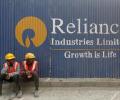
Reliance Industries Ltd was the biggest wealth creator during the five-year period from 2018 to 2023 while Adani Enterprises Ltd was the top all-round wealth creator, according to a study by Motilal Oswal Financial Services. The study, based on stock market performance of companies, said for the fifth time in succession, Reliance emerged as the largest wealth creator, adding Rs 9,63,800 crore wealth over 2018-23. It was followed by Tata Consultancy Services (Rs 6,77,400 crore wealth addition), ICICI Bank (Rs 4,15,500 crore), Infosys (Rs 3,61,800 crore) and Bharti Airtel (Rs 2,80,800 crore).
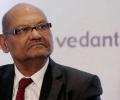
Mining magnate Anil Agarwal's conglomerate on Friday announced a major business shake-up, with flagship Vedanta Ltd approving a spin-off of its metals, power, aluminium and oil and gas businesses into separate listed entities and an overhaul of lucrative zinc unit planned as part of value creation and reducing debt load. Vedanta will issue one share of the five demerged businesses for every share held in the company, the firm said in a statement. The entire exercise, which would require shareholder and lender approval as well as a nod from the stock exchanges and courts, is expected to be completed in 12-15 months, its president for finance Ajay Agarwal said.

IndusInd Bank, Suzlon, and Paytm will remain under focus, as the stocks are pegged to get added to the MSCI global standard index. These stocks, along with six others, are seen attracting cumulative inflows of nearly $2 billion from passive funds tracking MSCI indices. Persistent Systems, APL Apollo, Polycab, Macrotech Developers, Tata Motors DVR, and Tata Communication are the other six stocks that will be added to the MSCI index, shows an analysis done by Nuvama Alternative & Quantitative Research.

The Indian Navy, which was earlier looking towards the US for design expertise, technical know-how and operational practices, is now considering the advantages of working with the Royal Navy.

The triennial exercise will take place for two hours and fifteen minutes during the day, dusk and night, he said.

From the Sensex pack, Hindustan Unilever, Asian Paints, Bajaj Finance, Nestle, Bajaj Finserv, Reliance Industries, Larsen & Toubro, Maruti, Infosys and Bharti Airtel were the major laggards.
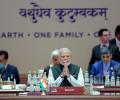
They also clarified that both the names Bharat and India, mentioned in Article 1 of the Constitution as "India, that is Bharat...", are part of the country's history and both names are "completely legitimate".

ICICI Bank was the biggest loser in the Sensex pack, slipping 2.81 per cent, followed by Mahindra & Mahindra, State Bank of India, UltraTech Cement, IndusInd Bank, Kotak Mahindra Bank, Tata Motors, Bajaj Finserv, Axis Bank and Power Grid. Tech Mahindra, Bharti Airtel, Infosys, Asian Paints, Hindustan Unilever, Larsen & Toubro and Titan were the gainers.

Nirma's tryst with the pharmaceutical space started in 2006 when it acquired the ailing Core Healthcare in a deal reported to be worth Rs 300 crore. The Ahmedabad-based manufacturer of intravenous fluids was subsequently renamed Nirlife. Pharma industry insiders say Nirma, which broke open the detergent market in the 1990s with low prices and massive advertising, tried an encore of the low-price strategy in pharma, but with mixed results.

Congress leader Rahul Gandhi has been re-allotted the 12, Tughlaq Lane bungalow a day after his disqualification as Lok Sabha member was restored following a directive of the Supreme Court, officials said on Tuesday.
Hindustan Unilever (HUL)'s decision to split its beauty and personal care division and place a renewed focus on digital has been driven by its aim to serve the consumer of tomorrow, say analysts and brand experts. HUL managing director and chief executive officer Rohit Jawa is looking to make the company 'future ready', and while these bets are not for the short-term, they will eventually pay off as the Indian consumer is young and digital friendly, they add. "Rohit Jawa comes with digital experience and he is preparing to steer HUL into serving the future consumer who is more digital friendly," said Sachin Bobade, vice-president at brokerage firm Dolat Capital.

His mother sold her gold chain so Dhruv could buy a cricket kit after his father, a Kargil War veteran, told him to give up the game because it was too expensive.

He also reacted to some media reports after the incident and said his reacting to a particular name were not true.

Stocks of public sector undertakings (PSUs) have been on fire in the past year as investors cheered an improvement in key operating metrics and embraced counters of these state-owned enterprises, analysts suggest. The S&P BSE PSU Index has gained over 90 per cent in the past year, rising much higher than the S&P BSE Sensex, which has rose nearly 19 per cent during this period, according to ACE Equity data. The BSE PSU Index, reports show, has delivered a compound annual growth rate (CAGR) of 28 per cent (including dividends reinvestments) over five years and risen by almost 60 per cent in the past year.

Members of all parties condemned the killings in the name of cow.

From the Sensex pack, Infosys, Hindustan Unilever, Reliance Industries, ICICI Bank, Larsen & Toubro, Asian Paints, Nestle, Axis Bank, Wipro and Kotak Mahindra Bank were the major gainers. JSW Steel, State Bank of India, Tata Steel, Bajaj Finserv, UltraTech Cement, IndusInd Bank, Tata Motors and Bajaj Finance were the major laggards.
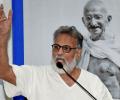
Gandhi maintained when he submitted the complaint application against Bhide, the police said they would seek legal opinion before moving forward in the matter.
FMCG major Hindustan Unilever Ltd on Thursday reported an increase of 12.74 per cent in its consolidated net profit at Rs 2,601 crore for the fourth quarter ended March 31, 2023. The company had posted a net profit of Rs 2,307 crore in the January-March quarter of the previous fiscal. Its revenue from sales during the quarter under review stood at Rs 14,926 crore, up 10.83 per cent, as against Rs 13,468 crore in the corresponding period a year ago, Hindustan Unilever Ltd (HUL) said in a regulatory filing.

A total of nine procurement proposals were approved by the Defence Acquisition Council headed by Defence Minister Rajnath Singh, officials said.
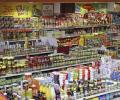
Companies manufacturing fast-moving consumer goods (FMCG) continue to see rural stress sustain and it continues to trail urban demand. At the Confederation of Indian Industry's FMCG summit, managements of various companies pointed out urban demand continued to grow while rural demand remained under pressure because incomes were under stress in rural areas. "Due to rural stress, volumes continue to remain an issue for the industry and we are yet to see any revival in demand," Sudhir Sitapati, managing director (MD) and chief executive officer (CEO) at Godrej Consumer Products

The mega procurement proposal will shortly be placed before the Defence Acquisition Council, the defence ministry's top body on procurement, they said.

Among Sensex stocks, Wipro gained the most by 3.29 per cent. Ultratech Cement, Reliance Industries, Hindustan Unilever, Nestle, NTPC, M&M, HDFC Bank, ITC, Kotak Bank and Axis Bank were among the winners. On the other hand, HCL Tech fell the most by 1.24 per cent. SBI, TCS, Infosys, IndusInd Bank and Tata Steel also dropped.

'Just because of my background and poor academic qualifications, most people disbelieve what I have done.'
Benchmark equity indices Sensex and Nifty rebounded from early lows to settle higher on Wednesday following buying in Reliance Industries, Larsen & Toubro and ITC and positive trends in Asian and European markets. The 30-share BSE Sensex rose by 173.22 points or 0.26 per cent to settle at 66,118.69. The index opened lower and fell further to a low of 65,549.96 in morning trade.

Nine of the 10 most valued firms faced a combined erosion of Rs 1,87,808.26 crore in market valuation last week, with HDFC Bank and Reliance Industries taking the biggest hit amid an overall weak trend in equities. Last week, the BSE benchmark tumbled 1,538.64 points or 2.52 per cent amid concerns that the US Federal Reserve might raise interest rates further to curb inflation. Fresh foreign fund outflows also dented investor sentiments. Barring ITC, all 10 firms, including Tata Consultancy Services (TCS), Infosys, ICICI Bank and Hindustan Unilever, were the laggards.
Benchmark stock indices Sensex and Nifty fell for the third day running on Friday due to weak trends in global markets and soaring crude oil prices. Foreign fund outflows also weighed on investor sentiments amid strengthening US bond yields which are nearing 5 per cent for the first time since 2007. The 30-share BSE Sensex fell 231.62 points or 0.35 per cent to settle at 65,397.62.
 © 2026 Rediff.com - Advertise with us - Disclaimer - Privacy Policy - Sitemap - Feedback - About us - Terms of use - Grievances