
'I served the Indian Army and I am an ex-serviceman.' 'I look at this as a battle I am fighting after I left the army.' 'I will not leave till I get her back as my daughter Akhila, and I believe it will happen one day.'
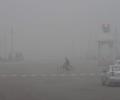
It was another chilly morning in the national capital as icy winds swept the city while early morning fog disrupted rail operations, delaying 52 trains.

Since 1950 successive governments have tried various options but failed to reduce alienation amongst the people, for different reasons, of Kashmir, Jammu and Ladakh. It is best to accept this reality and let each region charter its own path, within the framework of the Indian Constitution, says Sanjeev Nayyar.

A first-of-its-kind travel show explores the special bond a father and daughter share.

After last week's acquittal of 16 policemen, pointedly accused of the cold-blooded murder of 42 Muslims in Meerut in 1987, this mohalla in Meerut is still scarred by the past but willing to move on

'The root of the Kashmir problem lies in Partition. To solve the issue, we have to begin from there and settle it forever.'

'We don't know what the reasons were that we gave back the Haji Pir Pass which was strategically very important. Today the entire infiltration into Kashmir takes place from that area. If we had retained that post that we had captured, things could have been different.' 'A lesson we need to learn is if you start losing the gains of war at the negotiating table, they become a disincentive for future wars,' says Lieutenant General D B Shekatkar (retd), reviewing the lessons from the 1965 War.

'It is a very hard won situation that the army has brought about in J&K in 25 years, we don't want to fritter it away...' 'By 2010-2012 the terrorist strength had come down to 300, 400. From a high of 3,000 to 4,000 to 300 to 400 was no mean achievement for the army,' says Lieutenant General Syed Ata Hasnain (retd).

'By the time the ground dries up, considering that the homes are still submerged, winter will be here. By the end of October, it is going to be very, very cold. By the end of November, it will be freezing, and it would have snowed by mid December. So before the ground can dry up, there will be snow.' 'The anger has not receded with the water. It persists. The floods have completely finished whatever 5 per cent chance Omar Abdullah had left with the public... He is seen as someone who is highly arrogant and is coming across as one who has no feelings for his people.' A Kashmiri whose family has lived in J&K since before Partition, tells Archana Masih/Rediff.com how the government and media failed the people when flood waters turned Paradise into hell.
 © 2026 Rediff.com - Advertise with us - Disclaimer - Privacy Policy - Sitemap - Feedback - About us - Terms of use - Grievances