
There have been reports that RIL's mark-to-market losses on oil prices hedges has run into billions of dollars after its bets on crude futures went wrong last year, when prices first surged to a high of over 147 dollars and then plunged to below $40 a barrel.

The average estimate of 12 brokerage houses stands at Rs 6,994 crore for the June 2020 quarter. This is 30.8 per cent lower than the June 2019 quarter net profit of Rs 10,104 crore.
Refining margin is the difference in prices of crude oil and finished products. More exposure to diesel behind less fall in Indian refining margins.

Officials from State-run refiners contend that savings from purchase of Russian oil are used to offset a part of the losses in revenues from selling transport fuels and LPG at State-set rates.
The FIIs' stake in Reliance Industries has increased from 20.22 per cent at the end of the March 2007 quarter to 20.85 per cent at the end of the June 2007 quarter, according to the BSE's shareholding pattern data.

RIL's profit before interest and depreciation increased by 8%.
A major fire broke out on Wednesday at Reliance Industries' export-oriented oil refinery at Jamnagar in Gujarat, but there were reports of any casualty.
Reliance Industries has posted good growth in Q1 of the current financial year.
State-run Indian Oil Corporation on Wednesday it was incurring a loss of Rs 50 crore (Rs 500 million) per day on sale of all fuel products but petrol.

The company's turnover dipped to Rs 64,990 crore.
Fitch Ratings on Monday said uncertainty over the bidder consortiums and process complexity, including valuation, may lead to potential delays in privatisation of India's second-largest fuel retailer, Bharat Petroleum Corporation Ltd (BPCL). Affirming BPCL's rating at 'BBB-' with a negative outlook, Fitch said it continues to treat the potential divestment of the company by the Indian government as an event risk. "Bidders are conducting due diligence, but uncertainty over the bidder consortiums and process complexity, including valuation, may lead to potential delays.
Petrol and diesel prices, which have been on a freeze for the past four months in view of assembly elections in states like Uttar Pradesh, need to be increased by over Rs 12 per litre by March 16 for fuel retailers to break even. International crude oil prices shot above $120 a barrel for the first time in nine years on Thursday before retreating a little to $111 on Friday, but the gulf between cost and retail rates has only widened. With international oil prices - on which domestic fuel retails are directly benchmarked - spiking in the last two months, state-owned fuel retailers "need a massive price hike of Rs 12.1 per litre on or before March 16, 2022, just to breakeven and a price hike of Rs 15.1 is required" after including margins for oil firms, ICICI Securities said in a report.
A looming global shortage of diesel in Europe presents India with more than one opportunity to profit from strong margins. A shortage of the fuel, a key contributor to inflation, has been exacerbated by the conflict in Ukraine, and western sanctions on Russian fuel supplies. The slowdown in natural gas supply means the West needs diesel to heat their homes this winter.

The company's revenue fell to Rs 67,470 crore (Rs 674.7 billion).
Gross refining margins may decline sequentially but improving petro-chem margins will boost earnings
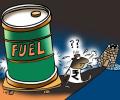
India must be prepared for a big, fat fuel import bill in FY23 - barring any further avatars of the Covid virus - as refiners crank up runs, or crude processing rates, to meet the growing demand for fuels, and crude prices soar. Capacity additions by an Indian state-run refiner will reinforce the need for foreign crude. Demand for all fuels is expected to increase by 3-8 per cent next fiscal from 2021-22, reaching pre-pandemic levels, according to analysts and industry experts.

Reliance Industries was the top Sensex gainer up 5.6% after the company reported better-than-expected net profit growth at 12% in the second-quarter aided hby higher gross refining margins.

The company raised Rs 53,124 crore through a rights issue and sold nearly 33 per cent stake in Jio Platforms Ltd - the firm that houses telecom business and apps - to likes of Facebook and Google for Rs 152,056 crore.

10 analysts estimated RIL's consolidated net profit at Rs 11,256 crore and nine analysts estimated revenue at Rs 1.5 trillion.
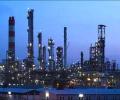
These refineries, commissioned mostly in the 1950s and 1960s during India's early industrialisation push, are inefficient and costly to maintain compared to their modern counterparts on the coast mainly operated by private companies.
A plunge in fuel demand after the raging pandemic forced people to stay home and stifled the economy dealt a body blow to the firm's traditional cash cow oil refining and petrochemicals, even as consumer-facing businesses, which account for 35 per cent of the oil-to-telecom-to-retail conglomerate's revenues, continued to do well.

For the full 2016-17 fiscal, the company generated its highest ever annual profit at Rs 29,901 crore. The annual profit was 18.8 per cent higher than the previous year's.

Refining and petrochemicals contribute around 90 per cent to RIL's overall revenue and profit.

Reliance Industries on Friday reported a 4.5 per cent drop in its December quarter net profit at Rs 5,256 crore (Rs 52.56 billion).

Total income from operations, however, dipped 27 per cent to Rs 68,261 crore.
.jpg)
RIL with a market cap of Rs 2,98,776 crore (Rs 2,987.76 billion) is the country's second most valued company after Tata Consultancy Services.

Analysts expect RIL to report consolidated revenue of Rs 1.40 trillion and 10 analysts expect RIL's net income to be Rs 9,629 crore

RIL's December quarter performance is likely to be muted

UBS said RIL's $10 billion petchem capex by 2016 will drive 12 per cent volume CAGR.
Reliance announced a rights issue of Rs 53,125 crore, which it said was the biggest in India.
Consolidated revenue rose to a record Rs 163,854 crore.
RIL might see its September quarter's profit between Rs 5,600 crore and Rs 5,670 crore.

Analysts remain confident RIL's refining and petrochemical segment will continue to support growth.

The Street expects lower earnings from RIL's shale business to be offset by the sharp uptick in refining margins and the gradual improvement in petrochemical earnings.

The oil-to-telecom conglomerate reported an 8.8 per cent rise in its consolidated net profit to Rs 10,251 crore, or Rs 17.3 per share, in the third quarter ended December 31, 2018.

The database of 194 companies has shown a revenue contraction of 2.6%.
Profit from its retail business jumped 77 per cent to Rs 1,923 crore and that from telecom rose by 78.3 per cent to Rs 2,665 crore.

Reliance reported record pre-tax profit from its retail and telecom businesses. The two now account for nearly 32 per cent of EBITDA, up from close to 25 per cent previously.

Revenue jumped 54.5 per cent to Rs 156,291 crore.
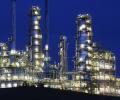
BPCL's impending privatisation and RIL's stake sale to Saudi Aramco raise questions about the future of the West Coast Refinery, once touted as the world's largest.
 © 2026 Rediff.com - Advertise with us - Disclaimer - Privacy Policy - Sitemap - Feedback - About us - Terms of use - Grievances