
The Iran conflict led to a sharp correction in Reliance Industries Ltd's (RIL's) share price, which has been partially reversed by a rebound.
Indian Oil Corporation's (IOC's) Q2FY26 operating profit of 14,600 crore beat Street estimates and was up 16 per cent on a sequential basis. It surged 287 per cent over the year-ago quarter on account of an improved refining performance.

Reliance Industries' refining earnings will remain steady, supported by its position as India's largest importer of Russian crude and favourable global supplies, according to analysts at JM Financial and Goldman Sachs. Reliance imported more Russian barrels than any other Indian refiner in the past eight months, according to data from Bloomberg/Kpler.
Oil refining companies, to a large extent, benefited from high gross refining margins during FY04 as a result of firm product prices in international markets

For Reliance Industries Ltd (RIL), the September 2024 quarter (Q2FY25) may turn out to be yet another weak one as refining margins drag, say analysts. Two brokerage firms - ICICI Securities and Nuvama - expect a 1-13 per cent dip in reported profits in Q2FY25 from a year ago. Kotak Institutional expects a modest 2.2 per cent rise. Revenue, at best based on available analyst estimates, could rise up to 4 per cent.

Consolidated earnings for oil-to-telecom conglomerate Reliance Industries (RIL) may report sequential weakness, and modest year-on-year (Y-o-Y) growth in the June 2024 quarter (Q1FY25), said analysts. Lower refining margins are expected to moderate gains made from other businesses. RIL is slated to report its financial performance for Q1FY25 on July 19.

Indian companies are generating more cash than ever. The net cash flow from listed firms' operations hit a new high of Rs 11.1 trillion in financial year 2023-24 (FY24), crossing the Rs 10-trillion mark for the first time, according to the Centre for Monitoring Indian Economy (CMIE) data going back to 1990-91. The FY24 figure represents a 19.3 per cent jump over the previous year, even as quite a few companies are yet to release their numbers.

Trends in the global energy markets are crucial if India's growth outlook is to remain healthy. Prices for the Indian crude basket were averaging around $86.2 per barrel through Q1FY25 and then moderated to $84 in July and to $78-79 in August (so far). But global crude supply may outpace weak global demand in the short term.

India may have to lean more on West Asian nations for supplies of liquefied petroleum gas (LPG), a cooking fuel, in the coming years after Indian state-run refiners drew up big plans to diversify into producing more profitable petrochemicals. This shift leads to reduced LPG output, Indian refining executives said. The mantra for state-run oil companies, from Indian Oil Corporation (IndianOil) to liquefied natural gas (LNG) importer Petronet LNG, which are looking to diversify their businesses from lower-margin fuels, has been value-added petrochemicals.

The market responded positively to the Q1 results of oil marketing companies (OMCs), Bharat Petroleum Corporation (BPCL) and Hindustan Petroleum Corporation (HPCL) despite numbers being weaker than consensus. BPCL's reported gross refining margin (GRM) was in line at $7.9 per barrel (bbl) in Q1FY25, which implies marketing margin stood at Rs 4.8 per litre. Standalone profit after tax or PAT at Rs 3,000 crore was down versus consensus due to under-recoveries in LPG business.
Weighed down by the oil-to-chemicals (O2C) business, Reliance Industries (RIL) results for the April-June quarter (Q1) of 2024-25 (FY25) missed Street estimates. A 14 per cent fall in the O2C segment's operating profit compared to the year-ago quarter and a 22 per cent sequential decline pulled down the consolidated performance. The O2C segment accounts for a third of the overall operating profit and about 60 per cent of the attributable consolidated profit.

State-run Indian Oil Corporation (IOCL) reported a weak performance in the fourth quarter of FY24 (January-March 2024), and the turmoil in the energy market indicates it could endure another lacklustre quarter. The oil marketing company (OMC) reported an Ebitda of Rs 10,400 crore, down 27 per cent year-on-year (Y-o-Y) due to weak reported gross refining margin (GRM) of $8.4 per barrel in Q4FY24, which was almost half the consensus expectation of $15 per barrel.

Indian Oil Corporation (IOC) on Tuesday reported halving of its March quarter net profit largely because of losses in the petrochemical business and shrinking margin after it announced a pre-election fuel price cut despite rising input costs. The net profit of Rs 4,837.69 crore in January-March compared to Rs 10,058.69 crore a year back and Rs 8,063.39 crore in the preceding October-December quarter, according to a stock exchange filing by the company.
Reliance Industries' (RIL's) consumer business is expected to lead earnings growth in the Q3FY24 performance, according to analysts. While the energy business is expected to show sequential weakness, the consumer business, especially retail, is estimated to show strong growth. The oil-to-telecom conglomerate will announce its Q3FY24 financial results on Friday.
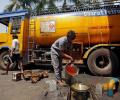
Investors shunned shares of oil marketing companies (OMCs) on Friday as they feared that the government's decision to cut retail prices of petrol and diesel could hurt the companies' profit margins in the near term. On Thursday, the government announced that OMCs will reduce pump prices of petrol and diesel after a record 22 months, making them cheaper by Rs 2 per litre in the national capital. The changes were effective from Friday.
After a spike in crude oil and gas prices in October following the Hamas terror attack, prices eased down 9 per cent month-on-month in November. The Organization of the Petroleum Exporting Countries (Opec) and Opec+ agreed to a further voluntary production cut in January-March 2024 to try and support global crude prices. The best guess here is that crude prices (currently at $75/barrel, or bbl) will not likely cross significantly above $80, and gas prices are also likely to remain subdued unless there's a further escalation in the Israel-Hamas conflict.

Operating margins have been the primary driver of corporate earnings in India in recent quarters, despite revenue growth suffering from weak consumer demand. Companies across sectors have reported a sharp improvement in earnings before interest, tax, depreciation, and amortisation (Ebitda) margins over the past two years, benefiting from lower commodity and energy prices. Higher margins more than compensated for slower revenue growth, resulting in double-digit growth in net profit for five consecutive quarters.
Reliance Industries Limited on Wednesday became the first Indian company to hit the Rs 19 lakh crore market valuation mark following a rally in its share price. The market heavyweight stock jumped 1.85 per cent to its record high of Rs 2,827.10 on the BSE. Following the gain in the share price, the company's market valuation jumped to Rs 19,12,814 crore in morning trade on the BSE.
India's trade account could come under pressure and there could be an inflation push if crude oil prices remain above the $90 per barrel (Brent) for a prolonged period since India imports over 85 per cent of its oil and roughly 50 per cent of its gas. A rebound in economic activity is bound to lead to higher fuel demand. While India is the third-largest importer of crude, it is a net exporter of refined products, which helps to compensate to some degree.
The medium-term scenario for oil marketing companies (OMCs) is high risk due to the surging crude and gas prices. Apart from OPEC-plus cutting production, the Hamas-Israel conflict has caused fears of supply disruption. The July-September quarter of 2023-24 (Q2FY24) saw positive surprises for OMCs. Strong gross refining margins (GRMs) more than offset weak marketing margins.

Global oil prices have slumped and India has access to larger amounts of discounted Russian crude oil, yet refiners are not passing on their savings to consumers

Consolidated sales jumped 38% to Rs 77,130 crore (Rs 771.3 billion).

Margins for the oil refining and retailing sector have moved off their peaks, and the average integrated margins (refining plus marketing) for oil marketing companies (OMCs) have normalised. The ascent in crude oil prices, combined with static retail prices, has depressed marketing margins for diesel and petrol. However, the fall in marketing margins has been offset by increased gross refining margins (GRMs).

Lower crude oil costs and higher marketing margins are expected to raise the fortunes of oil marketing companies (OMCs) in the first quarter (Q1) of 2023-24 (FY24), while city gas distribution (CGD) companies could also benefit from lower spot prices of liquefied natural gas (LNG). However, in a break from the past, growth trends are expected to diverge for various segments within the broad energy sector. Analysts expect the earnings from gas production to go down for upstream national oil and gas companies such as Oil and Natural Gas Corporation (ONGC) and Oil India (OIL) due to the introduction of the new domestic gas pricing regime on April 1. After showing steep losses over the first half of 2022-23 (FY23), the marketing margins of OMCs have steadily recovered in four months.

Equity markets maintained their winning momentum for the second day in a row on Thursday, with the Sensex surging over 874 points, propelled by index majors Reliance Industries, Infosys and HDFC twins amid a mixed trend in global markets. The BSE benchmark Sensex zoomed 874.18 points or 1.53 per cent to finish at 57,911.68. During the day, it jumped 954.03 points or 1.67 per cent to 57,991.53. The NSE Nifty rallied 256.05 points or 1.49 per cent to 17,392.60.

Notwithstanding the robust turnaround in the financial performance for the June quarter (Q1FY24), stocks of state-run oil marketing companies have been in a downtrend in the last month. The fall comes on a rise in crude oil prices that have surged to a 7-month high of $88 a barrel. A busy political calendar in the months ahead that may see the government keep a lid on auto fuel prices is also a dampener, analysts said. Shares of Hindustan Petroleum (HPCL), Bharat Petroleum (BPCL) and Indian Oil (IOC) have shed 9-11 per cent since their respective earnings announcement between July 26 to August 4.
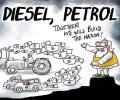
Petrol and diesel prices are unlikely to be increased despite firming raw material costs because of upcoming general elections next year, Moody's Investors Service said. Three state-owned fuel retailers -- Indian Oil Corporation (IOC), Bharat Petroleum Corporation Ltd (BPCL) and Hindustan Petroleum Corporation Ltd (HPCL) -- which control roughly 90 per cent of the market, have kept petrol and diesel prices on freeze for a record 18 months in a row. This is despite the raw material (crude oil) cost surging last year, leading to heavy losses in first half of 2022-23 fiscal year before easing oil prices propelled them to profitability.
Investors are showing some interest in the downstream energy cycle. Refiners and marketers, especially the public sector (PSU) oil marketing companies (OMCs) could see a revival of marketing margins. Lower crude oil and gas prices may also improve margins in industries like paints, logistics, synthetic fabrics, plastics, and fertilisers. In the medium-term, however, there could be a supply overhang affecting OMCs as new refining capacities are scheduled to be commissioned, especially in China, and this may lead to a drop in the refining margins as capacity would be surplus to demand until and unless there's a pick-up in global growth.

Reliance Industries may report a muted performance for the April-June quarter of FY24, with most brokerages expecting it to have witnessed a year-on-year (YoY) and quarter-on-quarter (QoQ) contraction in revenue and net profit during the period because of a poor showing by its oil-to-chemicals (O2C) division. The O2C division, which includes refining and petrochemical businesses, accounts for a little over half of RIL's revenue and profit. A muted showing by RIL in the first quarter of 2023-24 may weigh on the overall corporate earnings, as well as the equity markets.
Indian Oil Corporation (IOC), Bharat Petroleum and Hindustan Petroleum may post a combined loss of Rs 10,700 crore in June quarter on selling petrol and diesel at rates below cost, a report said on Monday. While the raw material (crude oil) prices soared in April-June, petrol and diesel prices were not revised, leading to marketing losses which offset strong refining margins, ICICI Securities said in the report. The three state-owned oil marketing companies -- IOC, BPCL and HPCL -- control 90 per cent of the retail petrol and diesel sales in the country.

Indian Oil Corporation (IOC), the nation's biggest oil firm, on Tuesday reported a 31.4 per cent drop in the fourth quarter net profit as record refining margins were wiped away by a margin squeeze in petrochemicals and losses on auto fuel sales. Standalone net profit of Rs 6,021.88 crore, or Rs 6.56 a share, in January-March, compared with Rs 8,781.30 crore, or Rs 9.56 per share, in the same period a year back, the company said in a stock exchange filing. Sequentially, the profit was higher than Rs 5,860.80 crore in the previous quarter.
Indian energy conglomerate Reliance Industries reported a nearly flat profit of Rs 5,511 crore ($895 million) for the December quarter but beat analyst estimates, helped by stable margins in its main refining business.
Institutional shareholders of Reliance Industries Limited (RIL) are expecting big-ticket announcements from the company, including timeline for listing of its telecom and retail subsidiaries. They expect this to unlock value in the company, which has seen a sharp fall in market valuation on Friday. This is due to windfall tax imposed by the Centre on refiners and oil producers.

Despite a massive underperformance at the bourses since the last six months, analysts are turning optimistic on Reliance Industries (RIL). Those at Jefferies, for instance, say that the company is a proxy play for India's consumption growth story. The key catalysts for the stock, according to a Jeffries note, include faster-than-expected market share gain in retail, oil-to-chemicals (O2C) stake sale, recovery in gross refining margins (GRM), potential public listing of Jio and even a possible banking licence going ahead. That apart, analysts feel any tariff hike in Reliance Jio (RJio) - its telecom venture - will also aid performance. With balance sheet adequately de-levered, proceeds from a strategic stake sale in the O2C business will create a sizeable war chest for the company, analysts say.

In the last 3 months, rupee has depreciated 16% against dollar.
Fact that RIL will get the much required support from another segment like shale gas is a big positive for the stock.

Analysts say the company's petrochemical segment and higher other income would boost its revenues. On an average, brokerages expect RIL's net profit to rise 12-17 per cent compared with the year-ago period.

'I would not suggest buying these stocks in the dip, as the upside in profit is dented without a safety net for a rainy day.'

Implementation of Kirit Parikh Committee recommendations looks bleak and the industry's expectation that all petroleum products including crude oil & natural gas should be included under GST is set to be turned down.
 © 2026 Rediff.com - Advertise with us - Disclaimer - Privacy Policy - Sitemap - Feedback - About us - Terms of use - Grievances