Defence expenditure was pegged at 1.4 per cent of GDP in the Budget for 2025-26 but it may widen, depending on tensions between India and Pakistan.

'India may never fully participate in the AI hype cycle, but we can position ourselves to benefit from its inevitable disenchantment and the cycle of disillusionment,' alerts Akash Prakash.

India is set to become the world's fourth-largest economy in 2025, but slow income growth, lack of structural change, and rising inequality highlight the gap between progress and real transformation.

'Indian markets may underperform global peers for the next two quarters.' 'But beyond that, India should catch up and resume its long-term growth path.'
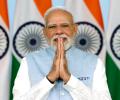
The Congress party has criticized Prime Minister Narendra Modi's handling of GST reforms, calling them inadequate and demanding an apology for the tax imposed on essential items. They argue that the reforms are merely a 'band-aid' solution and that the government should address the states' demand for extended compensation.

'Returning Indians can leverage their international skills and the strong funding environment for start-ups here.'

Reliance Industries Ltd has consistently remained compliant with international sanctions and is expected to adhere to upcoming measures on Russian oil, analysts said, estimating that oil sourced from Russia contributes just 2.1 per cent to its consolidated EBITDA. Reliance operates the world's largest single location refining complex, with more than half of the capacity exclusively dedicated for exports.

The Reserve Bank of India on Friday revised upwards the GDP growth projection for the current fiscal to 7.2 per cent from 7 per cent on rising private consumption and revival of demand in rural areas. Unveiling the bi-monthly monetary policy, RBI Governor Shaktikanta Das said estimates released by the National Statistical Office (NSO) placed India's real gross domestic product (GDP) growth at 8.2 per cent in 2023-24. "During 2024-25 so far, domestic economic activity has maintained resilience," he said, adding that manufacturing activity continues to gain ground on the back of strengthening domestic demand.

The 50 per cent US tariff on Indian goods pose a downside risk to growth but the impact is expected to be short-lived for the economy, and consumption demand could see an uptick after the new goods and service tax (GST) rates are implemented which could even offset the external uncertainty, Chief Economic Advisor (CEA) V Anantha Nageswaran reckoned on Friday.

Any industrial policy is only as good as how it is applied and the other reforms that support it. This was as true 40 years ago as it is now, points out Debashis Basu.

The size of Reserve Bank's balance sheet increased by 11.08 per cent to Rs 70.47 lakh crore as on March 2024, leading to the highest-ever dividend payout to the government, according to the central bank's annual report. In actual terms, the increase was Rs 7,02,946.97 crore over Rs 63.45 lakh crore as on March 2023.

The GST Council on Wednesday approved a two-tier rate structure of 5 and 18 per cent, which will be implemented from September 22.

Among the Sensex firms, Sun Pharmaceuticals, Tech Mahindra, HCL Technologies, Infosys, Bajaj Finance, Eternal, Tata Consultancy Services, UltraTech Cement, Bajaj Finserv, Tata Steel, ITC and L&T were the major laggards. Asian Paints, Mahindra & Mahindra, BEL, Adani Ports, State Bank of India, Trent, HDFC Bank were among the gainers.

'It must become faceless, just as the entire direct tax assessment system has already become fully online, without any human intervention in the normal course,' recommends A K Bhattacharya.

With general government debt now approaching three-quarters of GDP, and only incremental reform efforts visible, Pakistan risks prolonging its economic stagnation unless fundamental governance, regulatory, and industrial overhauls are undertaken.

Gold prices are likely to remain in a consolidation phase in the near term, but the overall bias will continue to stay positive amid heightened expectations of a US Federal Reserve rate cut in its September policy meeting, analysts said. Traders will closely track US macroeconomic data, such as Q2 GDP, PCE inflation, and speeches from Fed officials, which will provide more insights into the monetary policy stance of the Federal Reserve and the trajectory of the bullion sentiment, they added.

France today increasingly resembles the Italy of the past, when governments fell with bewildering regularity, prime ministers came and went in rapid succession, and political instability became the norm rather than the exception, point out Krishnan Srinivasan and Manoj Mohanka.

The deal fell through over unresolved disagreements over contentious issues, mainly on agriculture and automotive sector tariffs.

The next generation GST reforms would 'absolutely' set an economy open and transparent with further reduction in compliance burden and benefiting small businesses, Union Finance Minister Nirmala Sitharaman said on Tuesday.

'What India has done will surely embolden more countries to stand up to Trump.'

In Professor Sulochana Gadgil's passing, India has lost a scientific giant, a fierce intellect, and a compassionate soul, remembers Dr Madhavan Nair Rajeevan.

In trade negotiations, as in chess, sometimes you need to accept a temporary disadvantage to secure a better long-term position, points out Sonal Varma, chief economist (India and Asia ex-Japan) at Nomura.

Fitch Ratings on Thursday raised its forecast for India's economic growth to 7 per cent for the next fiscal year starting April 1 on the back of strong domestic demand and sustained level of business and consumer confidence. With a stronger-than-expected 8.4 per cent growth in gross domestic product (GDP) during the third quarter (October-December) of the current fiscal year, Fitch saw the Indian economy expanding 7.8 per cent in 2023-24 financial year (April 2023 to March 2024), marginally higher than the government's estimate of 7.6 per cent.

'That is going to have an impact on literally every one, whether you buy a toothpaste, a safety pin, a car, shoes or medicines or you go to a diagnostic centre.'

Russia has a "special mechanism" to confront any challenge arising out of the US slapping punitive measures against India for its procurement of Russian crude oil, Russian charge d'affaires Roman Babushkin said on Wednesday.

According to the World Bank, economic growth in middle-income countries, including India, is not accelerating. 'In fact, it is slowing down as incomes increase, with the trend becoming more pronounced each decade.'

The Reserve Bank of India on Thursday projected a GDP growth of 7 per cent for 2024-25 financial year, which is lower than the 7.3 per cent expansion estimated for the current fiscal. Announcing the bi-monthly monetary policy, RBI Governor Shaktikanta Das said rural demand continues to gather pace, urban consumption remains strong and investment cycle is gaining steam on the back of increased capex.
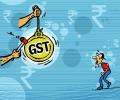
India needs Goods and Services Tax (GST) Council-like common platforms between states and the Centre in areas such as land clearances, power, and water to fast-track infrastructure projects to achieve double-digit growth going ahead, said Praveer Sinha, chief executive officer and managing director of The Tata Power Company.

Among Sensex firms, Tech Mahindra, HCL Tech, Asian Paints, NTPC, Infosys, Nestle, Sun Pharma, and Tata Steel were the major laggards. Eternal, State Bank of India, HDFC Bank, Larsen & Toubro, Reliance Industries and Bajaj Finserv were the gainers.
Deloitte India on Friday said it estimates India's GDP growth at 6.6 per cent in the current fiscal helped by consumption expenditure, exports rebound and capital flows. In its India's economic outlook report, Deloitte said the rapid growth of the middle-income class has led to rising purchasing power and even created demand for premium luxury products and services. With the expectation that the number of middle-to-high-income segments will be one in two households by 2030/31, up from one in four currently, we believe this trend will likely become further amplified, driving overall private consumer expenditure growth, it said.

As per the first advance estimates of national income released by the National Statistical Office (NSO) on Friday, the manufacturing sector output is estimated to grow to 6.5 per cent in the current fiscal compared to 1.3 per cent in 2022-23. Similarly, mining sector growth is estimated at 8.1 per cent in the current fiscal against 4.1 per cent in 2022-23.
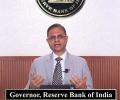
'India has the potential to grow at more than 7%, with the monetary policy providing a supportive hand.'

Foreign investors continue to exhibit confidence in the country's equity market, injecting Rs 19,860 crore in May driven by favourable global economic indicators and strong domestic fundamentals. This positive momentum follows a net investment of Rs 4,223 crore in April, data with the depositories showed.

On the back of robust tax collection, the ratio of direct taxes to gross domestic product (GDP) this financial year is likely to be the highest in this century so far. This, along with strong goods and services tax (GST) collection, may drive up receipts from central taxes as a proportion of GDP to the highest level or close to the highest since 2008-09 despite subdued excise and customs duty receipts. This will be due also to lower nominal GDP projected in the first advance estimates for 2023-24.

India's extreme poverty rate declined sharply to 5.3 per cent over a decade from 27.1 per cent in 2011-12 even as the World Bank revised upwards its threshold poverty line to $3 per day.

'What the US appears to be doing is to force India to be "the buyer of last resort", on whom their products can be dumped, 1.4 billion people have to eat something, so why not eat American corn?' 'What is exercising the Trump lot is the fact that most of the farms are in solidly Republican Midwestern states: Illinois, Indiana, Kansas, Michigan, Minnesota, Missouri, Nebraska, North Dakota, Ohio, South Dakota, Wisconsin,' points out Rajeev Srinivasan.

Siam argues that a 2040 ban could destabilise ongoing and future investments and threaten millions of jobs in the automotive value chain.

GST 2.0 may cushion consumers against US tariffs, but like the 2019 corporate tax cut, it risks being another tactical fix rather than a structural growth strategy, expects Debashis Basu.

The crisis may not be as visible this time, but the stakes are just as high, points out Rajeswari Sengupta.

The disbursement of the second tranche comes on a day when the International Monetary Fund is holding virtual discussions on Pakistan's upcoming budget, as the visit of its mission to Islamabad was delayed due to security concerns in the region.
