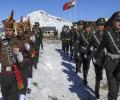
The Chinese government had "planned" the Galwan incident in June even as Beijing ramped up its multiyear coercion campaign against its neighbours, provoking military or paramilitary standoffs with countries from Japan to India, the United States top panel said in its report released on Wednesday.

'Both sides have agreed that the overall situation should be handled in a responsible manner'

The sources have said that patrolling will begin at these points once the disengagement that began last week is completed and both sides will move their respective troops and dismantle temporary structures.

The names of 20 Indian Army personnel, who were killed while valiantly fighting Chinese troops in Galwan Valley in eastern Ladakh in June last year, were inscribed on the National War Memorial ahead of the Republic Day, official sources said.

The Galwan valley clash took place on June 15 last year when Indian troops led by Colonel Babu took on the Chinese troops near the patrolling point 14 area.

Union minister Kiren Rijiju on Friday said he interacted with soldiers of China's People's Liberation Army along the Sino-Indian border near Tawang during a visit to an Indian Army post on Diwali.

The exchange took place at five Border Personnel Meeting points along the LAC, the sources added.

But there is a bigger issue that both of us have brought forces close up and in that sense there is a militarisation of the border, he said.

External Affairs Ministry Spokesperson Anurag Srivastava said China's claim over Galwan Valley was not in accordance with its own position in the past, noting that attempts of transgression by Chinese side were invariably met with appropriate response from the Indian troops.
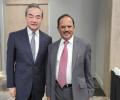
Doval is in Beijing for the 23rd round of the Special Representatives' talks being held after a gap of five years.

"He told me his (retirement) papers were through and he would return home in a weeks time and asked me to go ahead with the house warming ceremony on June 3 which I did," she said.

In a year bookended by intractable conflicts and geopolitical fragmentation, India focused on ramping up military prowess by broadly firming up defence procurement worth Rs 4.22 lakh crore even as Indian and Chinese militaries completed pulling back their troops from border face-off points in eastern Ladakh.

Chinese and Indian troops clashed in Galwan Valley for several hours on the night of June 15 in their deadliest brawl in the last five decades.

Prashant Kishor's Jan Suraaj Party on Wednesday named former vice chief of army staff, Lieutenant General Krishna Singh, as its candidate for the bypoll to Tarari assembly seat in Bihar.
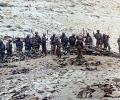
'The Galwan Valley clashes helped us prioritise our national security approach towards the northern border'

India and China have agreed to work towards a "roadmap" for rebuilding mutual trust following the border standoff in eastern Ladakh, according to a statement from the Indian Defence Ministry. Defence Minister Rajnath Singh met with his Chinese counterpart Dong Jun in Vientiane, Laos, on the sidelines of a regional security conclave. Singh called for drawing lessons from the "unfortunate border clashes" of 2020 and emphasized the need for cooperation rather than conflict. Both sides agreed to work towards a roadmap for rebuilding mutual trust and understanding, and a meeting of the Special Representatives and Secretary-Vice Minister mechanism will also take place soon.
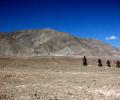
While the de-escalation process was underway, a violent face-off took place on Monday night between Indian and Chinese troops leading to the death of 20 Indian soldiers.

In the meeting, Doval conveyed to Wang that peace and tranquillity in border areas and respect for the Line of Actual Control are essential for return of normalcy in bilateral ties, according to the ministry of external affairs.

Prime Minister Narendra Modi and Chinese President Xi Jinping will hold bilateral talks on Wednesday on the margins of the Brazil, Russia, India, China, South Africa (BRICS) summit in Russia, in their first structured meeting since the eastern Ladakh border row erupted in May 2020.
The Congress on Friday questioned the silence of the government on the veracity of a video which purportedly shows injured Indian soldiers in captivity of the Chinese and said if it is genuine, then Prime Minister Narendra Modi must ensure that China is held globally accountable for indulging in war crimes.

Why can't the Indian government propose to the Chinese a corridor circumambulating the Holy Mountain where people from both sides could perform the yatra again? asks Claude Arpi.

The Indian Army is looking at deploying over 350 light tanks, mostly in the mountainous border areas.

A broad consensus has been achieved by India and China on restoring the 'ground situation' along the Line of Actual Control (LAC) pursuant to talks, including for patrolling and grazing cattle in the traditional areas, Defence Minister Rajnath Singh said on Thursday.

Jaishankar said, "The immediate part which awaits us is what we call the de-escalation, which is the build-up of forces along the Line of Actual Control."
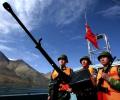
The step was taken by both the sides as they wanted to avoid a repeat of June 15 violent face-off as the troops were in close vicinity.

'China did not expect India to show such strategic resolve in defending its territorial integrity.'
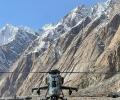
Disengagement of Indian and Chinese troops has started at two friction points in Demchok and Depsang Plains in the Eastern Ladakh sector, defence officials said.

The visit comes a week after 20 Indian Army personnel were killed in a brutal assault by the Chinese military in Galwan Valley which escalated the border tension.

China has violated border agreements, External Affairs Minister S Jaishankar said on Tuesday, noting that continued tension will cast a natural shadow over the rest of this relationship.

'The Galwan clash in 2020 resulted in a large number of troops being moved from J&K to Eastern Ladakh which caused a thinning of deployment in the Jammu area.'
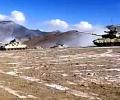
Senior Congress leader and former defence minister A K Antony on Sunday alleged that disengagement in both the Galwan Valley and Pangong Tso Lake areas and the creation of a buffer zone was a 'surrender' of India's rights.

China on Thursday said the meeting between Prime Minister Narendra Modi and Chinese President Xi Jinping in Russia's Kazan on Wednesday carries a "great significance" as they reached an "important common understandings" to improve the bilateral ties.

The jawan, Sachin More, was a native of Malegaon in Nashik district, around 200 km from Mumbai.

India on Wednesday delivered a strong message to China that the 'unprecedented' incident in the Galwan Valley will have a 'serious impact' on the bilateral relationship and held the 'pre-meditated' action by Chinese army directly responsible for the violence that left 20 Indian Army personnel dead.

'Given China's past behaviour and their territorial claims, should we be sceptical regarding China's willingness to adhere to these agreements fully? The answer is yes.' 'As Ronald Reagan famously said in the context of the SALT talks, 'Trust, but verify!' India should also do the same.' 'This has already begun with foot patrolling, drones, satellite imagery and so on. India's military deployment did mirror China's and will continue to do so in the future.'

Chinese Foreign Minister Wang Yi has expressed readiness to join hands with India's National Security Advisor Ajit Doval to "properly handle" issues related to the situation on the ground in the border areas, amid the protracted border row in eastern Ladakh.
China and India were able to "reduce differences" and build "some consensus" on disengaging troops from friction points to end the standoff in eastern Ladakh and agreed to maintain dialogue to reach a resolution acceptable to both sides at an "early date", the Chinese defence ministry said on Thursday.

The situation along the Line of Actual Control (LAC) in eastern Ladakh is stable but sensitive and not normal, Chief of Army Staff General Upendra Dwivedi said on Tuesday on the dragging military standoff between China and India in the region.

'If the Chinese military gets hold of some western sectors on the India-China boundary, it will give them added military advantage.'
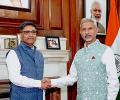
The 59-year-old Vikram Misri assumed charge of the key position at a time India is looking to navigate various geo-political challenges, including its frosty ties with China following the lingering eastern Ladakh border row and the consequences of the Russia-Ukraine conflict.
 © 2026 Rediff.com - Investor Information - Advertise with us - Disclaimer - Privacy Policy - Sitemap - Feedback - About us - Terms of use - Grievances